Custom colour matching for rugs works in three steps: the dyer matches each reference on the real yarn as a lab dip or pom, you approve each colour under agreed light, and every production dye lot is then checked against that approved standard. Most colour disputes on hotel projects come from the last step, when a large order is dyed in several lots and nobody agreed how close each lot must be.
Poms, lab dips and strike-offs: what is the difference?
The terms are used loosely, so it helps to define them before a project starts.
| Sample | What it is | What it is for |
|---|---|---|
| Pom | A tuft or small bundle of dyed yarn, often from a standard colour range held by the factory | Choosing colours quickly from an existing range |
| Lab dip | A small hank of the real yarn dyed to match your reference | Approving a new custom colour |
| Blanket or colour card | Several lab dips together on one card | Seeing how the palette works as a group |
| Strike-off | A small piece of the real rug | Seeing the colours in the pile, side by side |
| Dye lot sample | Yarn from the production lot | Checking bulk against the approved standard |
A pom from a standard range is the quickest route, because the recipe already exists. A custom lab dip takes trial dyeings, and each round adds time.
References and matching on hotel schemes
The basics of colour references and of matching a recipe on the right yarn are in our guide to custom rug strike-offs and colour matching. Two points matter more on hotel schemes. The strongest reference is often the fabric the rug must sit with, such as the headboard, curtain or upholstery, so send a cutting large enough to hold beside a yarn sample. And a rug that mixes wool and viscose needs each colour matched on each fibre, because the same recipe looks different on each.
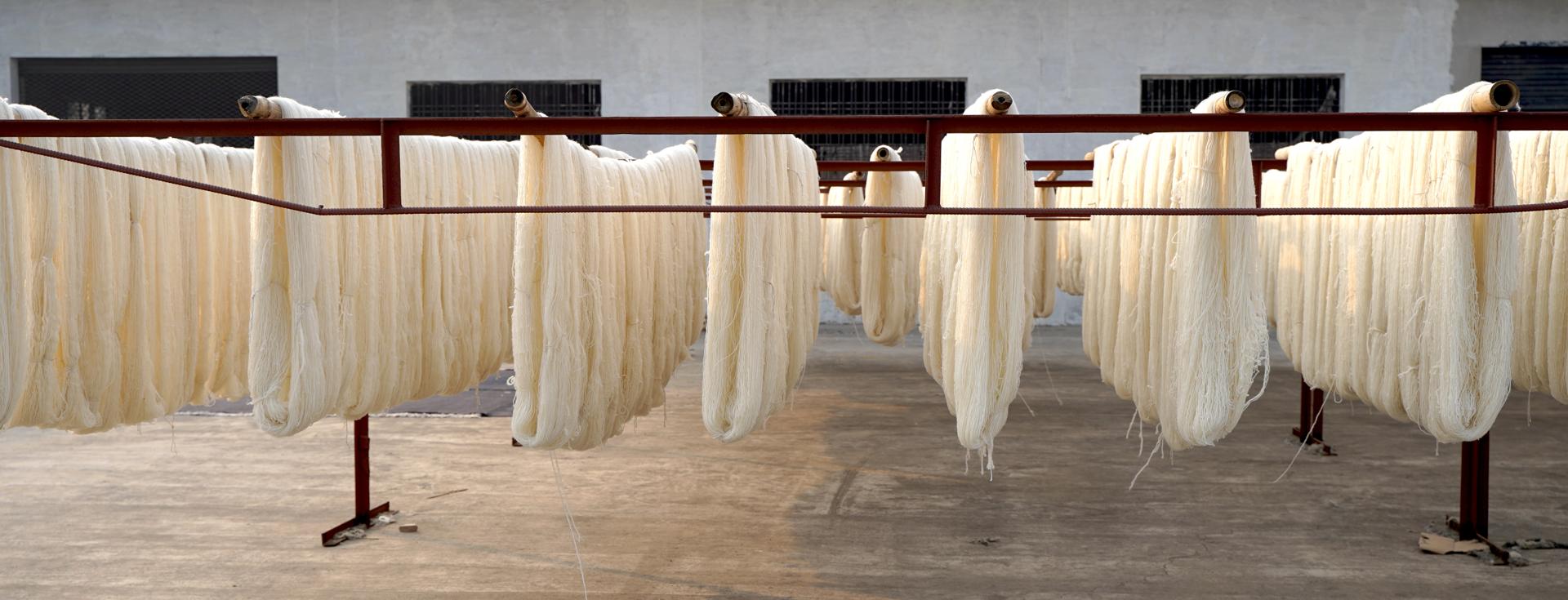
Eastern Mills spins and dyes yarn in house, so colour development and production dyeing happen within the same operation.
Which light should colours be judged under?
Two colours can match in one light and differ in another. This is called metamerism, and it is the most common reason a colour approved in a studio looks wrong in a hotel.
Dye houses and inspectors use a light booth with standard light sources.
| Light source | Represents |
|---|---|
| D65 | Average daylight |
| TL84 or similar fluorescent | Shop and office lighting |
| A | Warm incandescent light |
| UV | Shows optical brighteners and fluorescence |
For a hotel, state the primary light in the brief. Guest rooms and restaurants are often lit warm in the evening, so a colour should be checked under warm light as well as daylight. If the lighting designer has specified a colour temperature, pass it on.
How close is close enough?
Agree a tolerance before bulk dyeing starts. There are two common ways.
- Visual assessment against the approved standard in a light booth, often graded with a grey scale for colour difference, where 5 means no visible difference and lower numbers mean larger differences.
- Instrumental measurement with a spectrophotometer, which gives a colour difference value against the standard.
Instrument readings are useful for consistency between lots, but the final judgement on a rug is visual. A sensible approach is to approve the colour visually and then agree how much lot to lot variation is acceptable.
Why dye lots matter on hotel projects
A hotel order can need more yarn of one colour than a single dyeing produces, so the colour is dyed in several lots, each judged against the approved standard and the tolerance agreed above. How lots are then allocated so that two never sit side by side is covered in our guide to dye lot consistency on hotel orders, and spares in the guide to attic stock.
How should colour be approved?
- Approve each colour on a lab dip, under the agreed light.
- Approve the palette together on a colour card or strike-off.
- Keep a sealed half of the approved colour card, and leave the other half with the factory.
- Before weaving, approve or spot check the production dye lots against the standard.
- Record the recipe and lot numbers against the order for future repeats.
Repeat orders and phased openings
Hotels often open in phases or refurbish one floor at a time. A colour approved for phase one should be dyed to the same recorded recipe for phase two, and checked against the original sealed standard, not against a photograph. Keep the sealed sample somewhere safe from light, because a sample left in a sunny site office fades.
Colour matching checklist
- Physical reference for every colour, with its purpose stated
- Fibre for each colour confirmed before matching
- Primary light source and colour temperature stated
- Colours approved on lab dips, then as a palette
- Tolerance for lot to lot variation agreed in writing
- One lot per colour per rug, and matching lots for adjacent rugs
- Dye lot numbers shown on packing lists
- Spare stock ordered from the same lots
For more on how colour and construction come together, see our custom rugs page, or read about the spinning behind the yarn we dye.
Frequently asked questions
Can you match a Pantone or paint colour exactly?
A close match is possible on the chosen fibre, but a printed chip and a dyed pile reflect light differently. Approve the match on yarn and in a strike-off, not on paper.
Why does my approved colour look darker in the rug than on the lab dip?
Cut pile traps light between the tufts, so colour reads deeper in a rug than in a hank of yarn. This is why the strike-off is the final colour check.
How many lab dip rounds are normal?
One or two for most colours. Very pale neutrals and greys can take longer, because small shifts in undertone are easy to see.
Will a reorder match the original?
It will be dyed to the recorded recipe and checked against the sealed standard. Expect a close match, and order spare stock with the first order if an exact match matters.