A vertically integrated rug manufacturer owns the main stages of production itself: spinning the yarn, dyeing it, weaving, finishing, and loading the export container. Buyers care because each stage that is owned is one fewer hand over between separate companies, and hand overs are where colour drifts, quality slips and accountability gets blurred. It is not a guarantee of quality, but it changes who can fix a problem and how fast.
What are the stages of rug production?
| Stage | What happens | What ownership changes for the buyer |
|---|---|---|
| Spinning | Raw fibre is carded, blended and twisted into yarn | Fibre quality, blend ratio and twist are set by the maker, not bought as found |
| Dyeing | Yarn is dyed to a colour standard in lots | Colour matching and revisions do not wait in another company's queue |
| Weaving | Yarn becomes a rug by knotting, tufting or loom weaving | The people making the rug work to the same instructions as the people who sampled it |
| Finishing | Washing, drying, stretching, shearing, binding, inspection | The final look and the final check are done by the party you contracted |
| Container loading | Packed goods are loaded and sealed for export | The last quality gate and the count are controlled at source |
A supplier can be integrated across all five, some of them, or none. A trading house may own no production at all and still deliver good rugs through coordination. The useful question is not whether a supplier is integrated, but which stages it owns.
Why does in house spinning matter?
Yarn decides more about a rug than buyers usually see. The length and fineness of the fibre, the blend, the thickness of the yarn and the amount of twist determine how the pile feels, how it takes dye, how much it sheds and how it wears.
A company that buys yarn chooses from what the market offers that month. A company that spins sets those variables itself and can repeat them. It can also develop a yarn that does not exist on the market, such as a specific wool blend for one collection.
Spinning also shortens the traceability chain for certified wool. If the weaver is also the spinner, there is one fewer company between the farm and the finished rug.
Why does in house dyeing matter?
Custom colour is the stage where sourcing relationships most often stall. Matching a reference takes trial dyeings, and each revision takes time. When dyeing is outsourced, every trial joins another business's schedule.
When the dye house is in house, the sampling loom and the dye lab answer to the same management. Recipes are kept on site, so a colour from a past order can be reproduced from the record instead of matched again from scratch.
What changes when weaving and finishing are owned?
Consistency between sample and bulk. In a brokered model, the sample may be made by one workshop and the bulk by several others, each with slightly different hands. In an owned model, the same floor, the same supervisors and the same standards apply to both.
Finishing is easy to overlook and has a large effect. Washing changes colour and texture. Stretching sets the size. Shearing sets the pile height and the sharpness of the design. If these are done by an outside finisher, the company that took your order is relying on someone else for the last and most visible steps.
What does the buyer actually gain?
- One accountable party. If something is wrong, there is no dispute between a yarn supplier, a dyer and a weaver about whose fault it is.
- Faster development. Revisions to yarn or colour are internal scheduling decisions.
- Repeatability. Yarn specifications, dye recipes and production records stay in one place, which matters most on reorders.
- Fewer margins in the chain. Each independent stage adds its own margin. Fewer independent stages means fewer margins stacked into the price.
- Clearer traceability. It is easier to say where a rug was made when the answer is one site.
What are the limits?
Vertical integration has costs and it is fair to name them.
- Fixed capacity. An integrated factory cannot expand overnight. If it is full, it is full. A trading house can spread an order across more workshops.
- Breadth. No single manufacturer is the best at everything. A specialist workshop may outperform a large factory on one narrow technique.
- It proves control, not skill. A badly run integrated factory still makes bad rugs. Integration tells you who is responsible. It does not replace sampling, references and inspection.
Many good suppliers are partly integrated. Dyeing and finishing in house with weaving partly outside is a common and workable model, as long as it is stated plainly.
How do you verify a claim of vertical integration?
Supplier websites use the phrase freely. These checks separate ownership from description.
- Ask which stages happen on the supplier's own premises, one by one.
- Ask how many carding or spinning machines they run and what fibre is on them today.
- Ask how a new colour is developed and who physically dyes the trial.
- Ask to see raw fibre, yarn, dyeing, weaving, washing and packing on one continuous visit or one unedited video call.
- Ask who loads the container and where.
- Ask which stages are not in house. Every honest supplier has an answer.
Our posts on manufacturers and trading houses and auditing a rug factory go further into these checks.
How is Eastern Mills integrated?
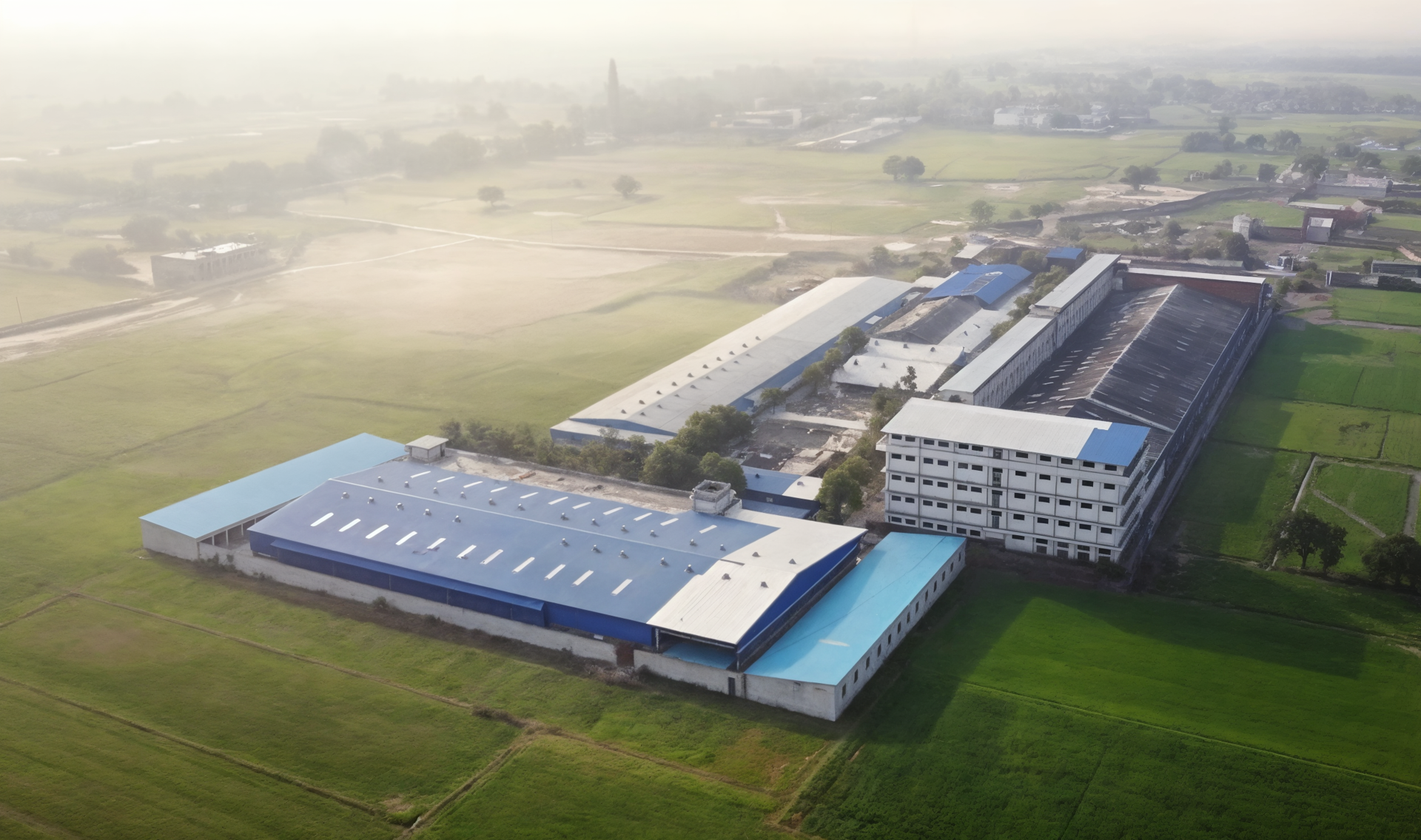
Eastern Mills is a manufacturer, not a trading company. At its site in Bhadohi it runs its own spinning plant with four spinning cards, in house dyeing for all sampling and custom rugs, weaving across hand knotted, hand tufted, handloom and flatweave constructions, finishing including washing, clipping, binding and final quality control, and export container loading at its own facility. More than 2,000 people work in house. The site covers 35 acres in total: a 50,000 square metre main facility on 20 acres and a dedicated 15 acre broadloom facility. The company has been in business since 1947 and is run by the third generation of the founding family.
Frequently asked questions
Is a vertically integrated manufacturer always better than a trading house?
No. A good trading house with strong quality control can deliver well. The difference is in how problems are solved. An integrated manufacturer fixes them internally. A trading house has to negotiate with its contractors.
Does vertical integration make rugs cheaper?
It removes intermediate margins, but an integrated factory also carries higher fixed costs. The more reliable benefit is consistency and speed of development, not the lowest price.
What is the most important stage to have in house?
For custom colour work, dyeing. For long term consistency of feel and wear, spinning. For final appearance, finishing.
How common is in house spinning among rug makers?
Most rug companies buy yarn. A minority spin their own, because spinning requires separate machinery, space and expertise.
Can I visit to see the stages myself?
A serious manufacturer will welcome it. Walking the floor from raw fibre to packing is the quickest way to confirm what is owned.
To see what is made on site, visit our capabilities page, or contact Eastern Mills to arrange a visit or a video walk through.


