Construction
Flatweave and dhurrie rug manufacturer in India
Eastern Mills makes flatweave rugs in Bhadohi, India, where dhurries have been produced for centuries. A flatweave has no pile. Warp and weft threads are interlocked to create a tight, flat surface that is lightweight, durable and easy to clean.
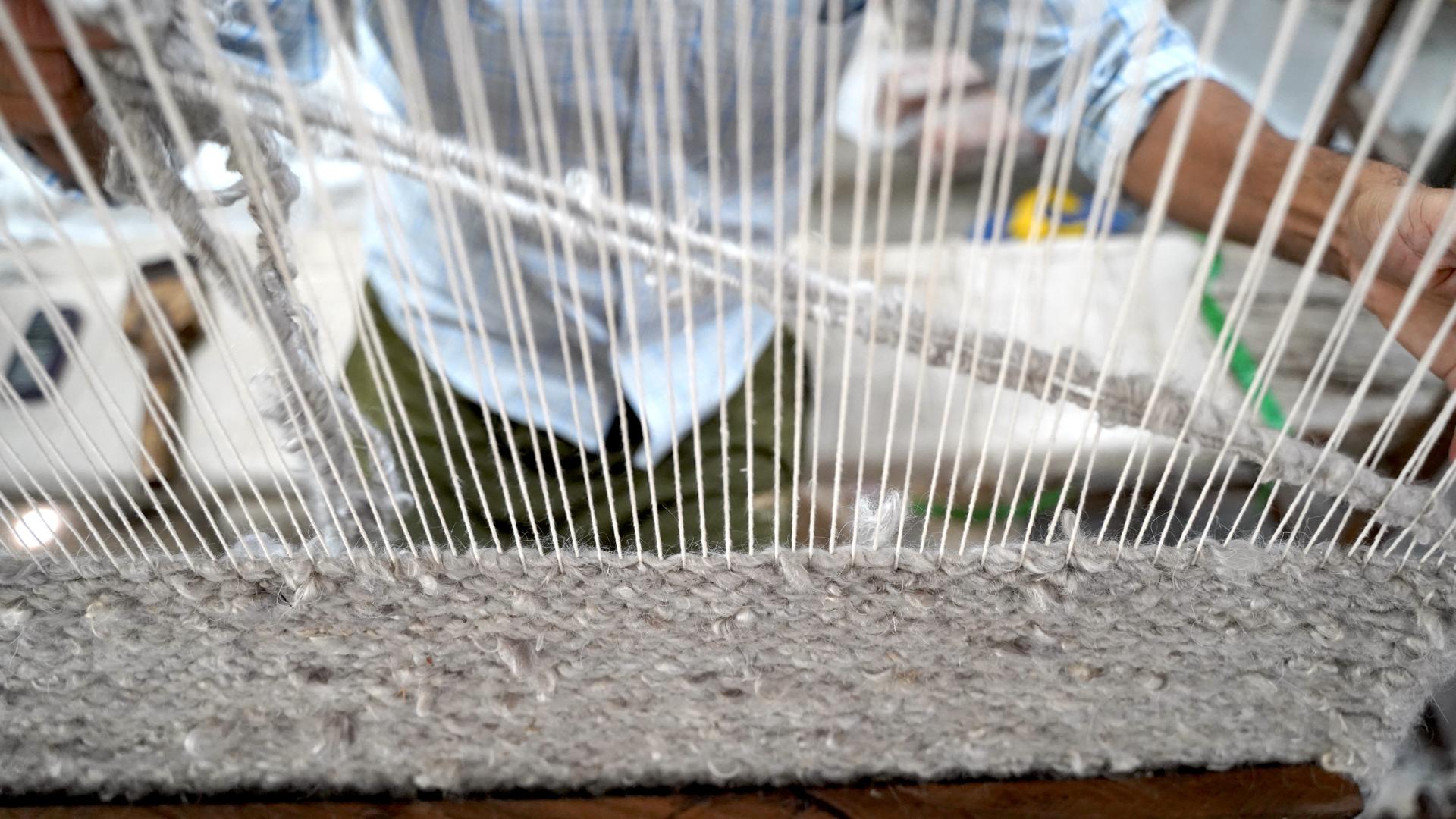
Flatweave techniques we weave
Dhurrie is a flatweave technique that originates in India. It typically uses a cotton warp with a wool, cotton or silk weft, and it is known for bold geometric patterns and vibrant colour. Dhurries are an important part of the Bhadohi weaving tradition.
Kilim is a technique in which weft threads are tightly interlocked to make a dense, tapestry-like fabric. Small slits form where two colours meet, which is the feature that identifies a slit-weave kilim. Patterns are bold and angular.
Soumak wraps supplementary weft threads around the warp. The result is a textured, herringbone-like surface that is thicker than a standard flatweave while still having no pile. Unlike dhurrie and kilim, soumak is not reversible.
How flatweave rugs are made
Flatweaves are woven on hand-operated looms. The weaver passes the weft across the warp by hand and packs each row down to keep the structure tight. Floor handlooms at Eastern Mills weave area rugs and runners in widths up to 14 feet (about 425 cm). Finished rugs are washed, clipped, bound and inspected in house.
Fibres
- Wool, the primary fibre, spun in our own plant
- Cotton, for dhurries and casual flatweaves
- Jute, for natural fibre flatweaves and base layers
- Wool and cotton blends for everyday area rugs
- Linen, for contemporary flatweaves
Why buyers choose flatweave
- Most flatweaves are reversible and can be used on both sides
- No pile, so they are simple to vacuum and clean
- Lightweight and easy to move, rotate and store
- Tight construction that wears well in high traffic areas
- A thin profile that sits well under dining chairs and furniture
Where flatweave rugs are used
Dining rooms, living rooms and family areas, and layered schemes where a flatweave forms the base beneath a smaller decorative rug. Certain constructions in suitable materials can serve covered outdoor spaces such as screened porches and patios. In contract interiors, low pile and flatweave are chosen for durability under heavy traffic.
Lead time
Production lead time for flatweave rugs is 90 days.
Who it suits
Retailers and brands who want an accessible, design-led line with authentic handcraft character, and importers running programme volumes. Custom colours are matched in our own dye house, and custom sizes are woven to order.
Eastern Mills holds ISO 9001:2015, GoodWeave, Sedex, Responsible Wool Standard (RWS), GOTS, GRS, SA8000 and C-TPAT certifications.
Frequently asked questions
- What is the difference between a dhurrie and a kilim?
- Both are flatweaves with no pile. A dhurrie is the traditional Indian flatweave, usually on a cotton warp with a wool, cotton or silk weft. A kilim uses tightly interlocked wefts that leave small slits where colours meet, giving bold, angular patterns.
- Are flatweave rugs reversible?
- Most are. Dhurries and kilims can be used on both sides. Soumak is not reversible because of its wrapped weft structure.
- Which fibres do you use for flatweave rugs?
- Wool, cotton, jute, wool and cotton blends, and linen.
- Can flatweave rugs be made in custom sizes and colours?
- Yes. Floor handlooms weave widths up to 14 feet, and colours are matched in our own dye house against a Pantone reference or a physical swatch.
- What is the lead time for flatweave rugs?
- Production lead time for flatweave rugs is 90 days.
Related
Handloom Rugs
Woven on manually operated looms in wool, cotton, jute and linen. Flat and low pile textures that suit modern interiors and programme volumes.
Hand-Knotted Rugs
Individually tied knots from 80 to 400+ KPSI in New Zealand wool, silk, wool and silk blends, and cashmere. The most durable construction we make.
Custom Rugs
Made to your design, size, colour and fibre. In-house design team, dye house and sampling, available in every construction we weave.
See also manufacturing capabilities, materials, the craft, broadloom and certifications and sustainability.
Send an enquiry
Tell us about your project or programme: construction, sizes, fibres and quantities. You can also write to corporate@easternmills.com.