Vertical integration reduces delivery risk on hotel projects because it removes the hand overs between separate yarn, dye, weaving and finishing companies, which is where most production delays and disputes begin. It does not remove every risk: capacity, shipping, customs and site readiness still need managing, and a buyer should plan for them whatever the supplier's structure.
Why delivery risk is different on hotel projects
A hotel opening date is fixed months in advance and tied to staff hiring, bookings and brand inspections. Rugs and carpet are among the last items installed, after flooring, joinery and furniture. A late delivery pushes back the final trades and can hold up room handover. A wrong delivery is worse, because there is rarely time to remake it.
Hotel orders also combine several products, such as corridor broadloom, guest room rugs, suite rugs and a lobby piece. If each comes from a different chain of subcontractors, the buyer is managing several schedules at once.
Where delays come from in a split supply chain
When production is spread across independent companies, each stage has its own queue, priorities and customers.
| Risk | Where it arises | How integration changes it | What the buyer should still do |
|---|---|---|---|
| Yarn shortage | A yarn supplier sells the specified yarn to someone else, or changes it | Yarn is spun on site to a recorded specification | Confirm yarn for the whole order is planned at the outset |
| Dye queue | Trial and bulk dyeing wait behind another dye house's work | Dyeing is scheduled internally alongside weaving | Approve colours on time, so bulk dyeing can start |
| Colour disputes | Dyer and weaver each blame the other for a mismatch | One company answers for colour from yarn to rug | Approve physical strike-offs, not photographs |
| Finishing backlog | An outside washer or finisher delays the last steps | Washing, stretching, trimming and inspection are in house | Agree inspection points and who attends |
| Transport to port | Goods move between towns before export | Containers are loaded and sealed on site | Confirm container plan and documents early |
| Quality escapes | A defect found at the end cannot be traced to a stage | Records of each stage stay in one place | Ask for pre-dispatch photographs and the inspection record |
| Scope changes | A late change ripples through several companies | One schedule is revised, not several | Freeze quantities and designs before bulk production |
What integration looks like at Eastern Mills
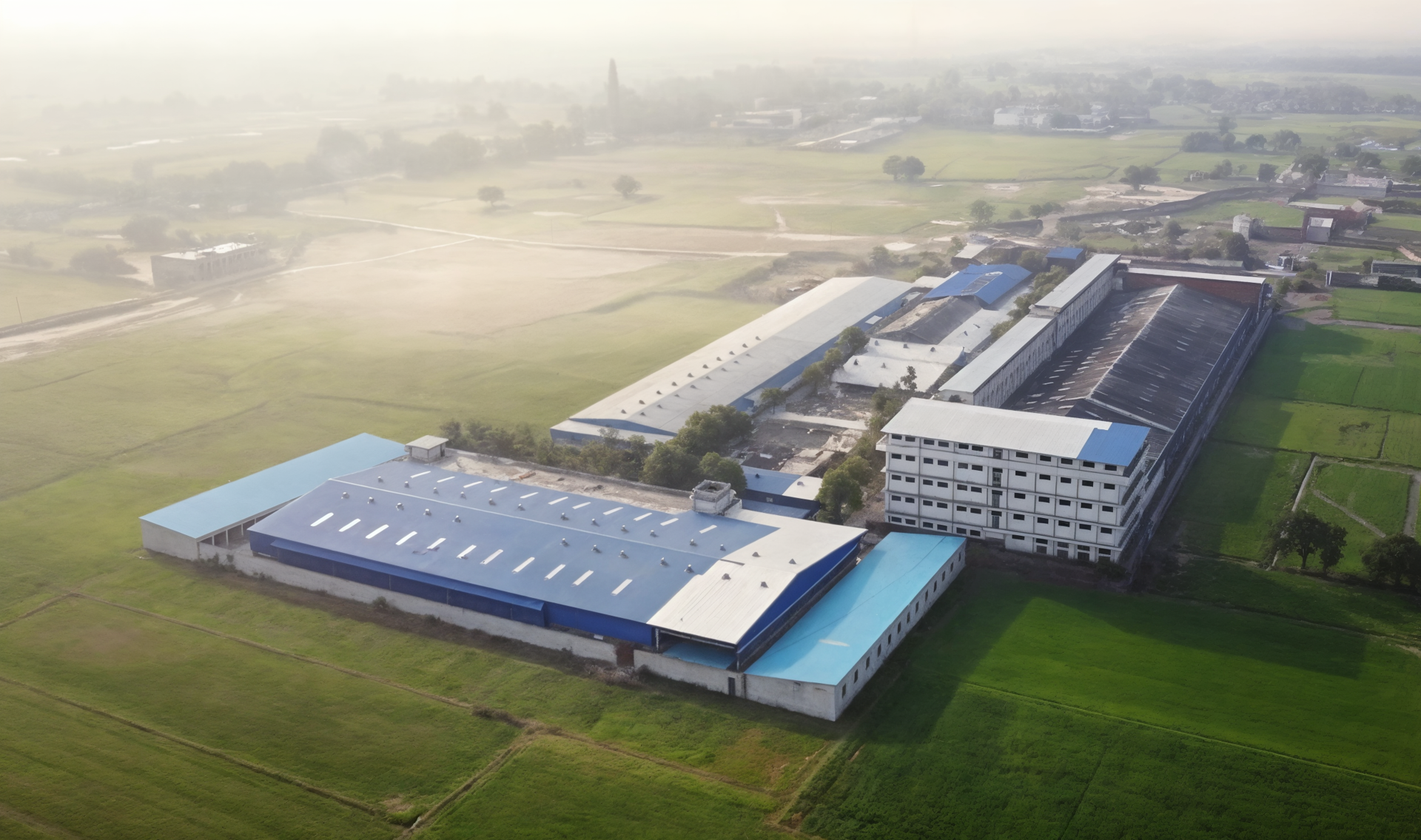
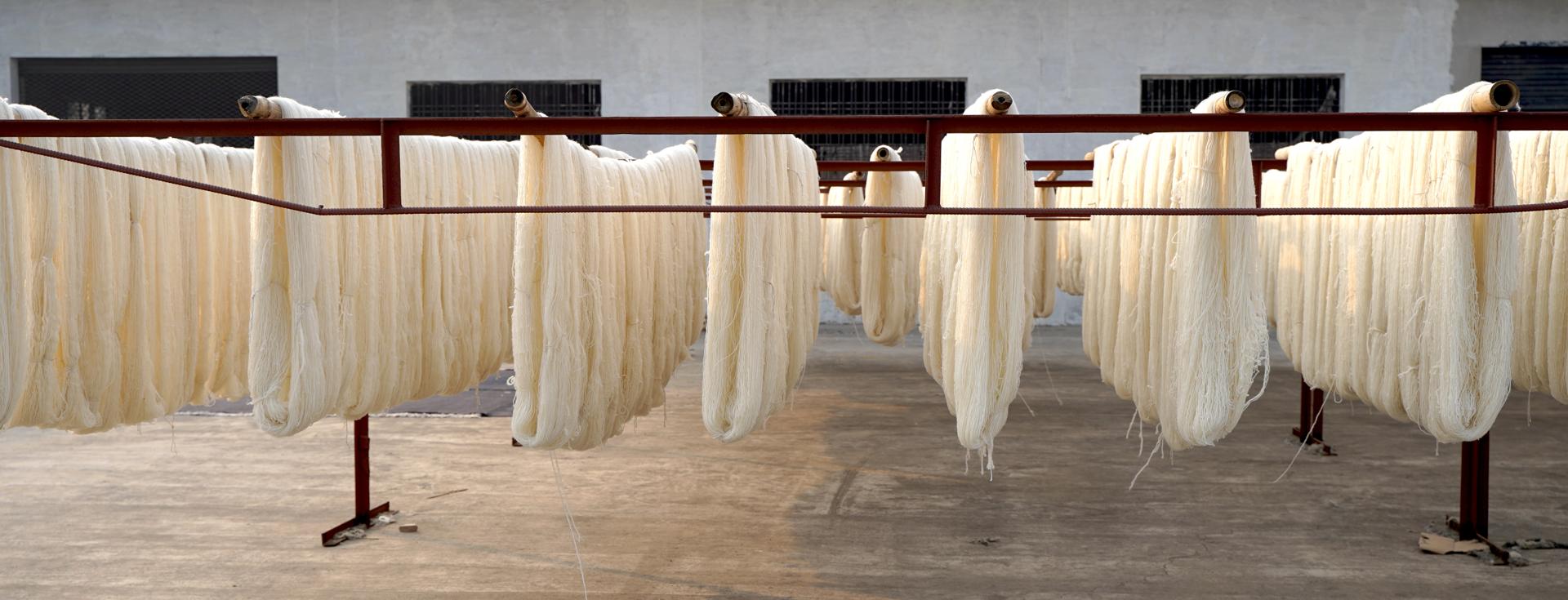
Eastern Mills runs the main production stages on one 35 acre site in Bhadohi, from spinning and dyeing through hand tufting, hand knotting, handloom weaving and broadloom to finishing and container loading. Our post on vertical integration in rug manufacturing describes each stage and what ownership changes. This guide is about what it means for a hotel delivery date.
For a hotel project, this means rugs and broadloom for the same building can be produced under one schedule, with one team responsible for both.
The limits, stated plainly
Integration is a way of controlling risk, not a promise that nothing will go wrong.
- Capacity is fixed. An integrated factory cannot borrow looms from someone else when it is busy. Ask how your order fits into the production plan.
- Shipping is outside the factory. Sea freight schedules, port congestion and transhipment are beyond any manufacturer's control.
- Customs and documentation take time at both ends. Missing or late documents hold up containers regardless of how the goods were made.
- Site readiness is the most common cause of late installation. Rugs that arrive before the floor is finished have to be stored and protected.
- Approvals drive the timeline. Production cannot start until designs, colours and quantities are signed off.
How to manage delivery risk with any supplier
At enquiry
- Share the opening date, the installation window and any phasing
- Give quantities by area and room type, with attic stock
- Name the documents you will need at handover
During sampling
- Approve strike-offs promptly and in writing
- Review colours under project lighting
- Freeze designs and quantities before bulk dyeing
During production
- Agree a schedule with milestones: yarn, dyeing, weaving, finishing, inspection, loading, as in our outline of hotel rug project stages
- Agree when inspections take place and who attends, whether the buyer, a third party inspector or both
- Ask for progress updates at each milestone rather than only at the end
Before dispatch
- Review close-up photographs of finished pieces. At Eastern Mills these are shared with clients for custom orders before shipping
- Check the packing list against the room schedule
- Confirm labelling by room number or area so the installer can work without sorting
On arrival
- Store rolls flat and dry until installation
- Unroll and inspect promptly, so that any issue is raised while there is still time to act
Building float into the programme
The most useful protection is time. Production lead time should be agreed with the manufacturer at the outset and treated as a fixed block in the programme, with shipping, customs clearance and site delivery added separately. Allow float between expected arrival and the start of installation. If the programme has no float, the risk does not disappear. It moves to the opening date.
See how our stages connect on the manufacturing infrastructure page, and how we support hotel teams on the hospitality page.
Frequently asked questions
Does a vertically integrated manufacturer deliver faster?
Not necessarily faster, but more predictably. Fewer hand overs mean fewer points where a schedule can slip without anyone noticing.
Should rugs and broadloom come from one supplier?
It simplifies coordination, colour matching between products and accountability. It is worth considering where one manufacturer can make both to the same standard.
What is the single biggest cause of late hotel deliveries?
Late approvals and late changes are among the most common. Production can only be planned once designs, colours and quantities are final.
How can I check a supplier's integration claim?
Ask which stages happen on their own premises, one by one, and ask to see them on a visit or an unedited video call.
To plan a delivery schedule for your project, contact Eastern Mills.