Under the 2010 ADA Standards for Accessible Design, carpet on an accessible route must be securely attached, have a firm backing or no cushion, a level pile texture and a pile height of no more than half an inch (13 mm), with exposed edges fastened down and trimmed. Any change in level at a carpet or rug edge must follow the rules in section 303: up to a quarter inch can be vertical, a quarter to half an inch must be bevelled, and anything higher must be ramped.
Where the requirement comes from
Hotels are places of public accommodation, so new construction and alterations in the United States fall under the ADA Standards. The floor surface rules sit in Chapter 3, which sets the building blocks used throughout the Standards. Section 302.1 says floor and ground surfaces must be stable, firm and slip resistant. Section 302.2 then adds the specific rules for carpet and carpet tile.
Some states and cities have their own accessibility codes that add to the federal Standards. The project's accessibility consultant confirms which apply. Requirements vary by jurisdiction and project, and the project's code consultant decides how they are applied.
The carpet rules in section 302.2
| Requirement | What the Standards say | What it means for specification |
|---|---|---|
| Attachment | Carpet or carpet tile shall be securely attached | Fitted carpet must not ruck or shift under a wheelchair |
| Cushion | A firm cushion, pad or backing, or no cushion or pad | Soft underlays are a problem. The advisory notes that padding increases roll resistance |
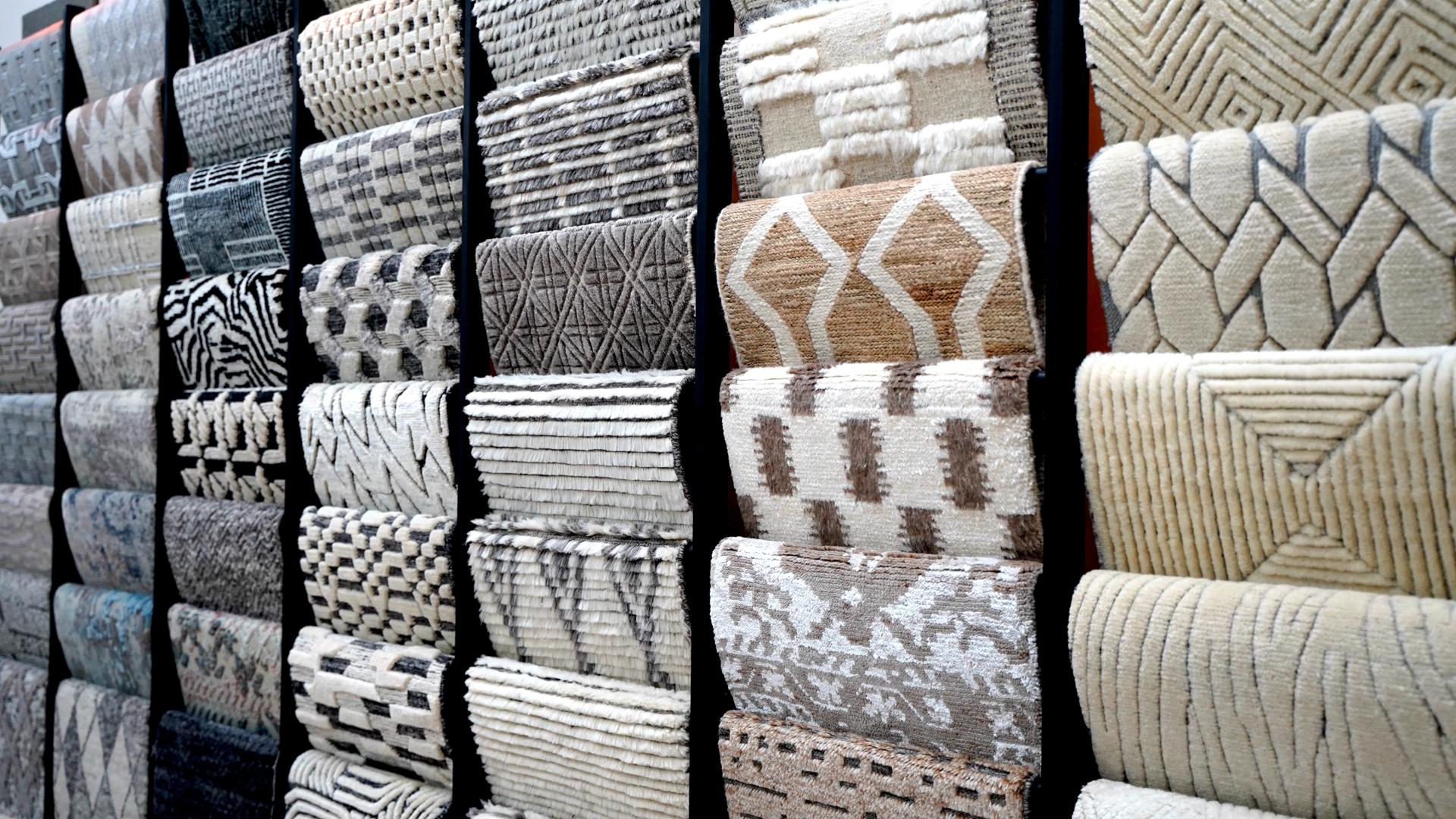
| Texture | Level loop, textured loop, level cut pile, or level cut and uncut pile | Deep carved or high and low designs are not in the list |
| Pile height | Half an inch (13 mm) maximum | Measured to the backing, cushion or pad, according to the advisory |
| Exposed edges | Fastened to the floor, with trim along the entire exposed edge | Trim must also meet the level change rules in section 303 |
The advisory note to 302.2 explains the reasoning. Carpet increases the force needed to push a wheelchair, called roll resistance. The firmer the carpet and backing, the lower the resistance, and a lower pile than the maximum makes movement easier still.
Level changes at carpet and rug edges
Section 303 covers changes in level, and it is where carpet edges, transitions to stone or timber, and the edges of rugs are judged.
| Height of the change | Rule |
|---|---|
| Up to a quarter inch (6.4 mm) | May be vertical |
| A quarter inch to half an inch (6.4 to 13 mm) | Must be bevelled, with a slope not steeper than 1:2 |
| More than half an inch (13 mm) | Must be ramped, under the ramp or curb ramp sections |
The height that matters at an edge is the total thickness standing above the surrounding floor, not only the pile. A rug with a half inch pile on a backing is thicker than half an inch overall, so its edge would need treatment as a ramp if it sat on an accessible route.
What about loose rugs?
The Standards do not have a separate section for area rugs. The rules above apply to floor surfaces on accessible routes and within required clear floor spaces and turning spaces. A loose rug placed in those areas becomes part of the floor surface a wheelchair user must cross.
Designers usually take one of three approaches, agreed with the accessibility consultant.
- Keep loose rugs outside accessible routes, clear floor spaces and turning spaces in accessible guest rooms and public areas.
- Where a rug must sit in those areas, fix it so it cannot move, and keep its total thickness and edge detail within the section 303 limits.
- Recess the rug into a well so that its surface is flush with the surrounding floor.
Corners and edges that curl are a trip hazard for every guest, not only wheelchair users, so edge construction and a non slip solution are worth specifying anywhere.
Accessible guest rooms
Accessible guest rooms have their own scoping and technical requirements elsewhere in the Standards, but the floor surface rules are the same: a route through the room, clear floor space at the bed and fixtures, and turning space must be on a surface that meets 302 and 303. In practice, hotels often specify the same low, level, firmly backed broadloom in accessible rooms as in standard rooms, and keep decorative rugs out of the required spaces.
No carpet carries an ADA certification
The Standards set requirements for the built environment. No agency certifies a carpet or rug as compliant. What can be shown is that a product's measured pile height, texture and backing allow an installation to meet the rules, and that the installer fastened the edges correctly. Compliance is a property of the finished installation, judged on site.
Specification checklist for accessible areas
- Pile texture from the 302.2 list, with no carved or high and low pattern on accessible routes
- Pile height stated as a maximum, measured to the backing, and not more than half an inch
- No cushion, or a firm cushion named in the specification
- Method of attachment stated
- Edge trim detail drawn, with heights checked against section 303
- Loose rugs kept out of clear floor spaces and turning spaces, or fixed and detailed
- Total thickness of any rug stated, not only its pile height
How Eastern Mills approaches it
Pile height, texture and construction are set per project. For a hotel, that means low, level, dense constructions can be made for accessible routes and the same design language carried into deeper or carved rugs in areas where the Standards do not reach. Our hand tufted hotel rugs and contract carpets pages describe the constructions. Send the plans and the accessibility consultant's notes through contact and the construction can be proposed area by area.
Frequently asked questions
Is the half inch pile limit measured from the floor?
The advisory to 302.2 says pile thickness is measured to the backing, cushion or pad. The total height above the surrounding floor is then judged separately under the level change rules.
Can hotels use carpet with a cushion underlay?
Only a firm one. The Standards allow a firm cushion, pad or backing, or none at all. The advisory states a preference for no pad, because soft padding increases roll resistance.
Are high and low carved rugs allowed?
They are not among the textures listed in 302.2. Keep them away from accessible routes and required clear spaces.
Do the rules apply to existing hotels?
They apply to new construction and alterations, and existing facilities have separate obligations. The accessibility consultant advises on what applies to a refurbishment.