A dye house controls dye lot consistency across a large hotel order by dyeing each colour for the whole order in as few lots as possible, under recorded and repeatable conditions, and by checking every lot against an approved standard before any yarn is woven. Where more than one lot is unavoidable, the lots are allocated so that they never sit side by side in the finished building.
What a dye lot is and why it matters in hotels
A dye lot is a quantity of yarn dyed together in one batch. Everything in one lot shares the same conditions, so it matches itself exactly. Two lots dyed from the same recipe on different days are very close, but rarely identical. Water chemistry, fibre, temperature and timing all move slightly.
In a single rug this does not matter. In a hotel it does, because identical products are installed next to each other and seen in sequence. A corridor carpet joined from two lots can show a line at the seam. Two guest rooms on the same floor can look different when the doors are open. A replacement rug from a later lot can stand out in a room where the other pieces have been in use.
Where variation between lots comes from
| Source | Effect on colour | How it is controlled |
|---|---|---|
| Fibre | Wool from different clips absorbs dye differently | Blending fibre before spinning, using one yarn batch per colour |
| Recipe | Small weighing errors change depth of shade | Documented formulas, measured dyestuff and auxiliaries |
| Process conditions | Temperature, time and pH change uptake | Controlled and recorded processing conditions |
| Liquor and water | Water quality and liquor ratio affect results | Consistent process set up from lot to lot |
| Assessment | Colour judged under the wrong light looks right but is not | Standard lighting, visual and spectrophotometer checks |
How the process works at Eastern Mills
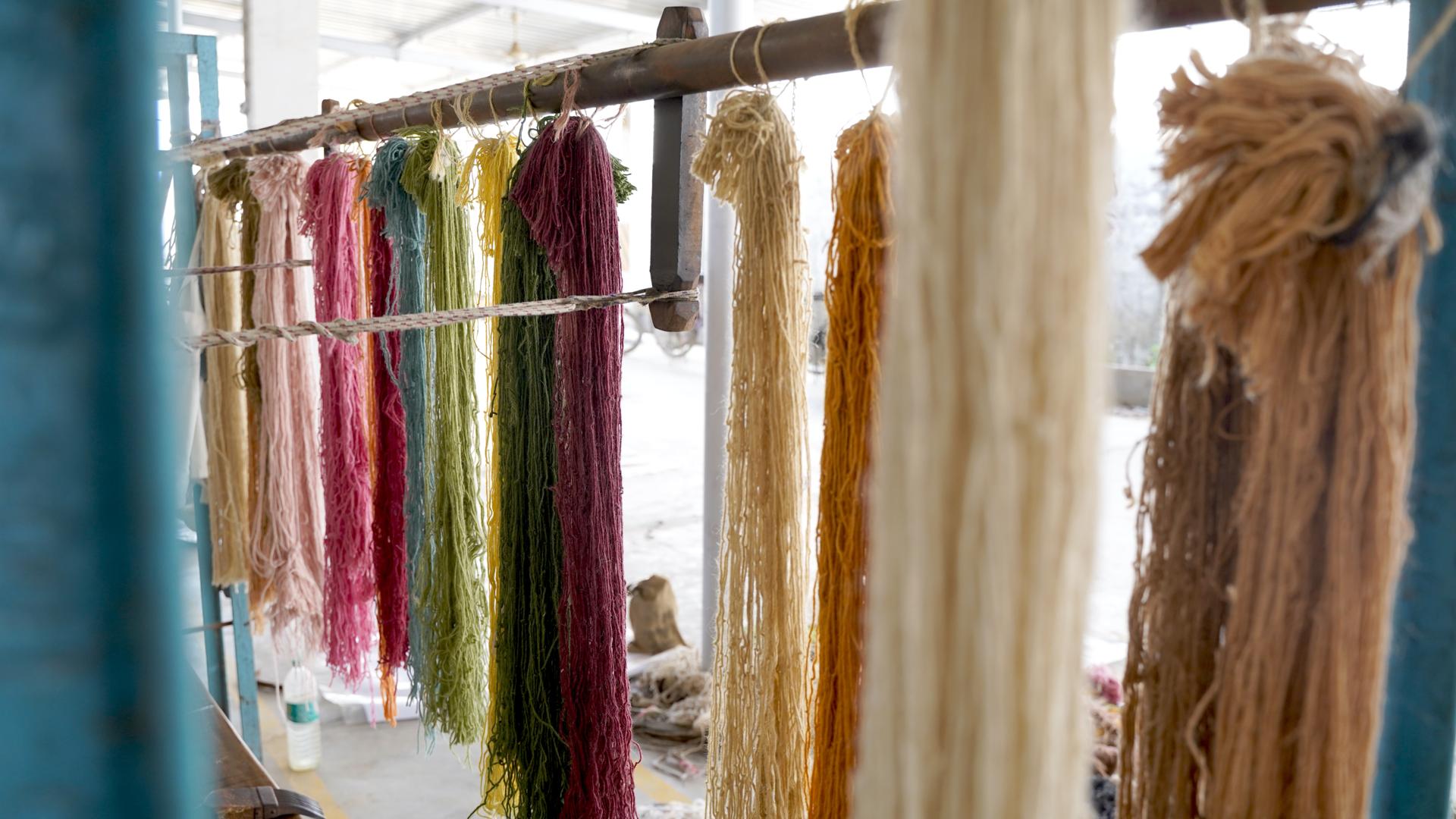
Eastern Mills dyes yarn in house for its sampling and production. For hospitality work, which usually requires exact colours and many matching pieces, the standard method is chrome dyeing, which gives a wide colour range and consistent reproduction between batches.
1. Colour development
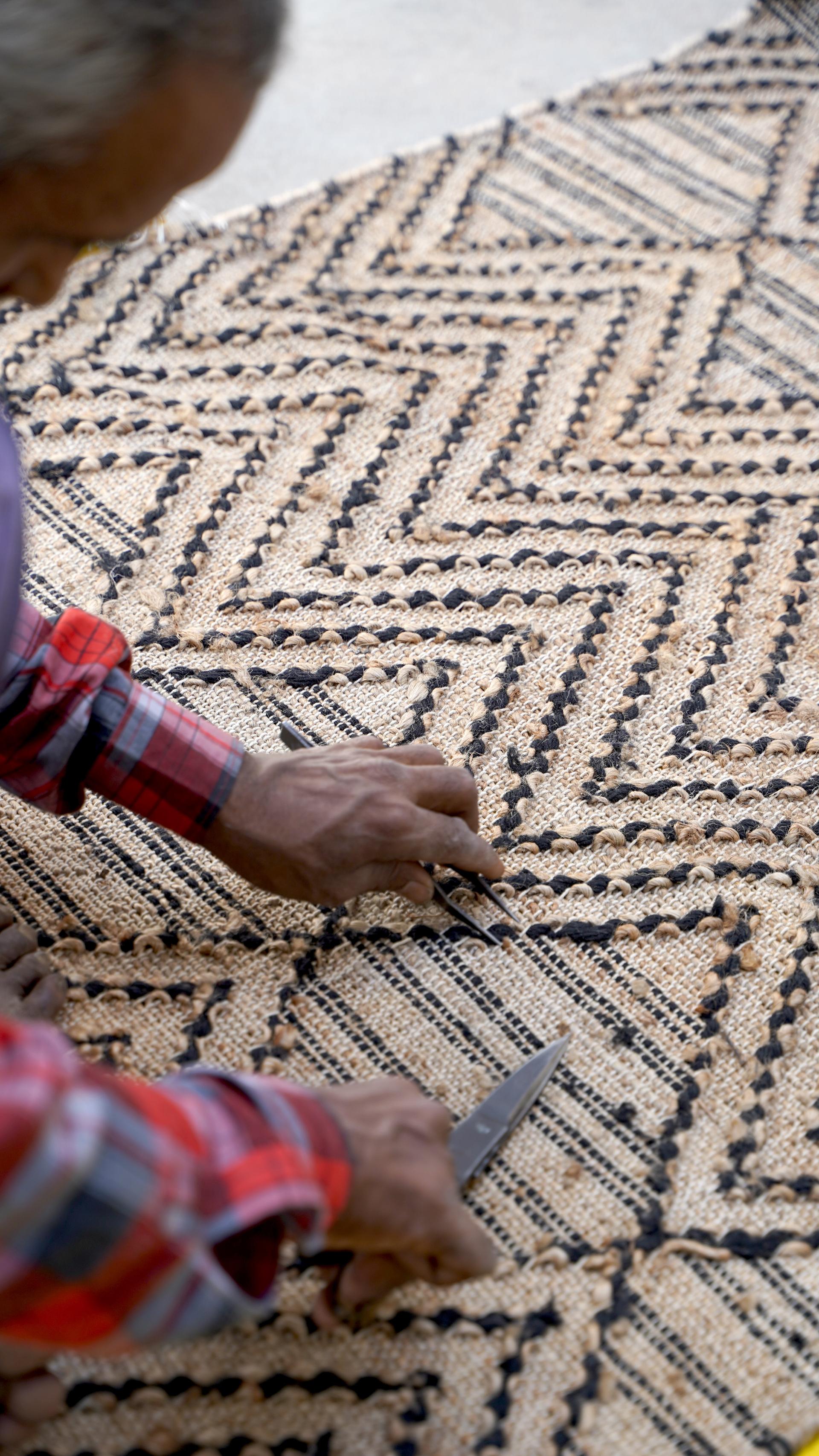
The designer's references, whether Pantone numbers, fabric swatches or paint chips, are matched in small trial dyeings. The trial colours are tufted or woven into a strike-off so the colour can be judged in the real construction, because the same yarn colour looks different as cut pile, loop pile or flatweave. Our guide to poms and lab dips covers this step.
2. Recording the recipe
Once a colour is approved, its dye formula and processing conditions are documented. That record is what allows the same colour to be dyed again for a later phase or a reorder.
3. Calculating yarn quantity
Before bulk dyeing, the yarn needed for each colour is calculated across the full order, with an allowance for attic stock where it has been ordered. The aim is to dye each colour in one lot, or in the fewest lots practical.
4. Dyeing under controlled conditions
Each lot is dyed with controlled temperature, time and pH, following the recorded recipe.
5. Lot approval
Every dye lot is tested before it is released to the weavers. Colour is compared with the approved standard visually and with a spectrophotometer. Colourfastness is tested using ISO 105 methods for light (ISO 105-B02), washing (ISO 105-C06) and rubbing (ISO 105-X12). Eastern Mills works to colourfastness of Grade 4 to 5 on the ISO 105 scale. The tests are explained in our colourfastness guide.
6. Keeping the reference
A sample of each approved lot is retained, so later lots and replacement orders are matched to the yarn that was actually used, not just to the original reference.
When one lot is not possible
Some orders are too large, or too spread out in time, for every colour to come from one lot. In that case consistency is managed by placement rather than by chemistry alone.
- Allocate lots by area. Assign one lot to one floor, one wing or one room type, so that two lots never meet across a seam or a doorway.
- Keep broadloom runs within one lot. A single corridor run should come from one lot from end to end.
- Label every piece with its lot. Rugs and rolls should arrive marked by lot as well as by room or area, so the installer can follow the allocation.
- Hold attic stock from each lot. Spares should be kept by lot, so a replacement in a given area comes from the same lot as its neighbours. Our guide to attic stock covers quantities and storage.
Phased openings and multi property programmes
A hotel that opens in stages, or a brand rolling one design out across several properties, faces lot differences over months or years. Two approaches are common:
- Dye yarn for all phases at the outset and hold it, which gives the closest match but commits stock early.
- Dye each phase separately from the recorded recipe and approve each lot against the retained reference, accepting that phases are placed in separate areas.
The choice depends on the programme and on storage. What matters is that it is decided at the start, not after the first phase is installed. Our guide to contract carpets covers phasing for broadloom in more detail.
A dye lot checklist for hotel buyers
- Approved colour standards supplied as physical samples, not screen colours
- Strike-offs approved in the real construction and under project lighting
- Number of lots per colour confirmed before bulk dyeing
- Lot allocation plan agreed for floors, wings or room types
- Lot numbers shown on labels and on the packing list
- Attic stock ordered with the main order and kept by lot
- Retained lot samples held by the manufacturer for reorders
- Colourfastness results available for each quality
What the buyer can do to help
Most lot problems on hotel projects start with information arriving late. Confirm room counts and quantities before bulk dyeing begins, because adding rooms afterwards usually means a second lot. Tell the manufacturer about later phases even if they are not yet ordered. Keep design changes to the strike-off stage. Once yarn is dyed, a change of colour means a new lot.
Read more about our approach on the hospitality page, or see how dyeing fits into the wider process on our manufacturing infrastructure page.
Frequently asked questions
Can two dye lots ever match exactly?
They can be very close, and often close enough to pass inspection on their own. Side by side under even lighting, a trained eye can usually see a difference, which is why placement planning matters.
Does natural dyeing make lot matching harder?
Yes. Natural dyes produce more variation, which is valued in individual rugs but harder to manage across many matching pieces. Most hotel projects use synthetic dyes for this reason.
How should strike-offs be viewed?
Under the lighting planned for the space, and next to the actual finishes. Warm, dim hotel lighting changes how colours read.
What happens if attic stock was not ordered?
A replacement can be dyed from the recorded recipe and matched to the retained sample, but it comes from a new lot. It will be close, and it will be most noticeable next to pieces that have aged in use.
To plan colours and lots for a hotel order, send us the project brief.