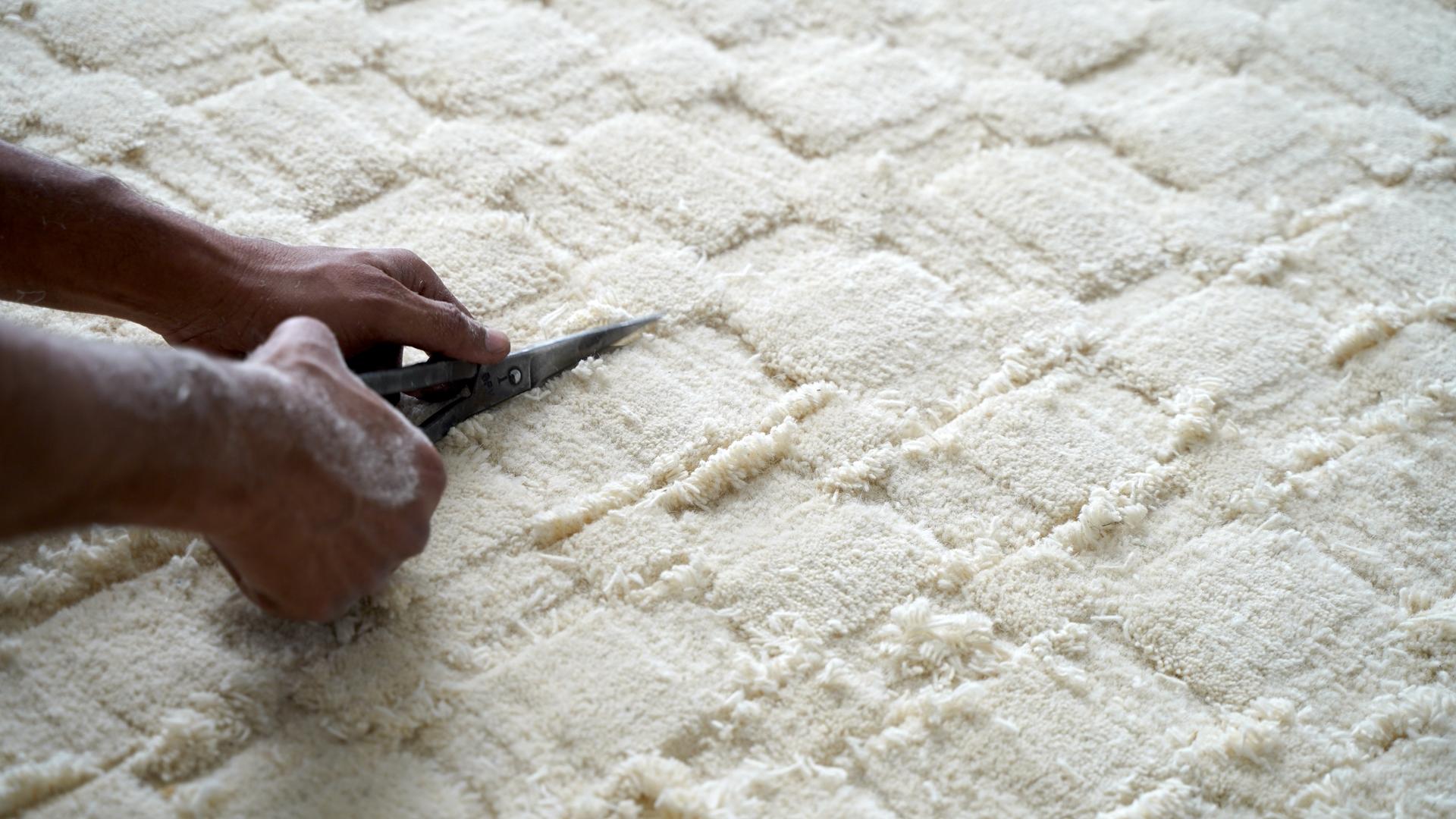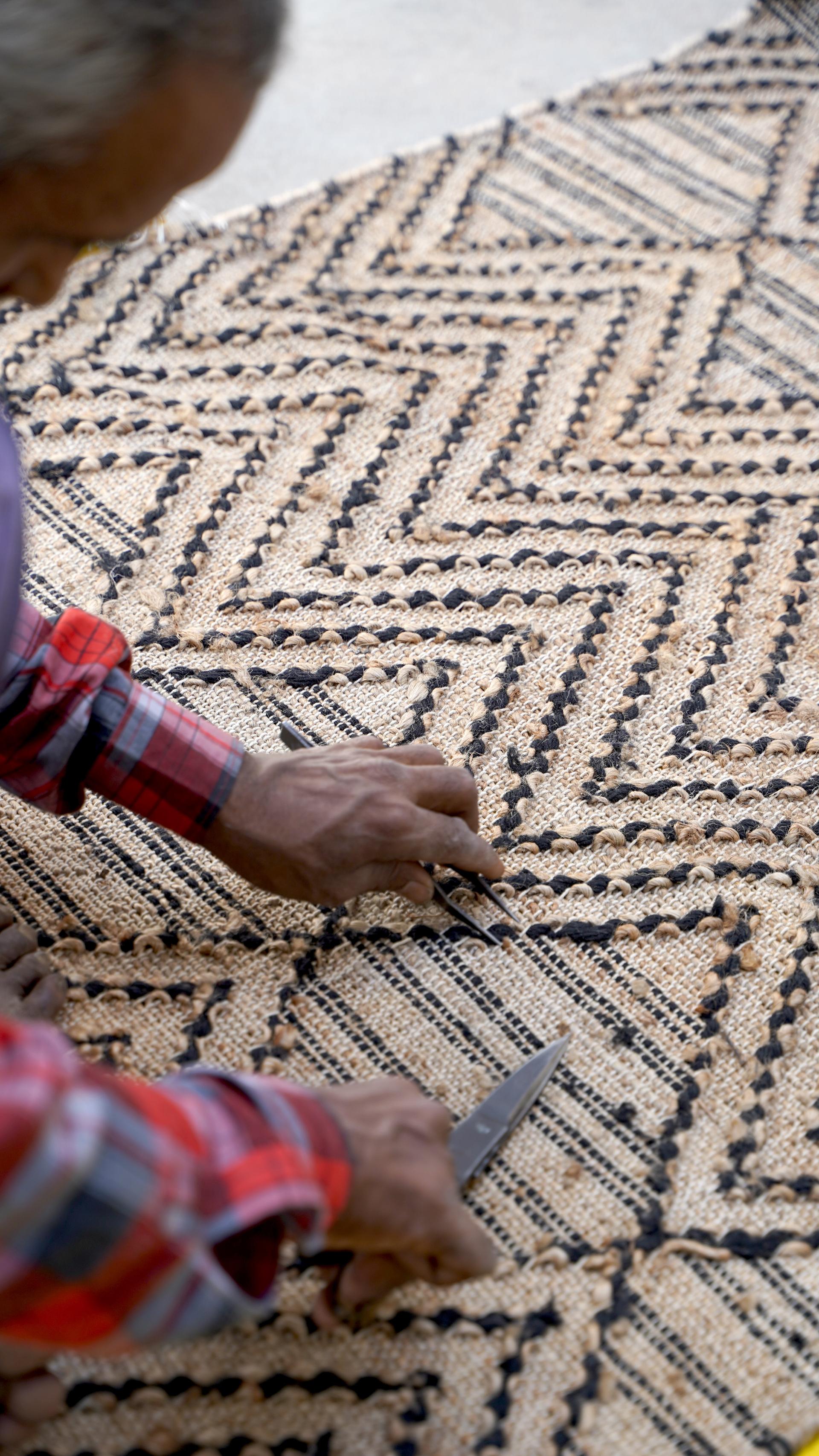
Before hotel project rugs ship, an inspection should confirm four things: that the pieces match the sealed approved samples, that rugs meant to sit together are consistent with each other, that the quantity of every size and design matches the room schedule, and that each carton is labelled for the room or area it is going to. The first is standard quality control. The other three are what make project inspection different from inspecting a retail order.
This post focuses on the project side. For the general list of defects and their causes, see our guide to rug quality inspection and common defects.
When should project rugs be inspected?
| Point | What it catches | Who usually attends |
|---|---|---|
| Dye lot approval | Colour drift before weaving starts | Factory quality team, sometimes the designer |
| During production | Construction, density and design accuracy on the first pieces | Factory, or a third party inspector |
| Pre-shipment | Finished goods, quantities, packing and labels | Buyer's inspector or agent |
| Container loading | Count, carton condition, loading method | Factory, sometimes the inspector |
A pre-shipment inspection is normally done when production is complete and most goods are packed, so the inspector can check finished pieces and the packing at the same time. A during production check on the first pieces of each design is worth arranging on large projects, because a problem found early affects a few rugs rather than all of them.
Checking against the approved samples
Every check should refer to a physical sealed sample and a written specification, not to memory or photographs. Give the inspector:
- The sealed approved strike-off for each design and colourway
- The specification: construction, fibre, pile height, pile weight, finishing and backing
- Agreed tolerances for size, pile height and shade
- The rug schedule with quantities per size and design
- Packing and labelling instructions
Without these, an inspection becomes a general opinion about quality, which is hard to act on.
How many pieces are checked?
For large lots of identical rugs, inspectors use acceptance sampling. The standard most often used is ISO 2859-1, which is based on the same sampling tables as ANSI/ASQ Z1.4. The number of pieces drawn depends on the lot size and the inspection level. At general inspection level II, for example, a lot of 281 to 500 pieces calls for a sample of 50.
Defects are classed before the inspection.
| Class | Meaning | Hotel rug example |
|---|---|---|
| Critical | Unsafe or unusable | Missing or wrong backing where a non slip backing was specified |
| Major | Likely to cause rejection by the user | Visible off shade, size outside tolerance, wrong design |
| Minor | A departure that does not affect use | A small loose tuft that can be trimmed |
Each class has its own acceptance limit, agreed in the purchase order. Large feature rugs for lobbies and suites are usually inspected individually rather than sampled, because each one is unique and highly visible.
Consistency between rugs
A guest sees one rug at a time, but an operator sees a floor. Two rugs that each match the sample can still look different side by side if they come from different dye lots, which our guide to dye lot consistency explains.
- Lay several rugs of the same design next to each other and compare them in daylight.
- Check dye lot numbers against the packing list, and confirm that each rug uses a single lot of each colour.
- Where rugs sit in adjacent spaces, such as twin rooms or a sequence of corridor rugs, check that they come from the same lot.
- Check rugs and corridor broadloom side by side if both are in the same order, since guests see them together at the room door.
Quantities against the room schedule
On a hotel project, a shortfall of one size can hold up a whole floor. The inspector should reconcile the count by design, colourway and size against the rug schedule, not only the total number of pieces.
| Check | Compared with |
|---|---|
| Pieces per design, colourway and size | Rug schedule |
| Spare stock pieces | Spare stock line on the order |
| Shaped or special pieces | Drawings or templates |
| Cartons per room type or floor | Packing list |
Packing and labelling for the site
Rugs that arrive labelled by room are placed in hours. Rugs that arrive unlabelled are unrolled, measured and sorted on site.
- Labels show the room number, room type or area, design, colourway and size.
- Labels are on the outside of the wrap and on the rug itself, in a position agreed with the operator.
- Cartons or rolls are marked with floor or zone, matching the installation sequence.
- Rugs are fully dry before wrapping, and moisture protection suits sea freight.
- The packing list matches the carton marks one for one.
Documents to collect at inspection
- Inspection report with photographs, per design
- Packing list by room, floor or zone, with dye lot numbers
- Copies of any test reports arranged for the order, matched to the construction shipped
- Fibre content and care information for the handover file
- Spare stock list
Pre-shipment checklist for hotel rugs
- Sealed samples and specification supplied to the inspector
- Tolerances and defect classes agreed in the purchase order
- Sampling plan agreed by lot size
- Rugs of the same design compared side by side
- Dye lots checked for single lot per rug and matching adjacent rugs
- Counts reconciled by design, colourway and size
- Labels checked against the room schedule
- Moisture and packing checked
- Documents collected for handover
Eastern Mills works under an ISO 9001:2015 quality management system, with yarn spinning, dyeing, production and finishing in house in Bhadohi, which allows inspectors to see each stage in one visit. See our manufacturing infrastructure page for the facilities, and hand tufted rugs for hotels for project details.
Frequently asked questions
Should a hotel project use a third party inspector?
For large orders or a first order with a supplier, it is common and sensible. The inspector needs the sealed samples, specification and tolerances to judge against.
What if some rugs fail inspection?
They are repaired, refinished or remade, depending on the defect. Agree before production what happens to failed pieces and how the shipment schedule is affected.
Can inspection be done remotely?
Partly. A live video inspection can check counts, labels and visible defects. Colour comparison against a sealed sample is more reliable in person, under a light booth.
Who pays for third party inspection?
Usually the buyer, unless the contract says otherwise. Re-inspection after a failed inspection is often charged to the supplier by agreement.