A rug quality inspection checks five things against the approved sample and specification: size and shape, colour, construction, surface finish, and cleanliness and packing. Most defects found at final inspection were created much earlier, in yarn, dyeing or on the loom, so effective quality control checks at each of those stages instead of only at the end. The tables below list what is checked and the defects buyers see most often, with their causes.
When should a rug be inspected?
There are four useful points.
- Yarn and dye lot. Before weaving starts, yarn is checked for count, twist and fibre content, and each dyed lot is compared with the approved colour standard.
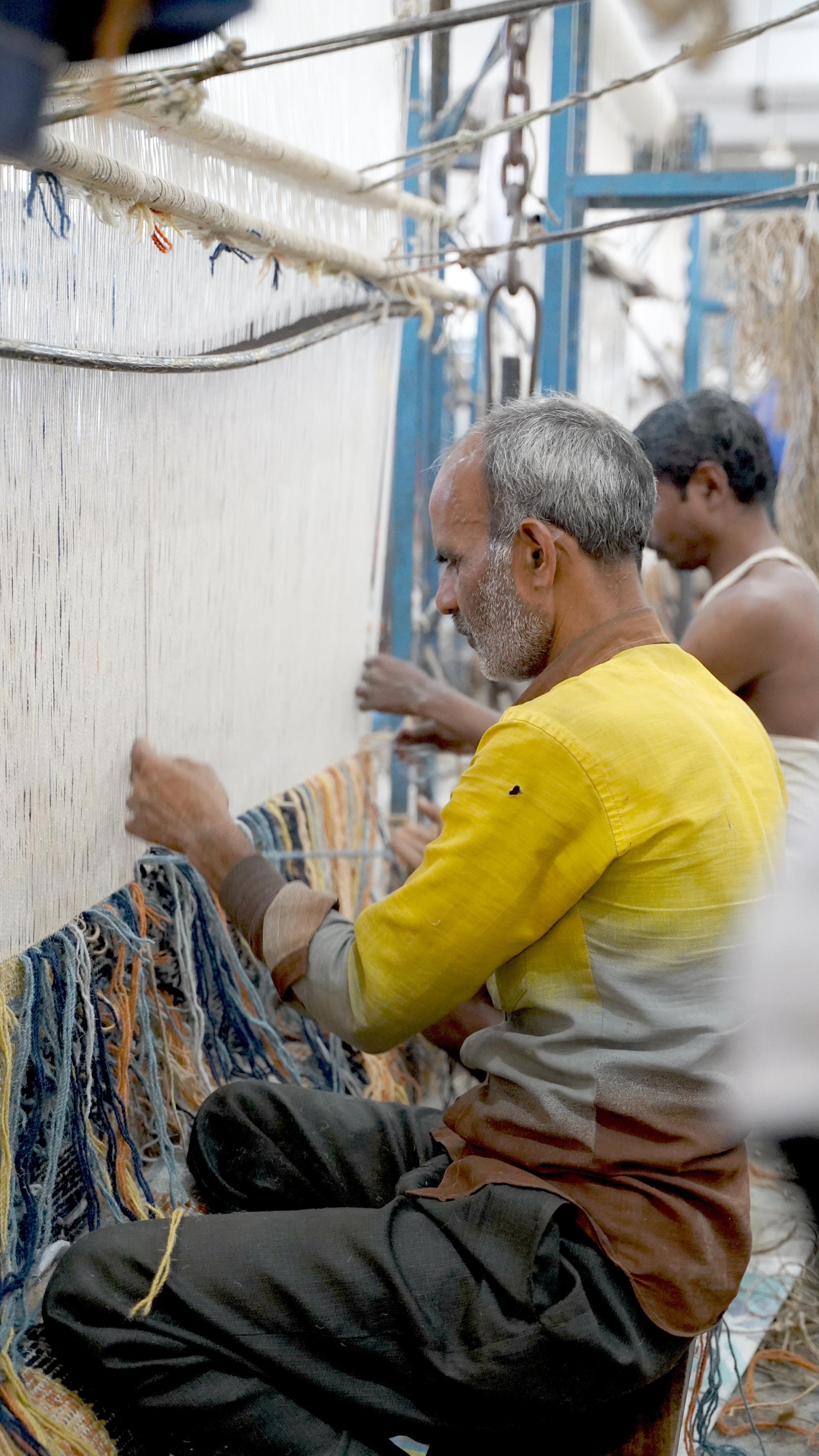
- On loom. During weaving, the piece is checked against the design map for pattern accuracy, density and width.
- After washing and finishing. Washing, drying and stretching change size, colour and hand feel, so this is where many problems first show.
- Final inspection. Each finished piece is checked before packing, by the factory and often by the buyer or a third party.
A final inspection alone can reject a bad rug. It cannot make a good one. Problems caught at dye lot stage cost a day. The same problem caught at final inspection costs the whole piece.
What is checked at final inspection?
| Check | How it is done | What it is compared with |
|---|---|---|
| Size | Measured flat at several points along length and width | Ordered size and agreed tolerance |
| Squareness and shape | Diagonals measured, edges sighted for straightness | Agreed tolerance |
| Colour | Viewed in daylight or a light box, from both pile directions | Sealed approved sample |
| Shade consistency | Whole face scanned for bands or patches | Approved sample and agreed level of variation |
| Design | Motif placement, centring and borders checked | Artwork |
| Density | Knots counted in a measured area, or piece weighed | Specification |
| Pile height | Measured with a gauge at several points | Specification |
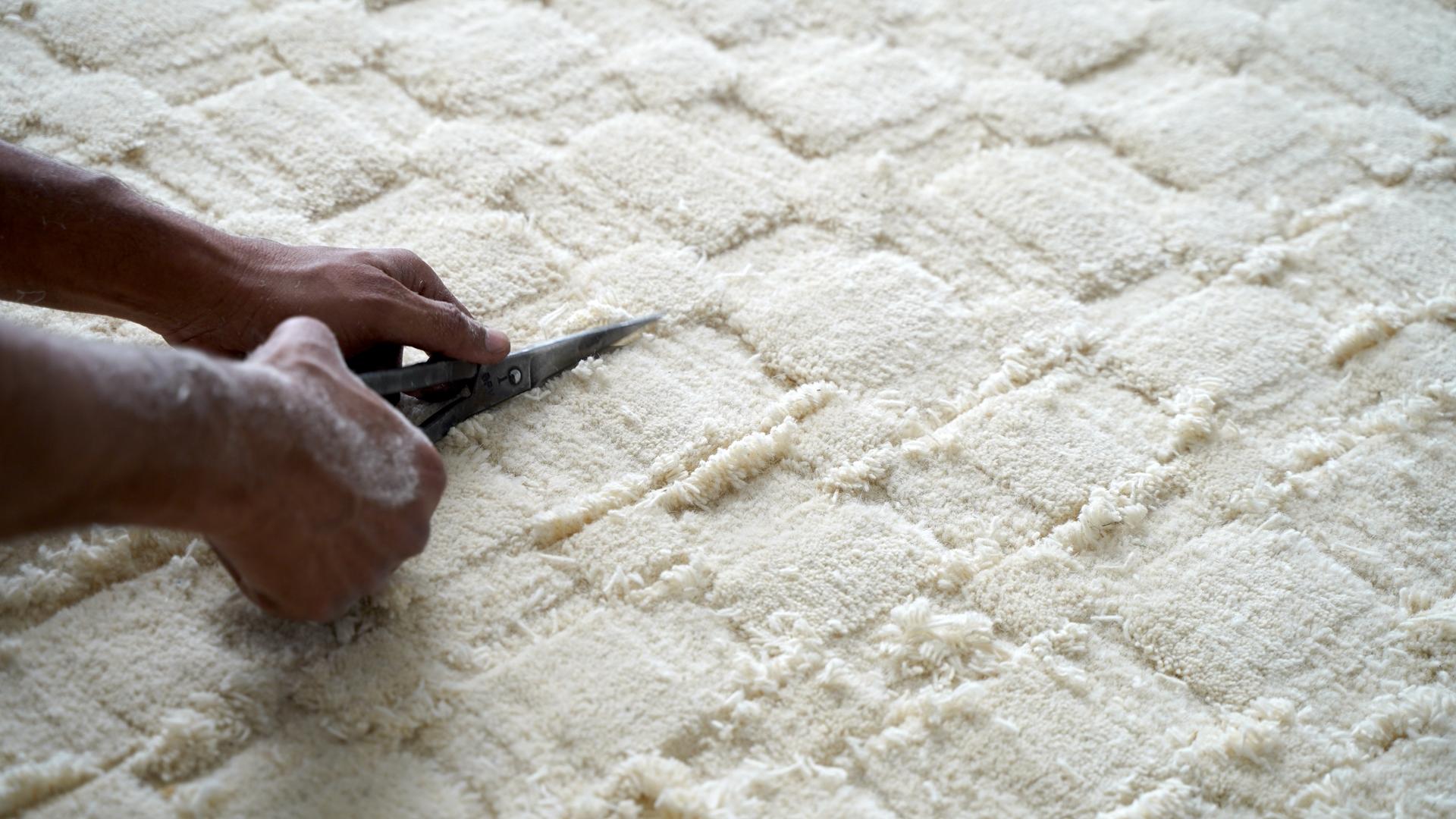
| Surface | Checked for loose tufts, uneven shearing, lines, marks | Approved sample |
| Back and edges | Binding, fringe, backing cloth and latex checked | Specification |
| Cleanliness | Stains, odour, moisture, foreign matter | Zero tolerance for stains and dampness |
| Labels and packing | Label content and position, wrap, carton marks | Packing instructions |
Inspect face up and face down, and from both ends. Pile reflects light differently in each direction, and some faults are visible from only one side.
Common defects and their causes
| Defect | What it looks like | Usual cause |
|---|---|---|
| Shade banding | Horizontal stripes of slightly different tone across the field | Yarn from two dye lots mixed in one area, or uneven dyeing |
| Off shade | Whole rug differs from the approved colour | Dye lot not matched to standard, or colour shift in washing |
| Size out of tolerance | Too long, short, wide or narrow | Loom tension, shrinkage in washing, insufficient stretching |
| Out of square | Corners not at right angles, edges that bow or wave | Uneven warp tension or uneven beating of the weft |
| Uneven pile | Visible highs and lows, shear lines | Inconsistent shearing or clipping |
| Low density | Thin feel, backing visible when pile is parted | Fewer knots or less yarn than specified |
| Design distortion | Stretched or compressed motifs, off centre medallion | Inconsistent knot or row count against the map |
| Sprouts and loose tufts | Individual tufts standing above the pile | Long yarn ends missed in finishing, or weak tuft anchorage |
| Excessive shedding | Fibre keeps coming away well beyond early use | Short fibre, low twist yarn, or poorly sheared pile |
| Colour bleeding | Dark colours run into light areas when wet | Dye not properly fixed or not rinsed out |
| Wrinkles and ripples | Rug will not lie flat | Tension differences in weaving, or uneven drying |
| Curling edges | Sides roll under or up | Tight edge yarns, or binding pulled too hard |
| Stains and marks | Spots, water marks, rust, handling dirt | Poor handling in finishing or storage |
| Backing faults in tufted rugs | Cloth lifting, stiff or crumbling latex, strong odour | Poor latex application or insufficient curing |
| Damp or mildew | Musty smell, marks on the back | Packed before fully dry, or moisture in transit |
Which variations are normal in a handmade rug?
Not every irregularity is a defect. Handmade rugs vary slightly in size, and a hand dyed field can show gentle tonal movement known as abrash. In some collections abrash is deliberately part of the look. The difference between character and defect is whether it was agreed. An approved sample showing the acceptable range of variation, plus a written size tolerance, removes most arguments.
Size tolerance should be stated in the purchase order. Handmade rugs are commonly accepted within a few percent of the ordered size, but the figure varies by construction and buyer, so write yours down.
How does sampling inspection work?
When an order is too large to check every piece twice, buyers and inspection agencies use acceptance sampling. A set number of pieces is drawn at random according to the lot size, and the lot passes or fails on the number of defects found. Defects are usually classed as critical, major or minor, with a separate limit for each. The plan and limits should be agreed before production.
For high value pieces such as hand knotted rugs, every piece is normally inspected individually.
How do you prevent defects instead of finding them?
- Approve a sealed sample and keep half of it.
- Approve dye lots before weaving, and ask that one rug is not woven from mixed lots.
- Write tolerances for size, pile height and shade.
- Ask for photographs or a video call at on loom and after wash stages.
- Make sure rugs are fully dry before packing, especially for sea freight.
- Ask the factory what proportion of pieces fail its own final inspection, and what happens to them.
Process control matters more than inspection. A manufacturer that spins, dyes, weaves and finishes on one site has fewer hand overs where a fault can enter unnoticed. Our post on vertical integration explains why.
How Eastern Mills inspects
Eastern Mills works under an ISO 9001:2015 certified quality management system. Yarn batches are tested before use, dye lots are approved before production dyeing, and pieces are checked on the loom and again after finishing for dimensions, colour, pattern, pile, foundation, edges and surface. Every rug is photographed and documented before shipping. For custom orders, close up photographs are shared with the client for review before dispatch. Finishing and container loading both happen at the company's own facility in Bhadohi. See our capabilities page for the full process.
Frequently asked questions
What size tolerance is normal for handmade rugs?
There is no single industry figure. A few percent of the ordered dimension is common, and tighter limits are possible for some constructions. Agree the number in writing before production.
Is abrash a defect?
Not if it matches the approved sample. Abrash is tonal variation from hand dyeing and is valued in many designs. Sharp bands from mixed dye lots are a different thing and are a defect.
Should I use a third party inspection company?
For a first order with a new supplier, or for large programmes, it is sensible. Give the inspector the sealed sample, the specification and your tolerances, or the inspection will be based on general judgment.
Why does a new wool rug shed?
Loose fibre left in the pile after shearing works its way out in early use. This is normal for wool and reduces with vacuuming. Shedding that continues heavily points to short fibre or weakly spun yarn.
What should I check when the shipment arrives?
Check carton condition, look for dampness or odour, measure a sample of pieces, and compare colour with your sealed sample in daylight. Report any problem with photographs straight away.
For a copy of the inspection points used on your construction, or to discuss tolerances for an order, contact Eastern Mills. Our guide to auditing a rug factory covers what to look at on a visit.