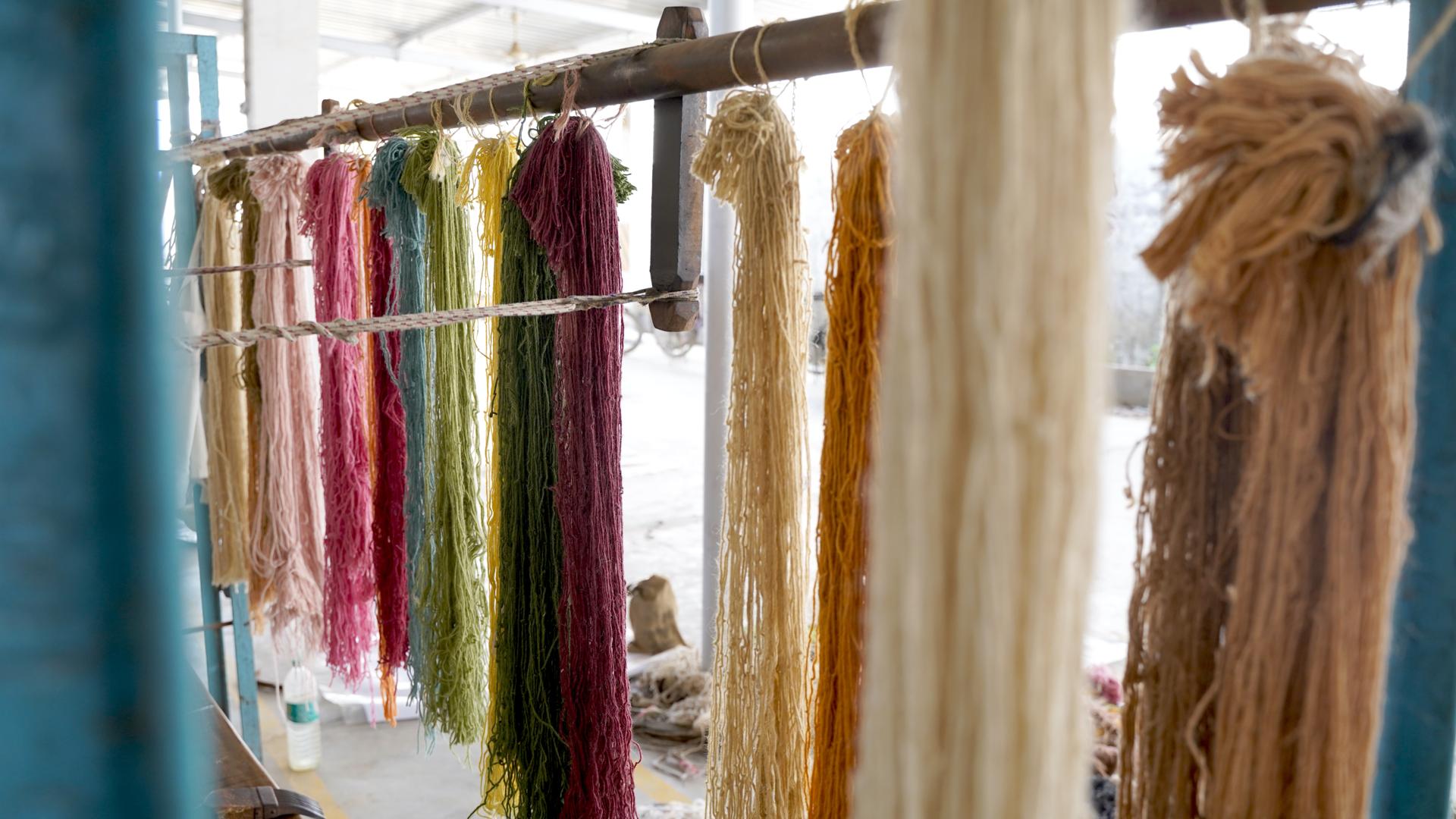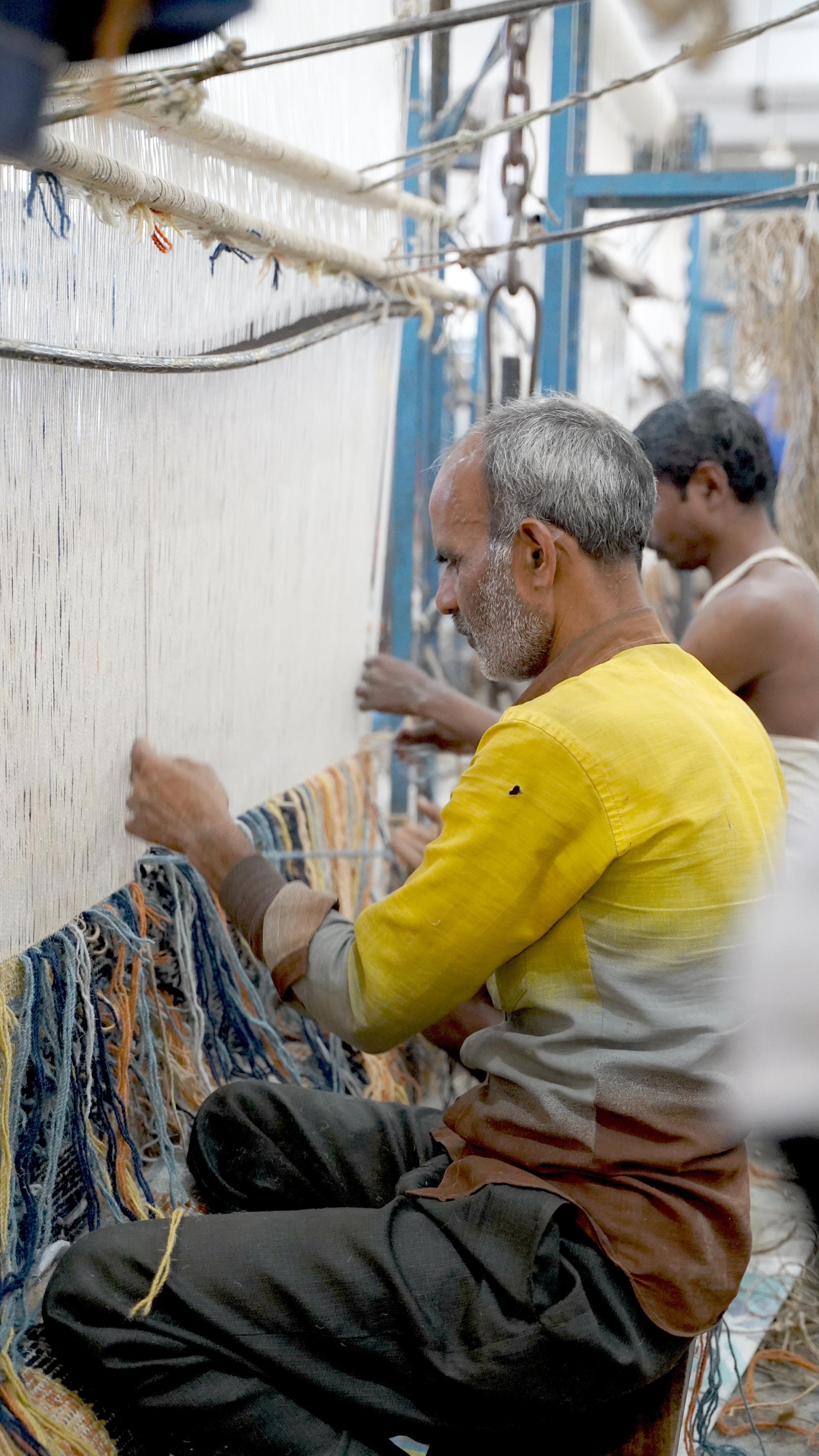
Bhadohi is a district in eastern Uttar Pradesh, between Varanasi and Prayagraj, and it is the centre of India's handmade carpet industry. Together with neighbouring Mirzapur it forms the country's largest hand knotting and handloom belt, with spinning, dyeing, weaving, washing and finishing all concentrated in one area. Buyers source there because of that depth: almost any handmade construction can be developed and produced within a short drive.
Where is Bhadohi?
Bhadohi lies on the Gangetic plain in the east of Uttar Pradesh. The nearest major city and airport is Varanasi, and most visiting buyers fly there from Delhi or Mumbai and continue by road. Prayagraj is the alternative on the western side. The town is widely called the Carpet City of India.
The weaving area is larger than the town. It spreads across Bhadohi district and into Mirzapur, Varanasi and surrounding districts, taking in hundreds of villages. In trade conversation, Bhadohi and Mirzapur are usually named together as one belt.
Why did rug weaving concentrate here?
Carpet weaving in the region is commonly traced back to the Mughal period, and it grew into an export industry over the nineteenth and twentieth centuries. What keeps it concentrated today is not history but the ecosystem.
- A deep pool of skill. Knotting, loom weaving, map drawing, dyeing, washing, clipping and binding are all specialist trades, and they are passed on within families and communities.
- Every supporting trade nearby. Yarn merchants, dye houses, loom makers, washing plants, finishers and packers operate within the cluster.
- Institutions. The Indian Institute of Carpet Technology, set up by the Ministry of Textiles, is in Bhadohi, and the Carpet Export Promotion Council runs trade fairs for overseas buyers.
- Recognition. Handmade carpets of Bhadohi hold a Geographical Indication registration in India, which ties the name to the region.
For a buyer, the practical effect is choice and speed of problem solving. A material, a technique or a skilled hand that is missing in one unit can usually be found close by.
What does Bhadohi make?
The belt is strongest in handmade and hand operated constructions.
- Hand knotted rugs, from coarse textured qualities to fine counts in wool and silk
- Hand tufted rugs in cut, loop and carved pile
- Handloom rugs, including the soft pile solids popular with contemporary brands
- Flatweaves, dhurries and kilims
- Handwoven broadloom on pitlooms and wide handlooms
How does Bhadohi compare with India's other rug clusters?
| Cluster | State | Best known for | Typical buyer need |
|---|---|---|---|
| Bhadohi and Mirzapur | Uttar Pradesh | Hand knotted, hand tufted, handloom and flatweave at scale, in wool | Broad programmes across several constructions |
| Jaipur | Rajasthan | Hand knotted rugs, design led contemporary and transitional collections | Premium knotted ranges |
| Panipat | Haryana | Handloom and machine made rugs, cotton and recycled yarn products, home textiles | Volume, price led and washable lines |
| Kashmir | Jammu and Kashmir | Very fine hand knotted silk and wool carpets in traditional designs | Collector and heirloom pieces |
These are general profiles, and capable manufacturers in each cluster work outside them. They are still a useful first filter when deciding where to start.
How are suppliers in Bhadohi organised?
This is the most important thing for a new buyer to understand. Companies in the cluster use the same words, manufacturer and exporter, for very different models.
- Contract based exporters. The company holds the buyer relationship, supplies yarn and designs to weavers working in village homes and small workshops, then collects, washes, finishes and ships. Much of the region's hand knotting has traditionally worked this way.
- Factory based manufacturers. Weaving, and often dyeing and finishing, happens on the company's own premises with its own workforce.
- Vertically integrated manufacturers. A smaller group also spins its own yarn and controls every stage through to container loading.
- Traders. Some companies buy finished goods and export them.
None of these is wrong, but each gives the buyer a different level of visibility and control. Ask where your order will physically be woven, and by whom. Our post on manufacturers and trading houses explains how to tell.
What should a buyer check when sourcing in Bhadohi?
- Which stages the supplier owns: spinning, dyeing, weaving, finishing, loading
- Whether weaving is on site, in outside workshops, or mixed
- Certifications, with their scope, especially for child labour and social compliance
- How a custom colour is developed, and who dyes it
- A production piece next to its original sample
- Minimum quantities per design and colour
- Who inspects, and who loads the container
Our guides to choosing a rug manufacturer in India and auditing a rug factory turn these into full checklists.
How do you plan a sourcing visit?
- Fly to Varanasi and travel on by road. Suppliers normally arrange transport.
- Allow full days. A proper visit to one integrated manufacturer, from fibre to packing, takes most of a day.
- Group visits by location. Units are spread out, and travel between them takes time.
- Bring physical references: colour standards, existing products, target specifications. Development moves fastest when sampling can begin while you are there.
- Ask to see ordinary production, not only the showroom.
- Avoid the peak of summer and the monsoon if you can. The cooler months are more comfortable for long days on factory floors.
Buyers who cannot reach Bhadohi often start in Delhi. Trade fairs for the industry are held there, and several manufacturers keep showrooms in the capital region. Eastern Mills has a design studio and showroom in Noida, in Delhi NCR, roughly an hour from Indira Gandhi International Airport, where buyers can review the archive, current collections and sampling. All production is in Bhadohi.
Eastern Mills in Bhadohi
Eastern Mills has manufactured in Bhadohi since 1947 and is run by the third generation of the founding family. It is a manufacturer, not a trading company. Spinning, dyeing, weaving, finishing and container loading all take place in house, on a site of 35 acres that includes a dedicated broadloom facility. More than 2,000 people work in house, and the company holds eight certifications, including GoodWeave, Sedex, SA8000 and ISO 9001:2015. Our post on Bhadohi's weaving heritage tells more of the region's story.
Frequently asked questions
Why is Bhadohi called the Carpet City?
Because handmade carpets are the district's main industry and it is the largest centre of the craft in India. The name is used across the trade and in official promotion of the region.
Is Bhadohi the same as Mirzapur for rug sourcing?
They are neighbouring districts in one weaving belt, and many companies work across both. Buyers usually treat them as a single sourcing area.
What is the nearest airport to Bhadohi?
Varanasi. Prayagraj also has an airport on the other side of the district.
Are rugs from Bhadohi all hand knotted?
No. The cluster also makes hand tufted, handloom and flatweave rugs and handwoven broadloom. Many programmes sourced there today are tufted or handloom.
How can I check labour standards when weaving is done in villages?
Ask where the order will be woven and whether those locations are covered by the supplier's certifications and inspections. GoodWeave in particular inspects outside weaving locations as well as the exporter's own site.
Eastern Mills welcomes buyer visits in Bhadohi and at its Noida showroom. To arrange one, contact our team.