In the eastern reaches of Uttar Pradesh, where the Ganges plain meets the ancient Vindhya hills, lies a region that has shaped the global carpet industry for over a century. Bhadohi and its surrounding villages form the heart of India's handmade rug production, a place where an estimated one million artisans practice their craft and where Eastern Mills has operated for nearly eight decades.
The Birth of an Industry
The story of Bhadohi's carpet industry begins in the late 19th century, when traders from Mirzapur recognized the weaving skills of local communities and began commissioning rugs for export to European markets. The region's proximity to the holy city of Varanasi, a center of traditional weaving for millennia, meant that skilled artisans and established weaving traditions were already present.
By the early 20th century, Bhadohi had established itself as India's premier rug-producing region. The combination of skilled labor, favorable climate for wool processing, and efficient trade routes made it an ideal location for the growing export industry. When Eastern Mills was founded in 1947, we chose Bhadohi as our home, recognizing the exceptional talent and deep craft traditions of its people.
A Living Tradition
What makes Bhadohi remarkable is not its industrial capacity but its preservation of traditional knowledge. Walk through the villages surrounding our facility, and you will find families in whose homes rug making has been practiced for generations. Children grow up watching their parents and grandparents at the loom, absorbing techniques and aesthetics that no formal training program could replicate.
This intergenerational knowledge transfer ensures that traditional patterns, color sensibilities, and construction techniques continue to evolve organically rather than being frozen in time. Bhadohi's weavers maintain strong connections to their heritage while remaining responsive to contemporary design trends and market demands.
The Landscape of Production
The Bhadohi rug belt encompasses hundreds of villages spread across the districts of Sant Ravidas Nagar, Mirzapur, and Varanasi. Each area has developed its own specializations. Some villages are known for particularly fine knotting, others for expertise in specific color palettes or pattern styles. This diversity allows Eastern Mills to source precisely the skills needed for each project.
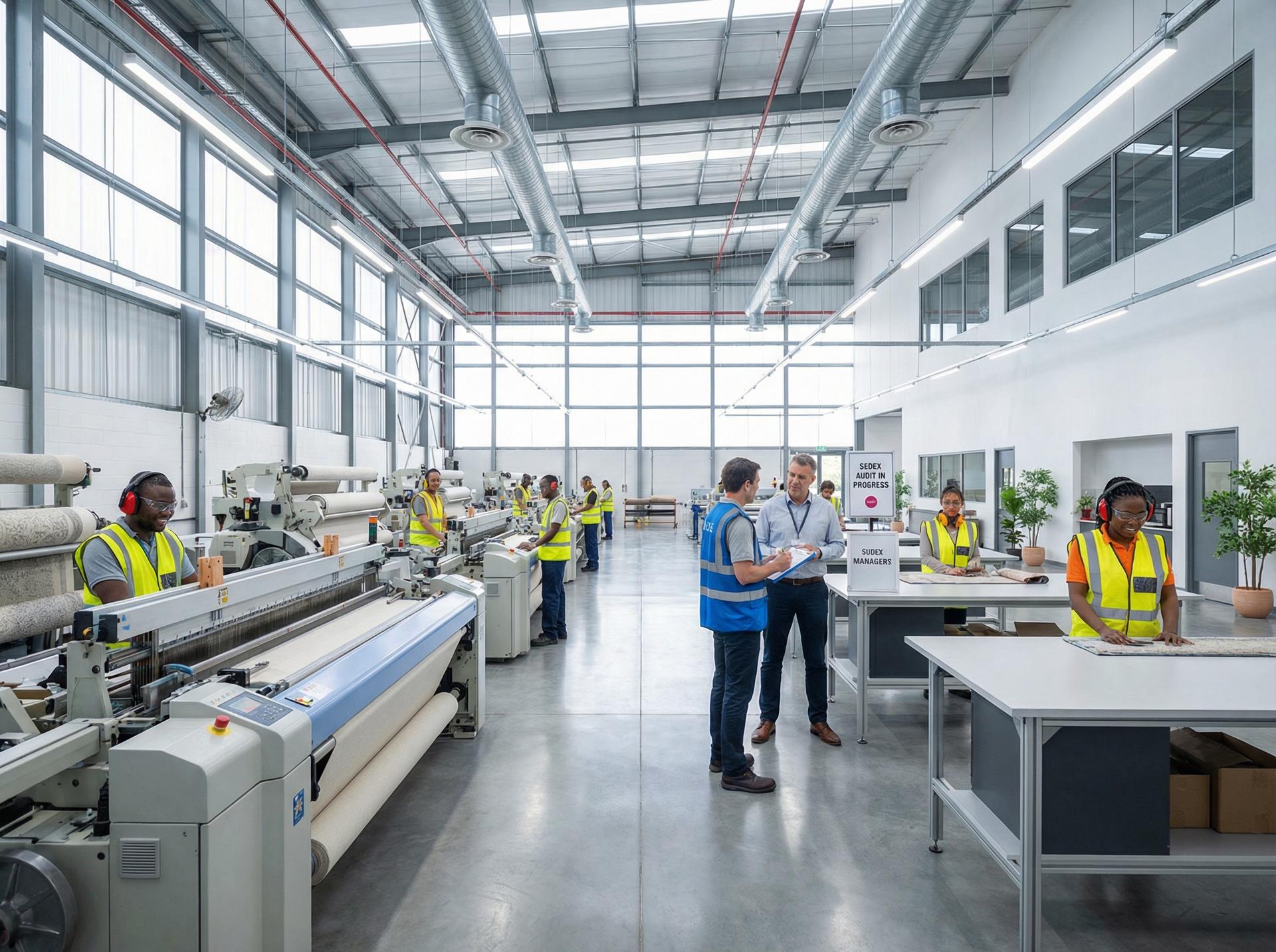
At the center of this network stands our main facility, where design development, quality control, and finishing operations take place. From here, our team coordinates with thousands of artisans across the region, providing materials, designs, and ongoing support while ensuring consistent quality standards.
Challenges and Adaptations
Like traditional craft industries worldwide, Bhadohi's rug sector has faced significant challenges. Competition from machine-made products and lower-cost producing regions has forced continuous adaptation. Younger generations, attracted by urban opportunities, sometimes view traditional crafts as less appealing than service or technology careers.
At Eastern Mills, we have addressed these challenges through a combination of fair compensation, improved working conditions, and investment in training programs that help artisans develop new skills while honoring traditional techniques. We have found that when rug making provides a dignified livelihood, talented individuals are proud to continue their families' traditions.
The Eastern Mills Community
Over nearly eight decades, Eastern Mills has become deeply woven into the social fabric of Bhadohi. Many of our master artisans have worked with us for their entire careers, and we now employ second and third generations of the same families. This continuity creates relationships of trust and mutual investment that translate directly into the quality of our products.
We support local schools, healthcare initiatives, and infrastructure projects, understanding that the vitality of our business depends on the vitality of our community. When artisans' children have access to education and their families have access to healthcare, the entire community benefits, and talented individuals feel confident building careers in traditional crafts.
Visiting Bhadohi
For designers, architects, and clients interested in understanding the origins of their rugs, we welcome visits to Bhadohi. Seeing artisans at work, understanding the processes involved in creating each piece, and experiencing the culture from which these rugs emerge adds immeasurable meaning to ownership.
Walking through our facility and the surrounding workshops, visitors invariably comment on the calm concentration of the weavers, the rhythmic sounds of loom work, and the vibrant colors of dyed wool drying in the sun. Bhadohi is not merely a place of production but a living museum of one of humanity's oldest and most beautiful crafts.
Looking Forward
As we approach our eighth decade in Bhadohi, we remain as committed as ever to this remarkable region and its people. The challenges ahead are real, but so is our conviction that handmade rugs represent a form of value that the world continues to treasure. As long as there are people who appreciate the irreplaceable quality of human craftsmanship, Bhadohi will continue to thrive, and Eastern Mills will be proud to call it home.


