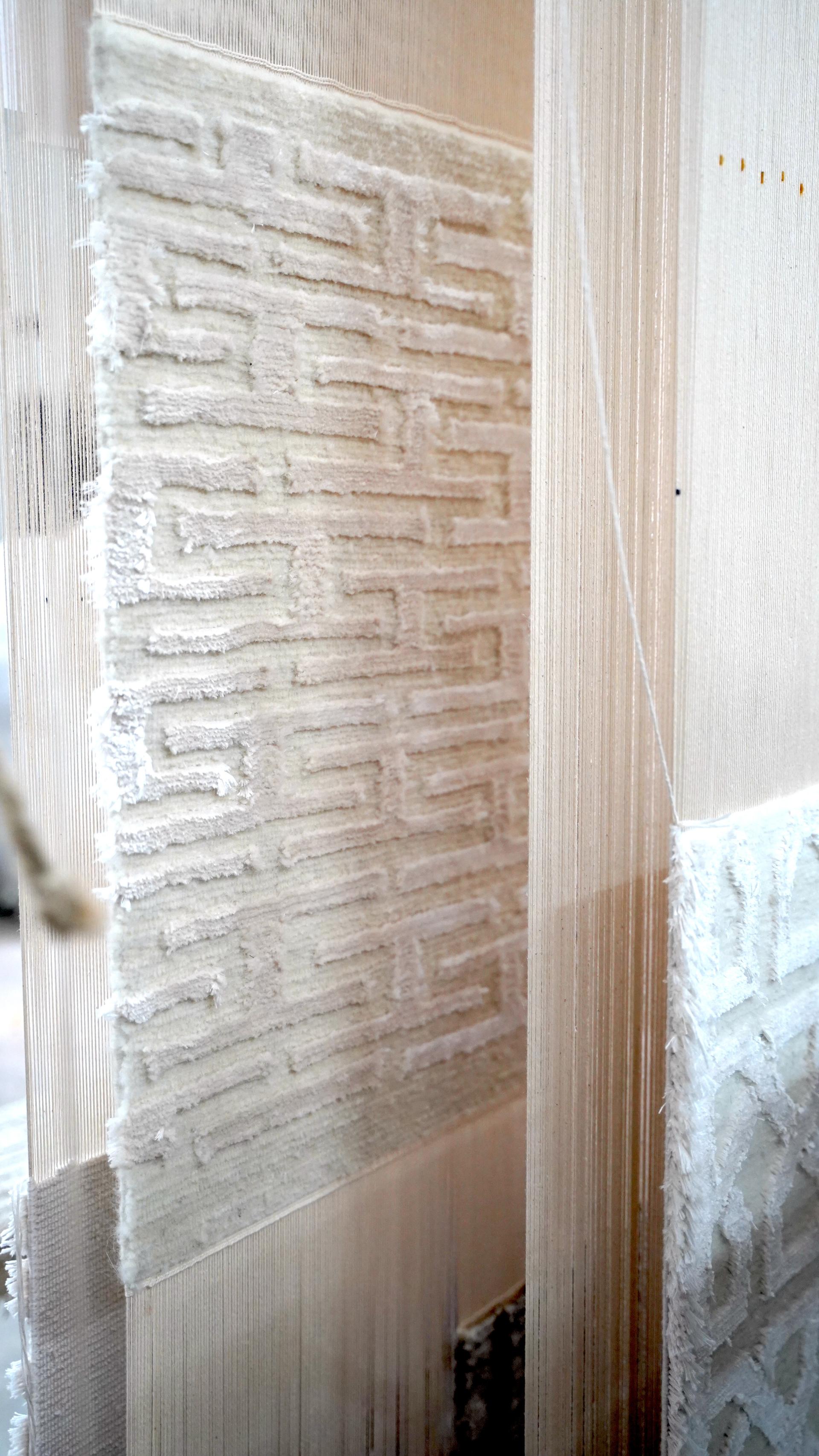
How long a hotel rug lasts depends far more on where it is placed, how it is built and how it is maintained than on any fixed number of years. A dense wool rug in a suite can outlast several refurbishments, while the same construction at a lobby entrance may need replacing at the first one, so renovation planning works best area by area rather than with a single date for the whole hotel.
Why there is no single answer
Hotel operators often ask for a lifespan figure. In practice, the same rug wears at very different rates depending on:
- Traffic. A lobby rug at the entrance may see more footfall in a week than a suite rug sees in a year.
- Soil. Grit tracked in from outside wears pile faster than traffic alone.
- Rolling loads. Luggage, room service trolleys and housekeeping carts crush and abrade pile along their routes.
- Light. Rugs near large windows fade on the exposed side.
- Maintenance. Regular vacuuming and correct spill treatment extend life considerably. Overwetting and harsh chemicals shorten it.
- Design. Hotels often replace rugs because the interior is changing, not because the rug has worn out.
How construction affects wear
| Construction | Strengths in hotel use | Typical wear signs |
|---|---|---|
| Hand knotted wool, dense | Very durable, can be washed and repaired | Pile wear in traffic lanes, fringe damage |
| Hand tufted wool, cut pile | Custom design at project quantity, good underfoot | Pile crushing, sprouting, backing fatigue with heavy wetting |
| Handloom and flatweave | Light, easy to rotate, suited to lower traffic | Abrasion of the surface, edge wear |
| Wool broadloom, low dense pile | Suited to corridors and routes with rolling loads | Matting and shading in traffic lanes |
| Viscose accents | Sheen and colour | Flattening and water marks, earlier than wool |
Wool's resilience is the main reason it remains the default fibre for hotel floors. It recovers from crushing, releases soil readily and wears gradually rather than suddenly.
Signs that a rug or carpet needs replacing
Replacement is due when the product no longer meets the standard of the space, not only when it is worn through.
- Pile visibly flattened or thin in traffic lanes, even after cleaning
- Permanent soiling or staining that professional cleaning cannot remove
- Fading that makes one side or one room noticeably different from others
- Backing or foundation damage, edges lifting or binding failing
- Repeated trip hazards from curling or rippling
- Patches and replacements that no longer match their surroundings
Planning renovation cycles by area
Many hotels follow brand or ownership plans that set soft refurbishment and full renovation intervals. Industry commentary commonly puts the soft goods cycle, which includes carpet, at around five to seven years, with full renovations at longer intervals (JLL, via Hospitality Net), but the figure that matters is the one in the property's own plan. Within those plans, floor coverings can be scheduled more precisely by area.
| Area | Wear pressure | Planning approach |
|---|---|---|
| Entrance and lobby | Highest | Specify the most durable construction, budget for earlier replacement, keep attic stock |
| Corridors | High, with rolling loads | Low dense broadloom, plan replacement with soft refurbishment, hold spare from the same lot |
| Restaurants and bars | High, with spills | Patterned, mid tone designs, plan for more frequent cleaning |
| Guest rooms | Moderate | Align with soft refurbishment, rotate rugs between cycles |
| Suites and villas | Low | Higher quality pieces that can carry through more than one refurbishment |
| Function rooms | Variable, event driven | Plan by event intensity, inspect after peak seasons |
How to extend life between cycles
- Put entrance matting at every entrance and keep it clean
- Vacuum traffic lanes daily
- Rotate loose rugs
- Trim sprouts and repair edges early
- Use correct underlay to reduce slipping and abrasion
- Clean with trained operators and wool safe products
- Replace damaged pieces individually from attic stock rather than waiting for the whole floor
The manufacturer's care guide for each quality gives the detail.
Attic stock: the cheapest life extension
The easiest way to extend the useful life of a scheme is to order spare pieces with the original order. A rug damaged in year three can be replaced from the same production, so it matches its neighbours, and the floor carries on to the planned refurbishment date. Without spares, one damaged room can force an early decision on a whole floor.
Our guide to attic stock and dye lots covers what to hold and how to store it.
Specifying for the cycle you plan
Specification should follow the renovation plan.
- If guest room rugs will be replaced at every soft refurbishment, specify a durable hand tufted wool rug and focus spending on design and colour.
- If suite rugs should last through several refurbishments, consider hand knotted wool, which can be washed and repaired.
- If corridors carry trolleys and luggage, specify low dense broadloom and plan seams and pattern direction so that sections can be replaced.
Our hand tufted hotel rugs and broadloom pages describe the constructions in more detail, and our care guide for housekeeping teams covers the routines that extend life.
Records that make renovation easier
Keep a simple floor covering register for the property:
- Product, construction and fibre by area
- Supplier, design reference and colour references
- Dye lot numbers and installation date
- Location and quantity of attic stock
- Cleaning history and any repairs
When the next refurbishment comes, this register lets the design team decide what to keep, what to replace and whether an existing design can be reordered. Eastern Mills keeps design and colour records for its custom work, which helps when a design is reordered later.
Frequently asked questions
Do hand knotted rugs last longer than hand tufted rugs in hotels?
Generally yes, in the same position and with the same care, because the pile is tied into the foundation and the rug can be washed and repaired. Hand tufted rugs are often chosen for guest rooms because they suit custom design and are replaced with refurbishment cycles.
Can a worn hotel rug be restored?
Hand knotted rugs can often be washed and repaired. Tufted rugs can be cleaned and have small repairs, but heavy pile wear is usually a reason to replace.
Should all rugs in a hotel be replaced at once?
Not necessarily. Replacing by area, according to wear, can make better use of budget, provided that new and old pieces do not sit side by side where the difference would show.
How much attic stock should we order?
It depends on the number of rooms and the risk of damage. Focus spares on high wear areas and the most common room types.
To plan a replacement or reorder, contact Eastern Mills.