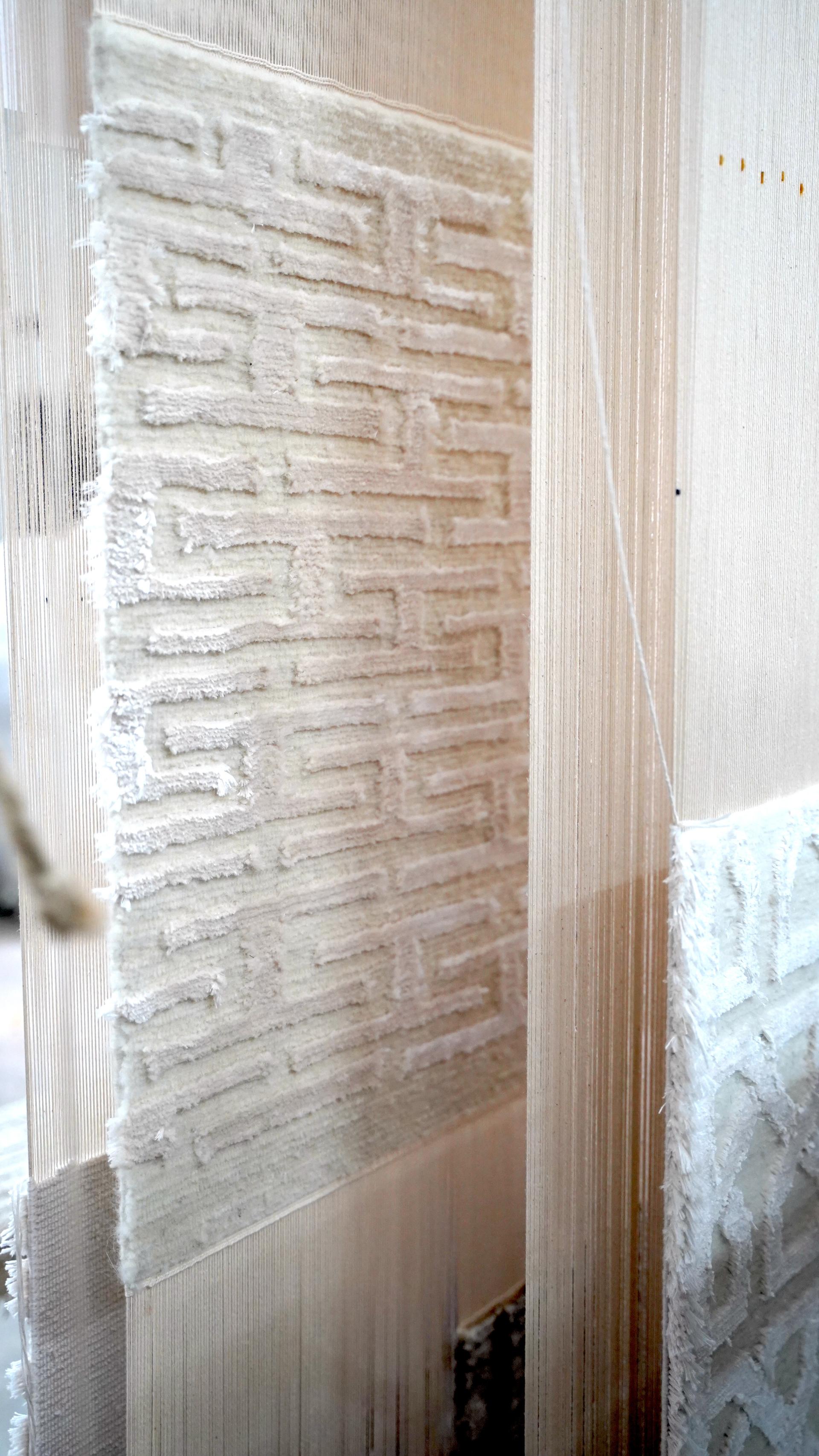
Rugs in hotel restaurants and bars should be made in a low, dense wool pile with a mid tone patterned surface, sized so that chairs stay on the rug when they are pulled out, and kept out of the service routes between the kitchen, the bar and the tables. Spills, chair legs and staff carrying trays do most of the damage and cause most of the risk, so the specification is built around them.
Where rugs belong in food and beverage spaces
Many hotel restaurants and bars have hard floors, with rugs used to define zones, soften the acoustics and bring warmth to a room of stone, timber or tile. The skill lies in placing them where they help and keeping them away from where they cause problems.
| Area | Rugs suitable? | Why |
|---|---|---|
| Dining room table groups | Yes | Defines the dining zone and absorbs chair noise |
| Lounge seating in a bar | Yes | Softens a hard room, marks out a quieter area |
| Private dining room | Yes | Lower traffic, more residential feel |
| Bar counter front | Usually not | Spills concentrate here and stools move constantly |
| Kitchen pass and server stations | No | Fast staff traffic, grease and trip risk |
| Buffet lines | Usually not | Food drops and queues form in the same place |
| Terrace doors | No | Wet and gritty footwear |
Fitted carpet is still used in some hotel restaurants, especially in formal dining rooms and banqueting style breakfast rooms. Where the whole floor is carpeted, the same rules on pile, colour and cleaning apply.
Sizing around tables and chairs
A dining rug that is too small is worse than none. When a chair is pulled back and its back legs drop off the edge, it tips, catches and wears the edge.
- Allow the rug to extend at least about 60 centimetres beyond the table edge on every side where chairs sit, so a chair pulled out stays on it.
- For banquettes, the rug can stop under the front of the banquette seat, as long as the edge is held flat.
- Ask the operator how often tables are rearranged. One large rug under a group of tables accepts more layouts than a series of small rugs fitted to one plan.
- Note table bases. Heavy pedestal bases leave deep marks, so ask whether the layout is fixed or the tables move.
Construction and fibre
Chair legs dragging across the surface every service is the main mechanical load. A short, tightly packed cut pile takes it well. Loop pile can catch on chair glides and snag, so it is usually kept to lounge areas where chairs move less.
Wool is the usual fibre. It resists soiling, recovers from chair legs, releases dirt during cleaning, and does not immediately absorb water based spills at first contact. Keep viscose and other regenerated silk like fibres out of dining and bar areas altogether, because they mark with water and are difficult to clean.
Hand tufted rugs suit most restaurant schemes, because they allow custom pattern and colour to match the interior. Flatweaves are an option where chairs need to slide very easily and where rugs will be sent out for washing, though they need a firm non-slip underlay to stay in place.
If a stain resist treatment is applied, it should be declared, along with how it is maintained through cleaning.
Colour and pattern
Restaurants and bars are designed for warm, low light, and the rugs should be approved under it. Colours that look rich in daylight can turn muddy in the evening, and the reverse.
- Choose mid tones rather than very pale or very dark grounds. Pale grounds show stains, very dark ones show crumbs and lint.
- Use pattern or tonal texture to break up the surface, so the marks of a busy service are not obvious the next morning.
- Think about the colours of what is spilt. Coffee, red wine and sauces disappear more easily into warm, varied palettes.
- Coordinate with upholstery and table linen, which sit in the same field of view.
Safety and edges
Staff move quickly with trays and cannot look down. Every rug edge in a restaurant must lie completely flat.
- Use a firm non-slip underlay sized just inside the rug edge.
- Check the edge finish lies flat on the actual floor before approving bulk production.
- Keep rugs entirely clear of service routes from the kitchen and bar.
- Where accessibility rules apply, keep pile low and fasten exposed edges.
Fire requirements for loose rugs in restaurants vary by jurisdiction. The fire consultant names the standard and class, and Eastern Mills arranges testing to the named standard per order.
A cleaning routine that works
| Frequency | Task |
|---|---|
| After each service | Remove debris, blot and treat fresh spills |
| Daily | Vacuum thoroughly, including under table groups |
| Regularly | Rotate rugs where the layout allows, to spread wear |
| Periodically | Deep clean by a contractor familiar with wool and the construction |
Ask the manufacturer for a maintenance guide for each quality, and share it with the cleaning contractor before opening. Our care guide for housekeeping teams covers spill treatment in more detail.
Restaurant and bar rug checklist
- Rug zones marked on the floor plan, clear of service routes
- Sizes allow chairs to stay on the rug when pulled out
- Construction, fibre, pile height and density agreed
- Colour approved under the evening lighting
- Edge finish and underlay specified
- Fire and accessibility requirements named
- Stain treatment declared where used
- Spares ordered from the same dye lot
Frequently asked questions
Are rugs practical in a hotel restaurant?
Yes, when they are placed under table groups and away from service routes, made in a low dense wool pile and cleaned on a regular routine.
Which rug construction suits a hotel bar?
A low, dense cut pile wool, usually hand tufted for a custom design, placed in lounge areas rather than at the bar counter.
How far should a dining rug extend beyond the table?
At least about 60 centimetres on each side where chairs sit, so a chair pulled back stays fully on the rug.
How do we stop staff tripping on rug edges?
Use a firm non-slip underlay, approve an edge finish that lies flat, and keep rugs out of kitchen and bar service routes.
Eastern Mills makes hand tufted rugs for hotels and other hand tufted rugs to designers' artwork, with yarn dyed in house. Read how custom rugs are developed, or contact us with your restaurant plan.