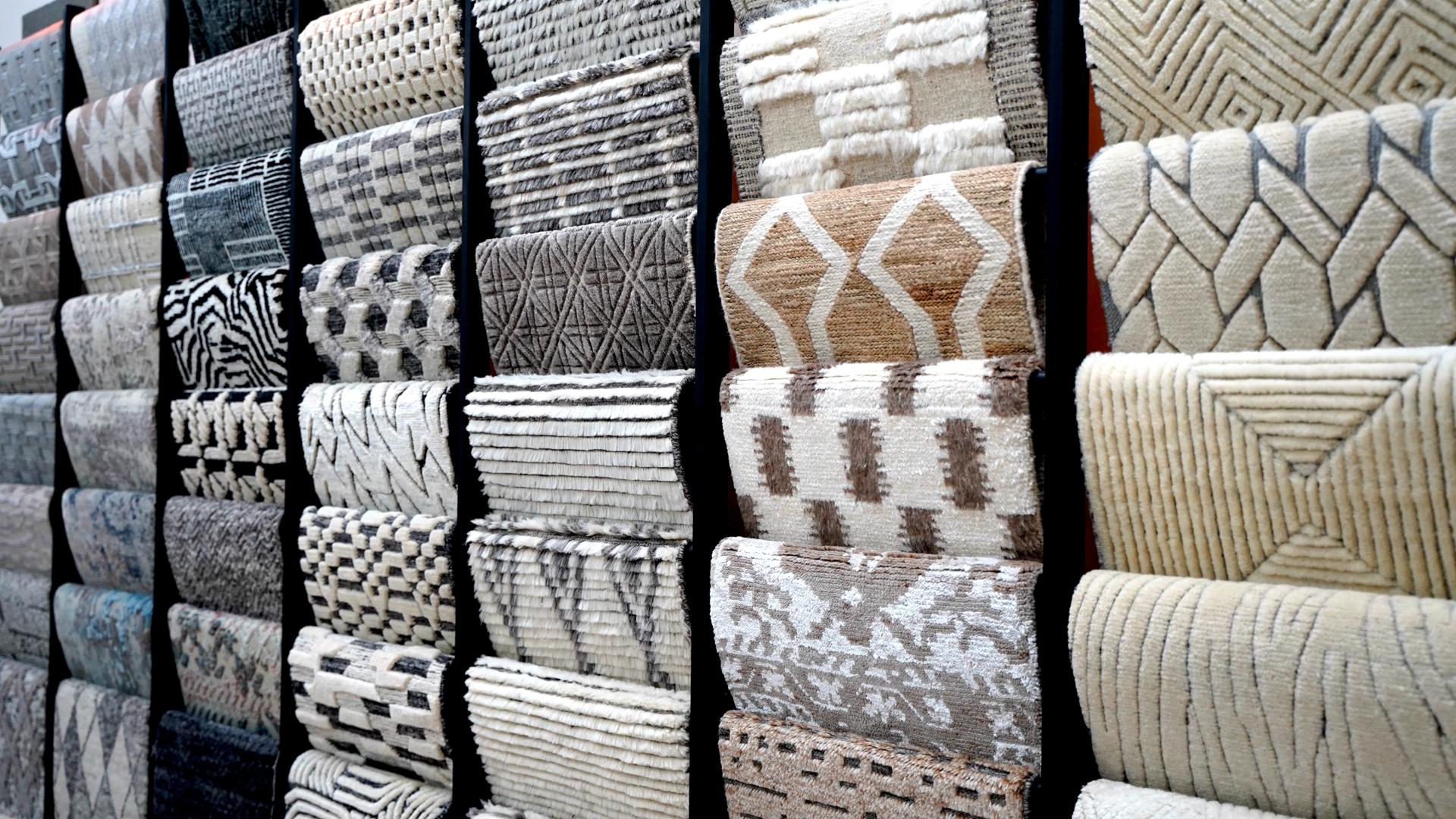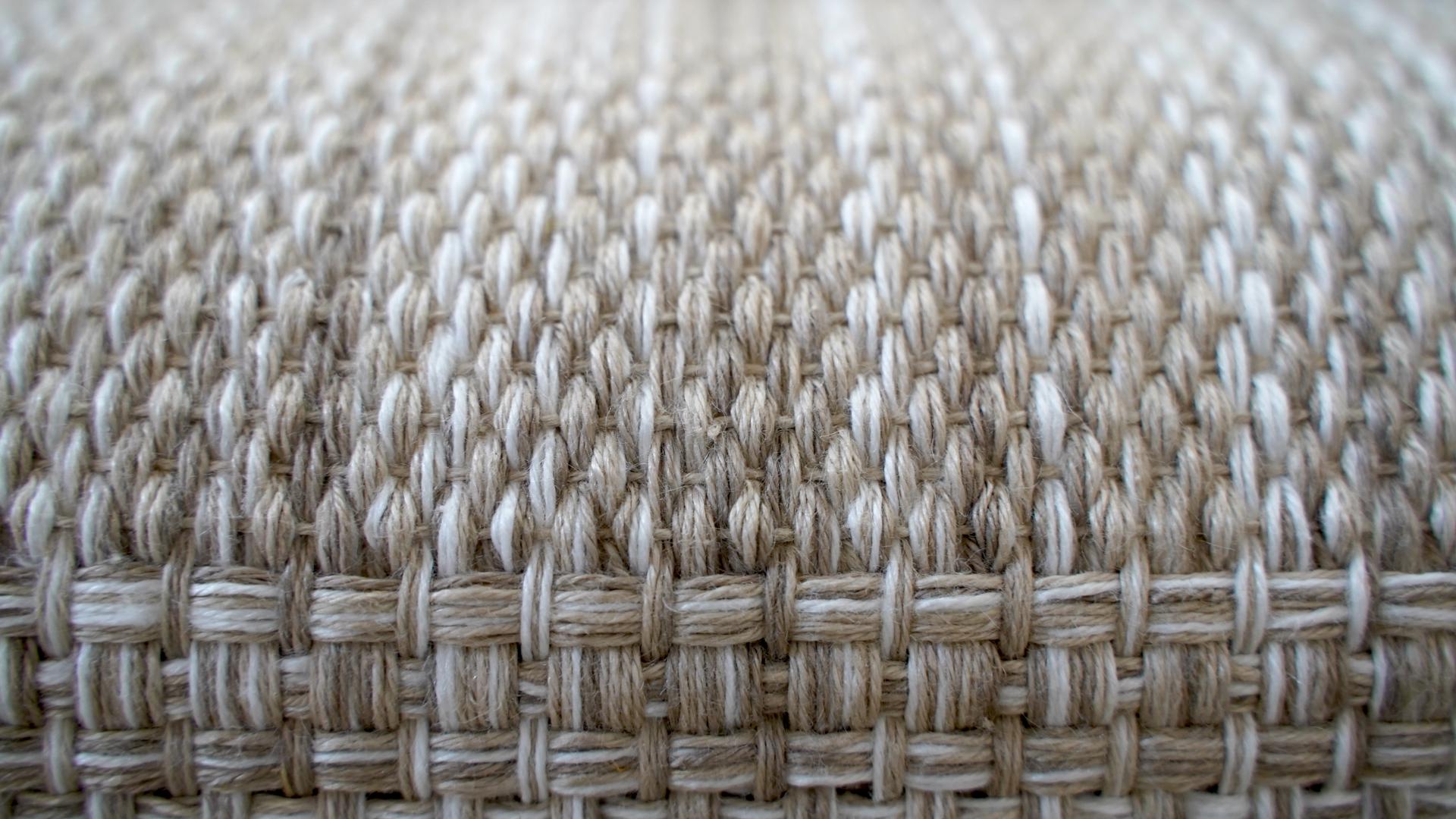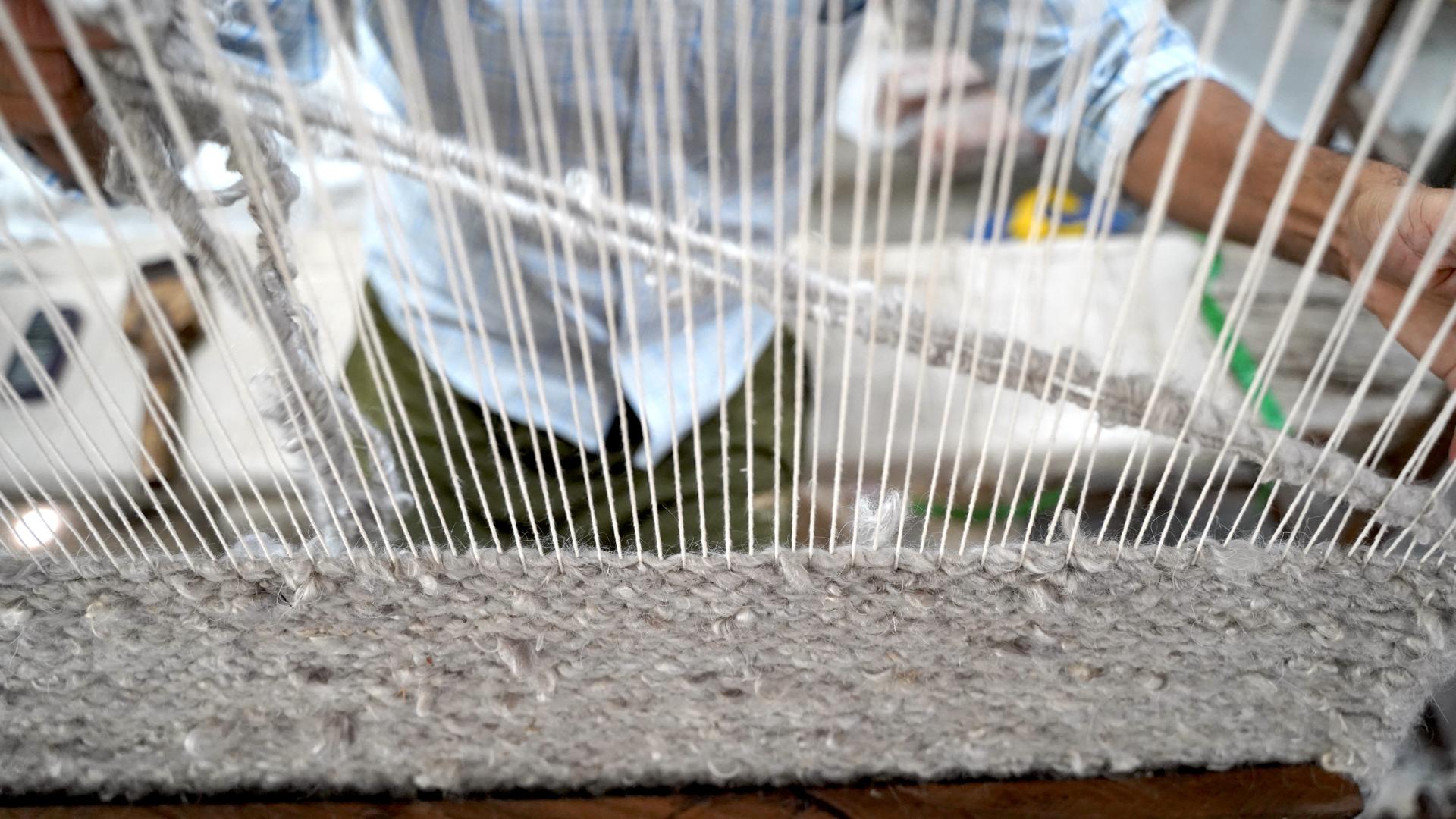
Under hotel traffic, density matters more than pile height: a low, dense pile holds its appearance and lets wheels roll, while a tall or loose pile crushes and shows wear. The practical rule is low and tight in lobbies, corridors and restaurants, moderate in guestrooms, and deeper or carved pile only in suites and other quiet rooms.
What the two terms mean
Pile height is the length of the tuft above the backing, measured in millimetres or inches. It is what people notice first, because it decides how deep the rug looks and feels.
Density is how closely the yarn is packed. A dense pile has many tufts per unit area and little air between them, so each tuft is supported by its neighbours. In machine made carpet, density is often expressed as average pile density, calculated as 36 times the face weight in ounces per square yard, divided by the pile height in inches. In hand tufted rugs, it is set by how closely the tufter places stitches and rows, and by the thickness of the yarn.
Height and density are linked through yarn weight. The same quantity of yarn can be used to make a tall, loose pile or a short, tight one. For a hotel, the short, tight one almost always performs better.
Why density outperforms height in traffic
- A dense pile supports itself. Tufts lean on each other instead of bending over, so traffic lanes and furniture marks are less visible.
- Soil stays near the surface. In a loose pile, grit works down to the base, where it abrades the fibre and is harder to vacuum out.
- Wheels roll more easily. A tall pile increases rolling resistance for luggage, housekeeping trolleys and wheelchairs, and can catch small castors.
- Shading is reduced. Cut pile changes colour depending on which way the tufts lean. The taller and looser the pile, the more pronounced the effect.
A tall pile is not wrong. It gives comfort and a sense of luxury in a suite or a bedroom seating area, where the traffic is light and nobody is pushing a trolley across it.
Traffic levels and starting points
| Area | Traffic | Particular demands | Starting point |
|---|---|---|---|
| Lobby and reception | Heavy | Luggage wheels, outdoor soil, first impression | Low, dense pile, tight construction |
| Corridors | Heavy and continuous | Trolleys, long runs, strict fire class | Low, dense pile, usually broadloom |
| Restaurants and bars | Heavy | Chair movement, food and drink | Low, dense pile, pattern to hide soil |
| Lift lobbies | Heavy, concentrated | Turning wheels, waiting guests | Low, dense pile, secured edges |
| Guestrooms | Moderate | Bare feet, bedside comfort, housekeeping | Medium pile, good density |
| Suites and villas | Light | High finish, comfort | Medium to deep pile, carving possible |
| Spa relaxation rooms | Light | Bare feet, calm, humidity nearby | Medium pile, fibre chosen for moisture |
These are starting points for the strike off, not fixed values. The final pile is agreed on a physical sample.
Accessible routes
Accessibility rules can set a limit regardless of the design intent. In the United States, the ADA Standards limit carpet pile on accessible routes to half an inch, which is 13 mm. Our guide to ADA requirements for carpet and rugs covers the backing, edge and level change rules that come with it. Other countries and hotel brands have their own requirements. Name the rule that applies at the brief stage, because it decides the pile height for every rug on a circulation route.
How classification works
Machine made carpet is often classified for use under ISO 10874 and EN 1307, which grade products for domestic and commercial traffic, with commercial classes running from 31 to 33. Handmade rugs are rarely put through that classification. Specifiers usually judge them on construction, fibre, density and a physical sample, and should ask the manufacturer to state pile height and face weight in writing. Our guide to pile weight and face weight explains how to compare those figures.
How to check density on a sample
- Fold the sample back on itself. If the backing shows clearly between rows of tufts, the pile is open. This is sometimes called grin.
- Press firmly with a thumb and release. A dense wool pile springs back quickly.
- Run a hand against the pile. A loose pile flattens and stays marked.
- Compare the stated face weight with the stated pile height. A high weight on a tall pile can still be a loose construction.
- Roll a castor or small suitcase wheel across it, if the rug is for a circulation area.
Pile height and acoustics
A thicker pile absorbs a little more sound within the room, and any rug reduces the hard echo of a stone or timber floor. For impact sound between floors, the underlay and the floor build up matter more than the pile itself. Do not raise pile height on a circulation route to improve acoustics. Specify a better underlay instead.
Specification checklist
- Traffic level stated for each area
- Pile height in millimetres, with a tolerance
- Face weight and the basis it is measured on
- Construction: cut, loop or a combination
- Accessibility rule named for circulation routes
- Edge detail for rugs on routes with wheeled traffic
- Underlay or rug pad specified
- Strike off approved for each pile and density
How Eastern Mills fits
Eastern Mills makes hand tufted hotel rugs in Bhadohi, India, where it has worked since 1947, from yarn spun and dyed in house. Pile height and density are set per project and confirmed on a strike off, typically 18 x 18 inches, before production. For how pile choices fit into a wider hotel programme, see the hospitality page.
Frequently asked questions
What pile height suits a hotel lobby rug?
A low, dense pile, kept within any accessibility limit that applies to the route. Comfort can come from the density and fibre of the pile rather than its height.
Does a denser pile cost more?
Usually, because it uses more yarn per square metre. It also tends to stay presentable for longer, which matters more than the purchase price in heavy traffic.
Can one rug have more than one pile height?
Yes. Hand tufted rugs often combine high and low pile to draw the pattern in texture. Keep the height difference modest in areas with wheeled traffic.
Is a deep pile better in guestrooms?
A medium pile with good density usually works better. It is comfortable underfoot, easier for housekeeping to vacuum, and shows fewer footprints. To agree a pile for each room type, send the rug schedule.