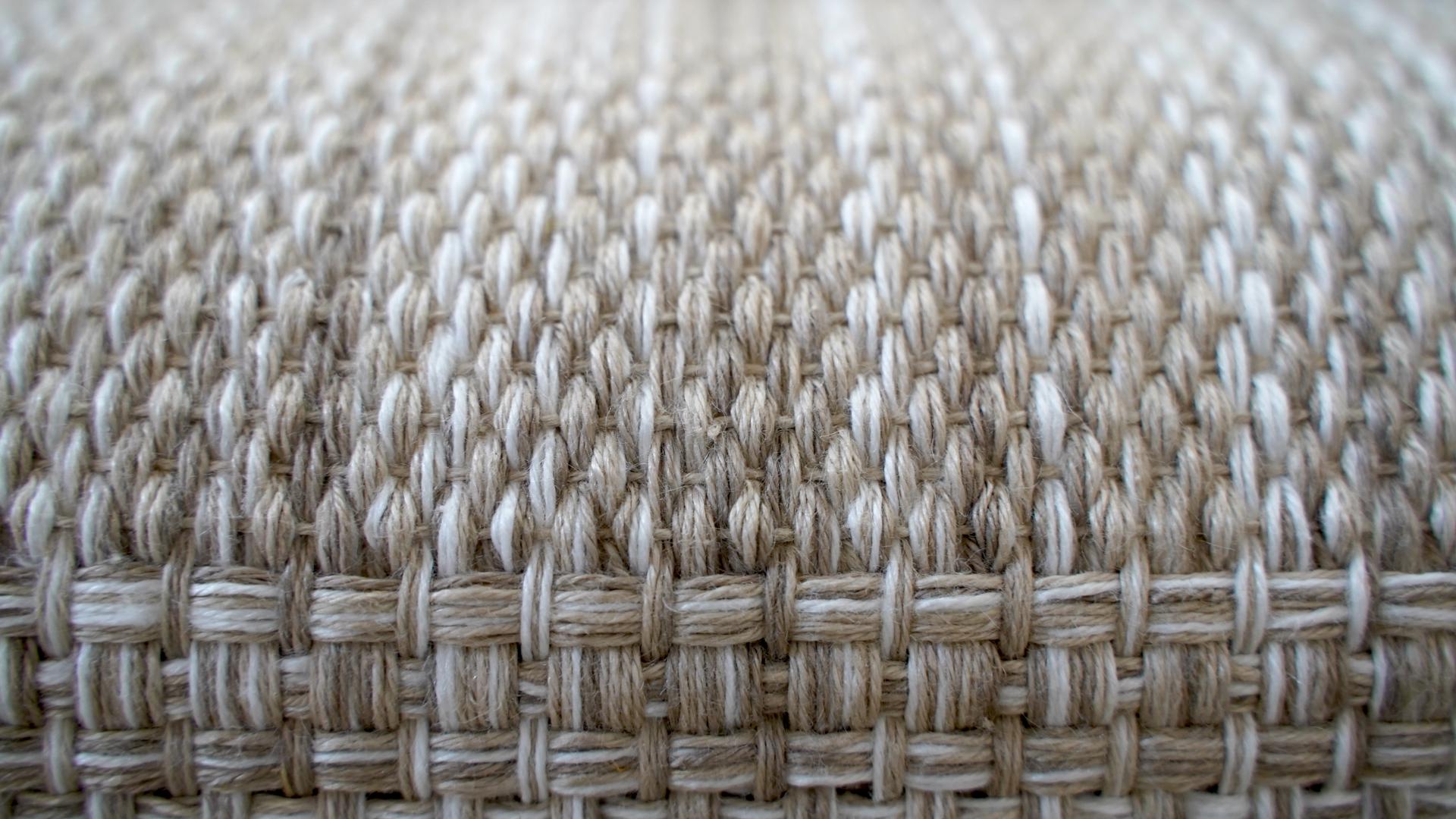
For resorts and villas in humid and coastal climates, choose wool or cotton in woven constructions with little or no latex, place rugs in air conditioned or well ventilated rooms, and plan for sand, salt and strong sunlight. Avoid viscose and jute, which react badly to moisture, and plan shipping and storage so that rugs arrive dry and stay dry.
What humidity, salt and sand do to rugs
A rug in a beach villa or a rainforest resort faces conditions that a city hotel rug never meets.
- Humidity. Persistent damp allows mildew to grow on natural fibres, causes odour, and can weaken the latex backing of tufted rugs. Rugs that absorb moisture can also change shape slightly and lose flatness.
- Salt. Salt carried on sea air and on guests' feet attracts moisture, so salty rugs stay damp longer than clean ones.
- Sand. Sand is abrasive. It works down into the pile and cuts fibres as people walk over it, which wears a rug faster than ordinary soil.
- Sunlight. Strong sunlight through open doors and large windows fades dyes, especially pale and bright colours.
- Empty rooms. When a villa is unoccupied and the air conditioning is turned off, humidity rises quickly. Rugs can develop mildew in rooms left closed for a few days.
Fibre choice
| Fibre | In a humid, coastal setting | Recommendation |
|---|---|---|
| Wool | Absorbs and releases moisture vapour, resists soiling, generally less prone to mildew than plant fibres | Suitable for most indoor rooms |
| Cotton | Washable, used in flatweaves, will mildew if left damp | Suitable for flatweaves that are laundered regularly |
| Jute and sisal | Stain and brown when wet, weaken with persistent damp | Avoid in humid or open rooms |
| Viscose | Marks with water, loses strength when wet | Avoid |
| Recycled synthetic yarns | Do not absorb water, suit covered outdoor areas | Suitable for verandas and covered terraces |
Where recycled content is claimed, it should be certified. Eastern Mills holds GRS certification for recycled content and RWS certification for responsible wool, and the claim is stated on the order.
Construction choice
- Flatweaves and handloom rugs. No latex backing, quick to dry, can be washed, and some are reversible, which doubles their life. They suit living areas, bedrooms and shaded pavilions.
- Hand knotted rugs. No latex backing either, robust and washable, and suited to the principal rooms of premium villas.
- Hand tufted rugs. Latex backed, so they belong in fully air conditioned rooms where humidity is controlled. They are not the right choice for open air pavilions.
- Pile height. A low pile dries faster and releases sand more easily than a deep one.
Placement in resorts and villas
Think about each room's exposure, not just its use.
- Air conditioned bedrooms and living rooms can take most constructions, provided the air conditioning runs consistently.
- Open sided pavilions and rooms with doors that stay open all day suit flatweaves in wool or cotton, which dry quickly.
- Covered terraces and verandas call for rugs in recycled synthetic yarns or other fibres made for outdoor use.
- Keep rugs away from pool doors, outdoor shower routes and the path from the beach, where feet arrive wet and sandy.
- On stone and terrazzo floors, check that the underlay holds the rug in place without trapping moisture against the floor.
Dyes and sunlight
Specify light fastness for rooms with strong sun, and favour colours that fade gracefully. Natural, undyed wool shades and mid tones show sun fading far less than bright, saturated colours. Rotating rugs during low season spreads fading evenly. Eastern Mills dyes in house, so colours can be developed with light exposure in mind and recorded for future replacements.
Shipping, storage and spares
Rugs can be damaged before they reach the resort. Containers crossing warm, humid regions can build up condensation inside.
- Ask for rugs to be fully dry before packing, and wrapped to keep moisture out.
- Ask whether desiccants are used in the container.
- On arrival, unwrap and inspect promptly. Rugs left wrapped in a hot, humid store can develop mildew.
- Store spares in a dry, air conditioned room, raised off the floor, not in a back of house shed.
- Open and air stored spares from time to time.
Maintenance routine
- Vacuum often to remove sand before it cuts the pile.
- Shake or beat flatweaves outdoors, where sand falls through more easily.
- Keep air conditioning or dehumidification running in rooms with rugs, including unoccupied villas.
- Dry any wet rug quickly and fully, with air moving over both sides.
- Rinse salt out during periodic cleaning, using a method suited to the fibre.
Humid and coastal resort checklist
- Exposure of each room assessed: air conditioned, open or covered outdoor
- Fibres that react badly to moisture excluded
- Latex backed rugs kept to controlled rooms
- Low pile or flatweave in sandy areas
- Light fastness specified for sunlit rooms
- Underlay checked for moisture on stone floors
- Packing, container and arrival procedure agreed
- Spares stored dry and aired periodically
- Fire requirements named by the consultant, with testing arranged per order
Frequently asked questions
Can wool rugs be used in a tropical resort?
Yes, in air conditioned or well ventilated rooms. Wool handles changes in humidity well, but no natural fibre should be left damp for long.
Are jute rugs suitable for beach villas?
Generally not. Jute stains and browns when wet and weakens in persistent damp. Wool or cotton flatweaves are more practical.
How do we prevent mildew on resort rugs?
Keep humidity controlled, dry wet rugs quickly, remove salt and sand regularly, and store spares in a dry, air conditioned room.
What rugs work on a covered terrace?
Rugs in recycled synthetic yarns or other fibres made for outdoor use, which do not absorb water and dry quickly.
Eastern Mills spins and dyes its own yarn, which allows fibre blends and colours to be developed for the climate. See our spinning plant, the custom rug process, our hospitality work, or contact us with your resort brief.


