Oversized and shaped lobby rugs are made to a dimensioned template taken from the finished floor and furniture layout, produced as one piece or in planned sections depending on construction, rolled on a rigid core for transport and installed by a team that has planned the route from the loading bay to the final position. Most problems with large lobby rugs come from inaccurate measurements and poor site logistics, not from production.
Why lobby rugs are different
A lobby rug is often the largest single textile in a hotel and the first one guests see. It may be shaped around columns, reception desks or curved seating, or set into a recessed well in a stone floor. It carries the heaviest traffic in the building, including luggage. And it usually arrives late in the programme, when the floor around it is finished and other trades are still at work. For sizing lobby rugs to seating zones and choosing a durable construction, see our guide to hotel lobby rugs. This guide covers making and installing them.
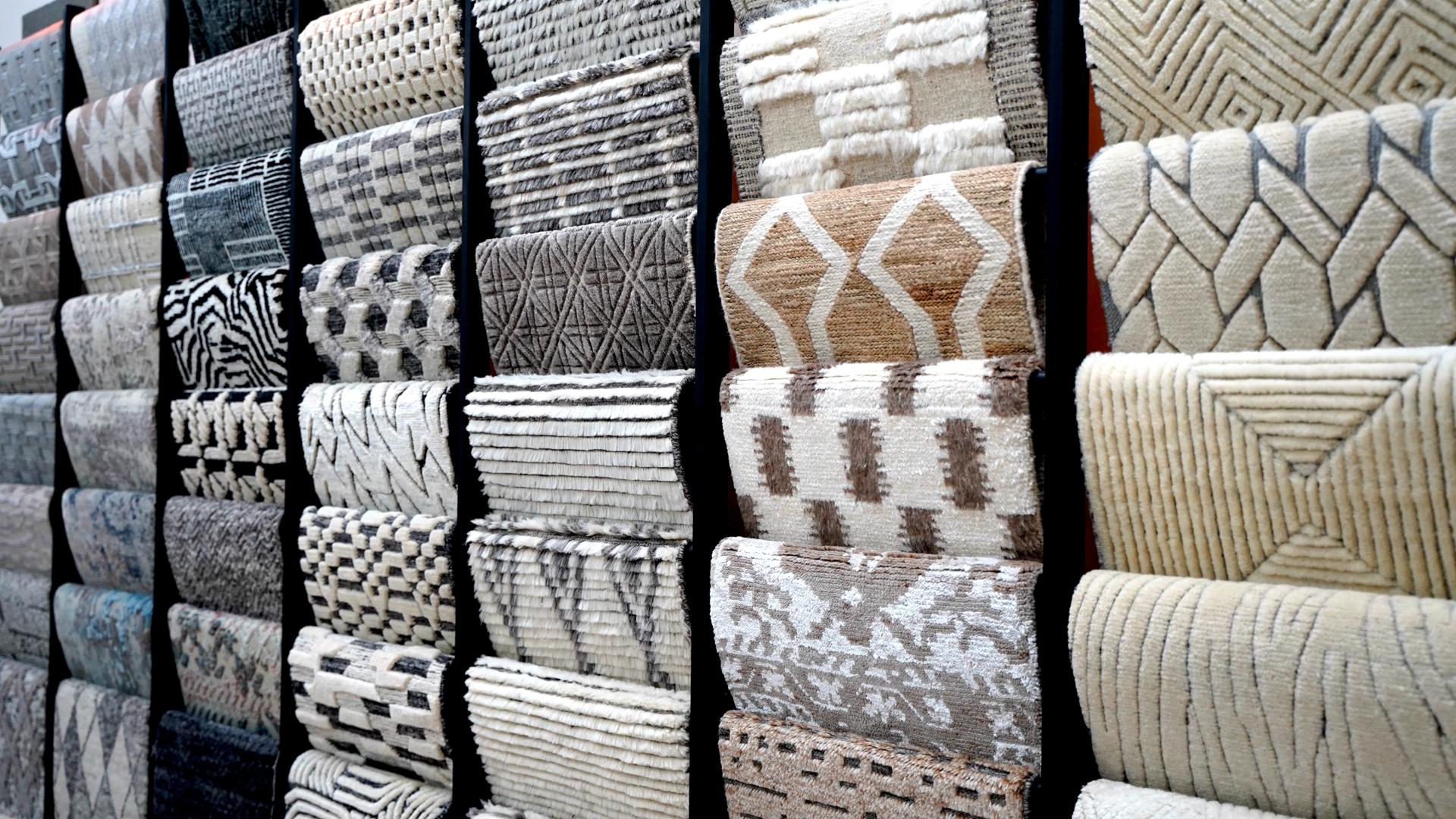
Choosing the construction
| Construction | Suits | Points to consider |
|---|---|---|
| Hand tufted | Custom shapes, large areas, carved or high low designs | Shapes are cut and bound after tufting. Practical for most free form and cut out shapes |
| Hand knotted | Signature lobby pieces, long service life | Shapes are best kept simple. Large pieces need a wide loom and more production time |
| Broadloom | Very large areas, wall to wall lobby zones | Joined on site with planned seams. Pattern match must be planned to the floor plan |
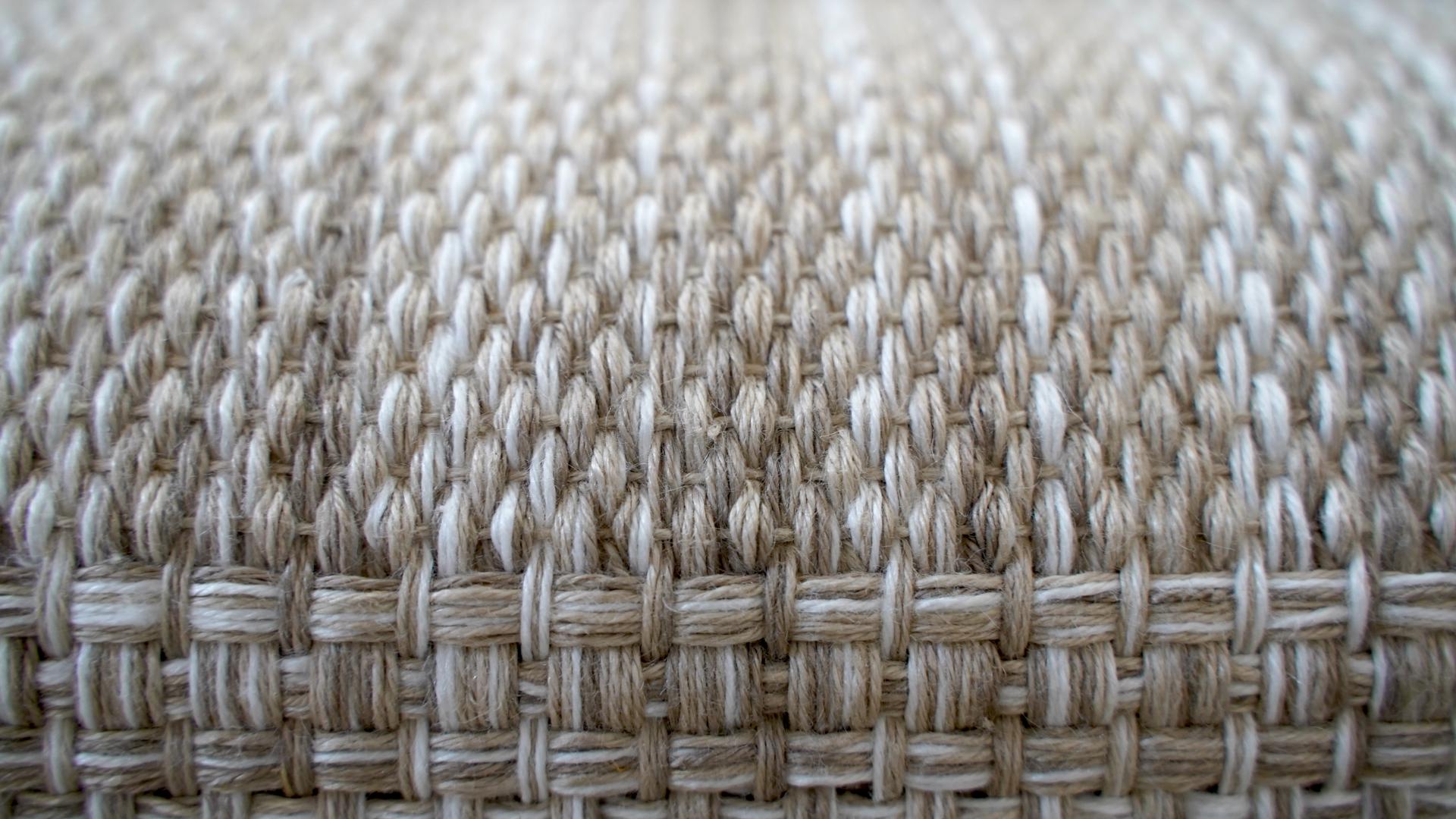
| Handloom | Lounge zones within a lobby | Usually for rectangular shapes and lighter traffic |
For heavy lobby traffic, specify dense wool pile at a moderate height. Deep pile and pronounced carving belong in seating areas rather than routes.
Measuring and templating
Drawings are a starting point, not a final size. Stone floors, column finishes and joinery often finish slightly differently from the drawings.
- Agree the final size from the furniture plan. A lobby rug should define a seating area or a route, so the furniture layout sets its edges.
- Take a site template once the floor is finished. For shaped rugs, rugs with cut outs and rugs set into a well, a full size template in paper or board, marked with reference points, is more reliable than a drawing.
- Mark fixed features. Columns, floor boxes, door swings, lift thresholds and stair edges.
- State tolerances. Agree acceptable size tolerance in writing, especially for a rug that sits in a recessed well, where too large is as much a problem as too small.
- Confirm thickness. Total height of rug and underlay must suit the well depth or adjacent floor levels.
Making the rug
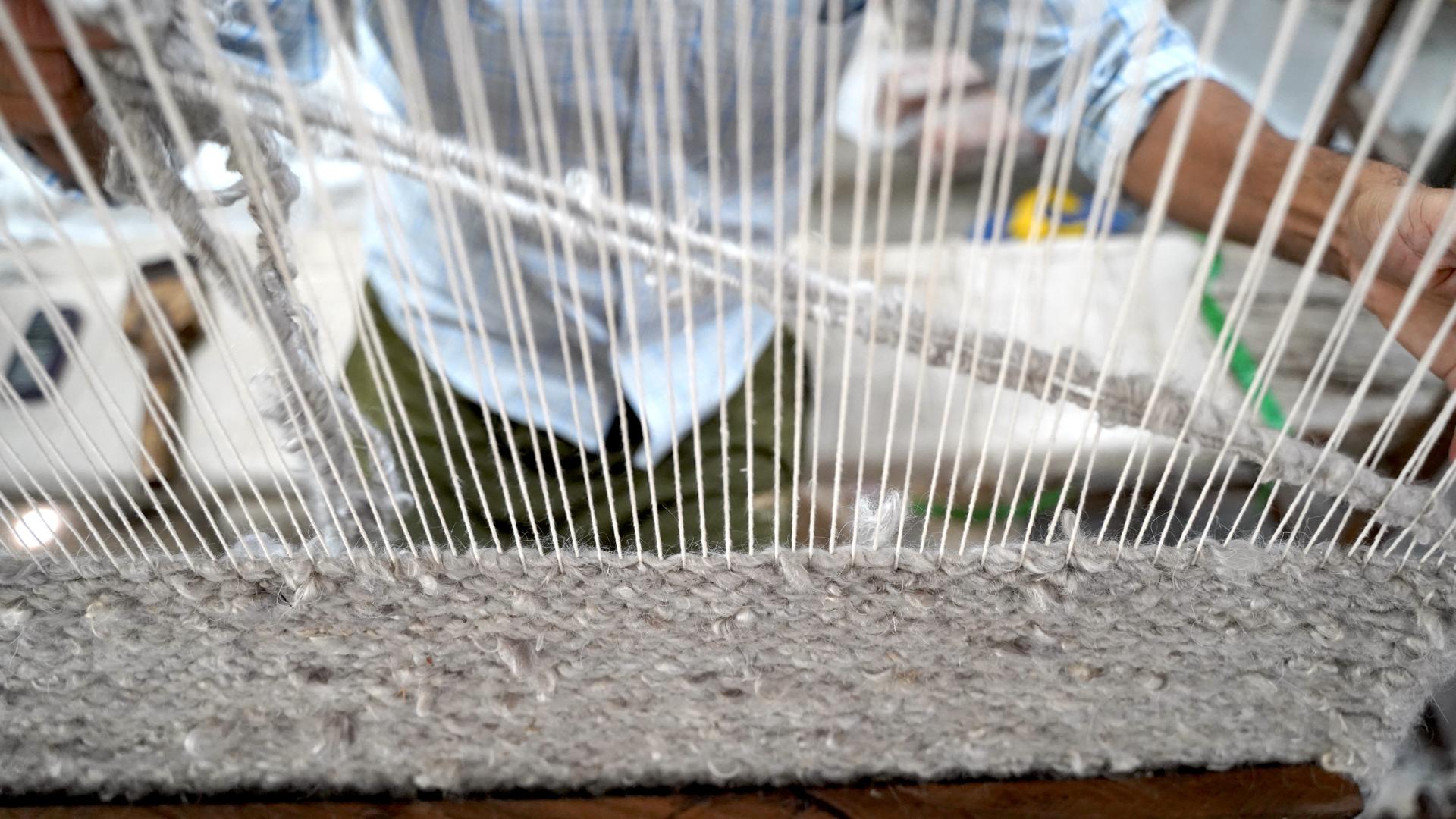
At Eastern Mills, the design team prepares the artwork to scale from the template or drawing, and a strike-off is approved for colour and construction. Production follows the agreed construction. After weaving or tufting, large rugs go through the same finishing stages as any rug: washing, stretching to the specified size, drying, trimming and carving where the design calls for it, and final inspection of dimensions, colour, pattern and edges.
For shaped hand tufted rugs, the outline is cut after tufting and the edges are bound. Cut outs for columns are cut and bound in the same way.
One piece or sections?
A single piece has no joins, but its size and weight affect handling, access and delivery. Sections can be easier to deliver and install, but the joins must be planned within the design, ideally along lines in the pattern, and joined by an experienced installer on site. Decide this with the manufacturer before the design is finalised, because it changes the artwork.
Packing and transport
- Rugs are rolled, never folded. Folding a large rug can leave permanent creases and stress the backing or foundation
- Large rugs should be rolled on a rigid core to prevent bending in transit
- Each roll should be wrapped to protect against moisture and dirt
- Labels should show the rug's reference, its final location, its orientation, such as an arrow to the entrance, and its weight
- The packing list should match the lobby plan
Eastern Mills packs finished rugs rolled and wrapped, and loads export containers on site.
Site logistics checklist
Plan the route before the rug leaves the factory.
- Loading bay access and the delivery vehicle size
- Width and height of doors, corridors and lifts on the route
- Whether the roll fits a goods lift, or must be carried by stairs
- Number of people needed to carry and position the roll
- Storage space, flat and dry, if the rug arrives before the floor is ready
- Protection of finished floors during handling
- Agreed installation date after wet trades and heavy work are complete
Installation
- Clean the floor. Grit under a rug wears it from below.
- Lay the underlay. Use an underlay suited to the floor, cut slightly smaller than the rug so it does not show at the edges. For a rug in a well, follow the depth plan.
- Unroll in position. Unroll along the intended direction rather than dragging the rug across the floor.
- Allow it to relax. Large rugs can hold the shape of the roll. Leave time for it to settle flat before final adjustment.
- Align and square. Use the reference marks from the template.
- Join sections where planned. Joins should be made by an experienced installer using the method agreed with the manufacturer.
- Protect until opening. Cover the rug if other trades are still working.
After installation
Brief housekeeping on the care guide, set a daily vacuuming routine for the traffic route and place entrance matting at every door. Keep a spare section or matching attic stock where the design allows, so localised damage can be repaired rather than the whole rug replaced. Our hand tufted hotel rugs and hand tufted rugs pages explain the construction in more detail, and the custom rugs page covers the design and sampling process.
Frequently asked questions
How big can a lobby rug be?
That depends on the construction, the manufacturer's equipment and the delivery route. Discuss the size with the manufacturer at the start, and confirm site access before finalising a single piece design.
Can a rug be made to fit around columns?
Yes. Cut outs can be made and bound, most practically in hand tufted construction. A site template is the most reliable way to position them.
Should a lobby rug be fixed to the floor?
Loose rugs in busy areas should use a suitable underlay to stop movement. Where a rug sits in a well or must not move, discuss fixing methods with the installer and the flooring contractor.
Why is my new rug not lying flat?
Large rugs often hold the curve of the roll after delivery. Given time on a flat floor they usually settle. If an edge still curls, check the underlay and contact the supplier.
To plan a lobby rug, send us the drawings and furniture plan.