Wool is chosen for hotel carpet and rugs because it keeps its appearance, hides soil, feels comfortable and is naturally difficult to ignite. Nylon is chosen for its abrasion resistance, its tolerance of strong cleaning chemicals when solution dyed, and its lower cost. Woven hotel carpet often blends the two, and handmade hotel rugs are usually wool.
How the two fibres differ
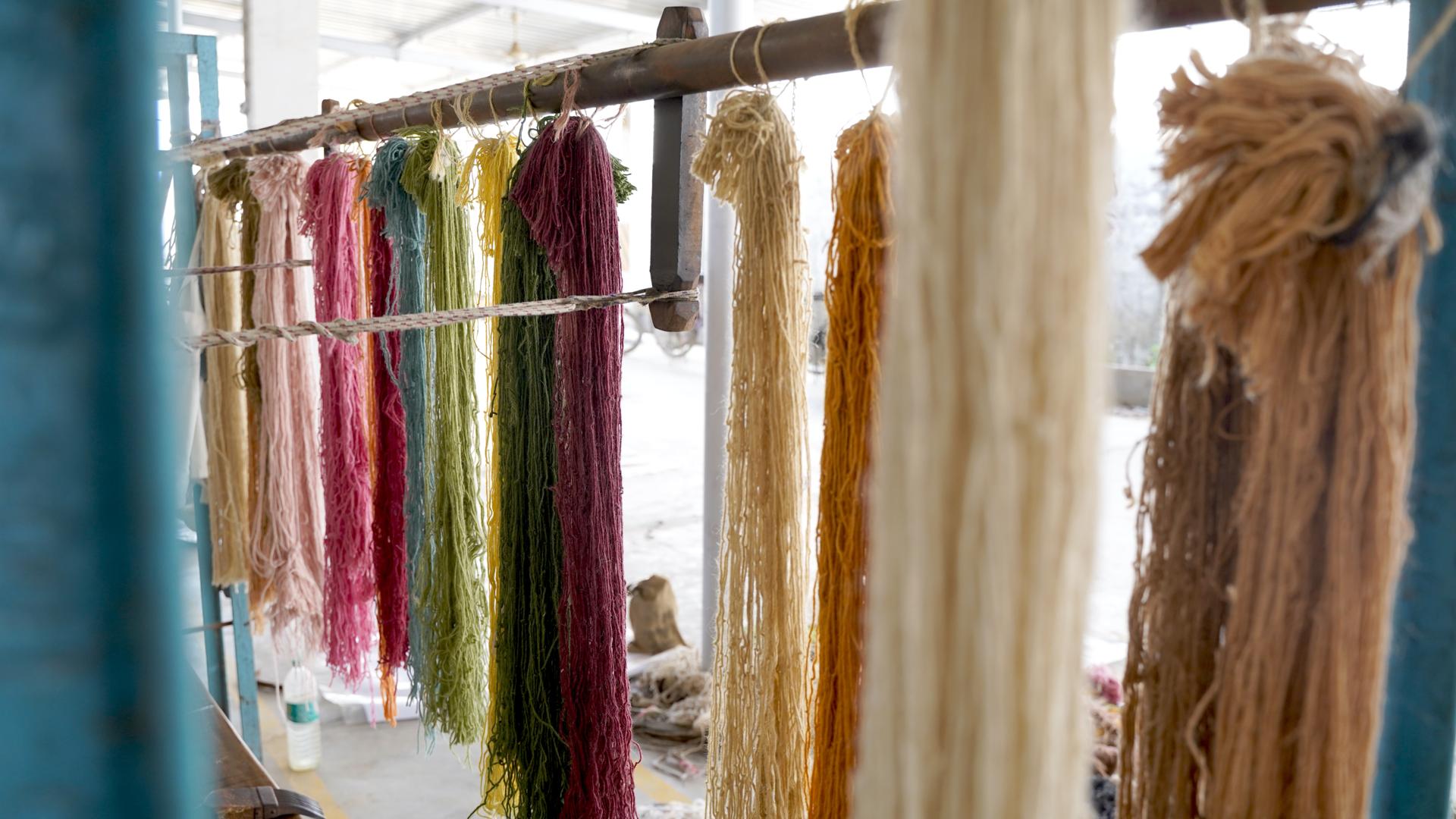
Wool is a protein fibre. Each fibre has a natural crimp that acts like a spring, so the pile recovers after it is crushed. The scaly outer surface sheds dry soil and slows the absorption of spills for long enough to blot them. Wool holds moisture within the fibre, which helps it resist static build up, and it takes dye deeply, giving rich and stable colour.
Nylon is a synthetic polyamide, extruded as a continuous filament and then textured into a carpet yarn. It is strong, resilient and highly resistant to abrasion. It can be dyed after it is made, or solution dyed, where pigment is added to the polymer before extrusion. Solution dyed nylon is colourfast to sunlight and to bleach, because the colour is part of the fibre rather than sitting in it.
Side by side
| Wool | Nylon | |
|---|---|---|
| Origin | Natural, renewable, from sheep | Synthetic, from petrochemicals, recycled content available |
| Resilience | Good, recovers through natural crimp | Good |
| Abrasion resistance | Moderate | High |
| Soil hiding | Good | Depends on yarn and construction |
| Reaction to flame | Difficult to ignite, tends to char | Melts, performance depends on construction and treatment |
| Static | Low in normal humidity | Can build up in dry conditions unless treated |
| Cleaning chemicals | Needs wool safe products, no bleach | Solution dyed types tolerate bleach based spot cleaning |
| Comfort and feel | Warm, soft, matte to soft sheen | Varies, can feel slightly synthetic |
| Relative cost | Higher | Lower |
| Typical hotel use | Rugs, premium broadloom, suites, public areas | Corridors, guestroom broadloom, carpet tiles, meeting rooms |
Appearance over time
Hotels replace carpet because it looks tired, not usually because it has worn through. Nylon resists abrasion better than wool and will usually lose less fibre in heavy traffic. Wool tends to stay looking acceptable for longer in normal hotel use because it hides soil well and recovers from crushing. Each fibre's result also depends heavily on construction: a dense, well twisted pile in either fibre outperforms a loose one.
Cleaning and housekeeping
This is where many specifications go wrong. Wool must be cleaned with products formulated for wool. Bleach, strongly alkaline cleaners and high heat can damage the fibre and strip colour. Solution dyed nylon tolerates a wider range of chemistry, including bleach based spot treatments, which suits restaurants, buffets and areas where staff need to remove stains quickly.
If wool is specified, the hotel's housekeeping team and its cleaning contractor need written care instructions that name suitable products and methods. A wool carpet cleaned with the wrong chemical will fail early, and the fibre will be blamed.
Fire behaviour
Wool is difficult to ignite and tends to char and self extinguish rather than melt, which is one reason it has a long history in hotels and on ships. Nylon melts when exposed to flame. Both fibres are used successfully in hotel projects, because fire performance is a property of the whole construction: fibre, pile weight, backing, any treatment and the underlay or adhesive. Testing must be done on the actual product. For Eastern Mills products, testing to the project's named standard is arranged per order.
Where a blend makes sense
The blend most often seen in woven hotel carpet is 80 percent wool and 20 percent nylon. The wool gives appearance, comfort and fire behaviour, and the nylon adds abrasion resistance. Blends are mostly found in machine made broadloom. In handmade rugs the pile is usually all wool, with silk, viscose or other fibres used as accents rather than for strength.
Choosing by area
| Area | Points to weigh | Usual direction |
|---|---|---|
| Lobby rugs | First impression, luggage wheels, comfort | Dense wool, low pile |
| Corridors | Constant traffic, trolleys, long runs | Wool and nylon blend, or nylon |
| Guestrooms | Comfort, moderate traffic, refit cycle | Wool, wool blend or nylon, depending on budget |
| Suites | Low traffic, high finish | Wool, with accent fibres if wanted |
| Restaurants and buffets | Food and drink spills, strong cleaning | Solution dyed nylon, or patterned wool with a strict care plan |
| Meeting rooms | Chair movement, access floors | Nylon carpet tiles |
Cost over the life of the floor
Wool usually costs more per square metre at purchase. Whether it costs more over the life of the scheme depends on how long it stays presentable and how it is cleaned. Set the comparison on the expected refit cycle, the cleaning regime and the replacement plan, not on the purchase price alone. For a rug that will be replaced as a single piece, the calculation is simpler, because there is no fitting or uplift cost.
How Eastern Mills fits
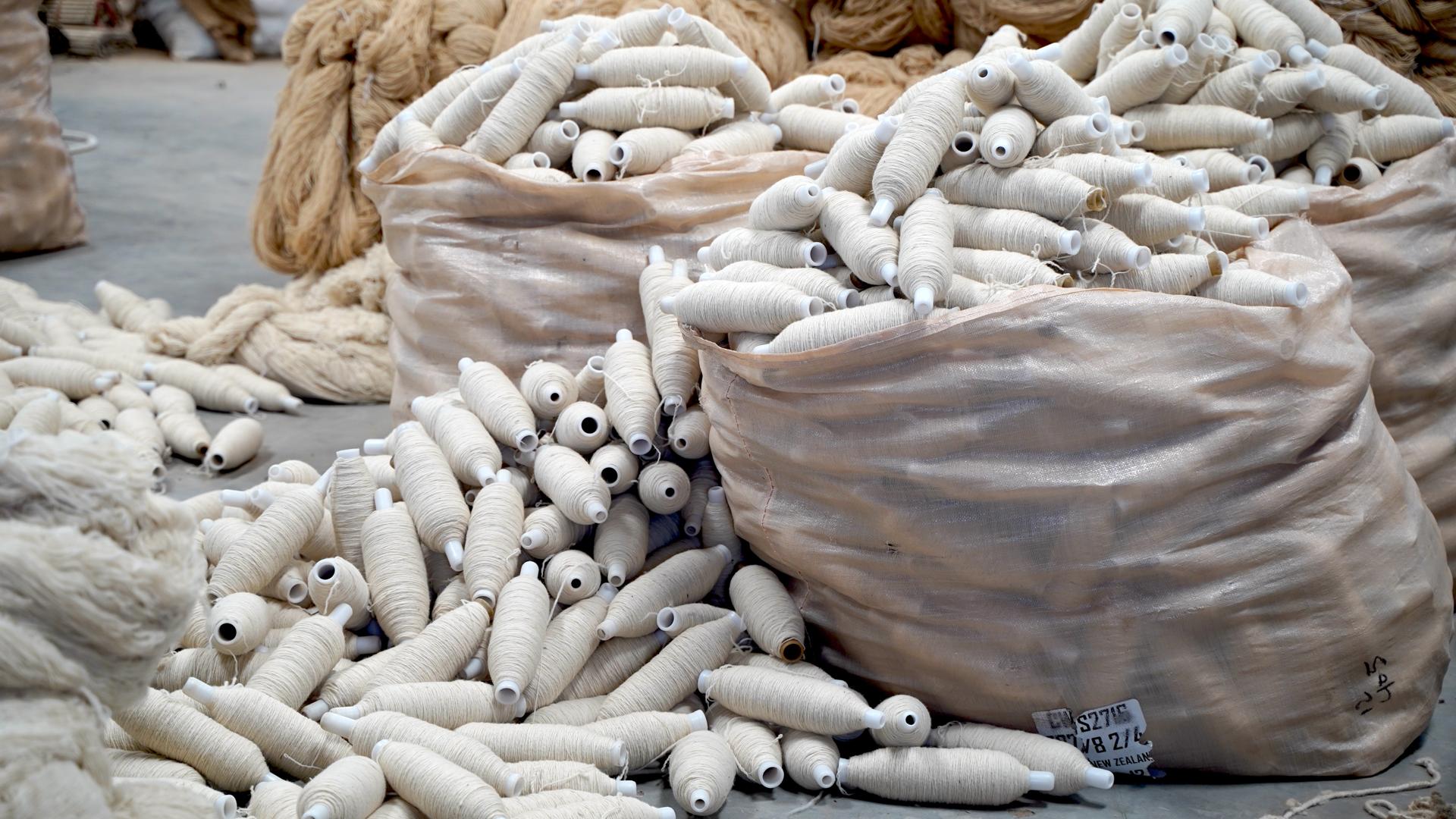
Eastern Mills spins and dyes its own wool yarn in house in Bhadohi, India, where it has made rugs since 1947. Its spinning plant sets the fibre, blend and twist for each quality, and it holds Responsible Wool Standard certification for certified wool programmes. Wool is the base fibre for its hand tufted hotel rugs and for handmade contract carpets from its separate broadloom facility.
Frequently asked questions
Is nylon more durable than wool?
Nylon has higher abrasion resistance, so it loses less fibre under heavy traffic. Durability in a hotel is usually judged by appearance, and wool holds its appearance well in normal use. Construction matters as much as fibre.
Can wool carpet be cleaned with bleach?
No. Bleach damages wool and strips colour. Use products formulated for wool and give housekeeping written care instructions.
Is an 80/20 wool and nylon blend used in rugs?
It is mainly a woven broadloom blend. Handmade rugs are usually all wool in the pile, with other fibres used as accents.
Which fibre is more sustainable?
Wool is renewable and biodegradable. Nylon can contain recycled content and may last longer in abrasive areas. Ask for certified material and documentation for whichever claim the project wants to make.