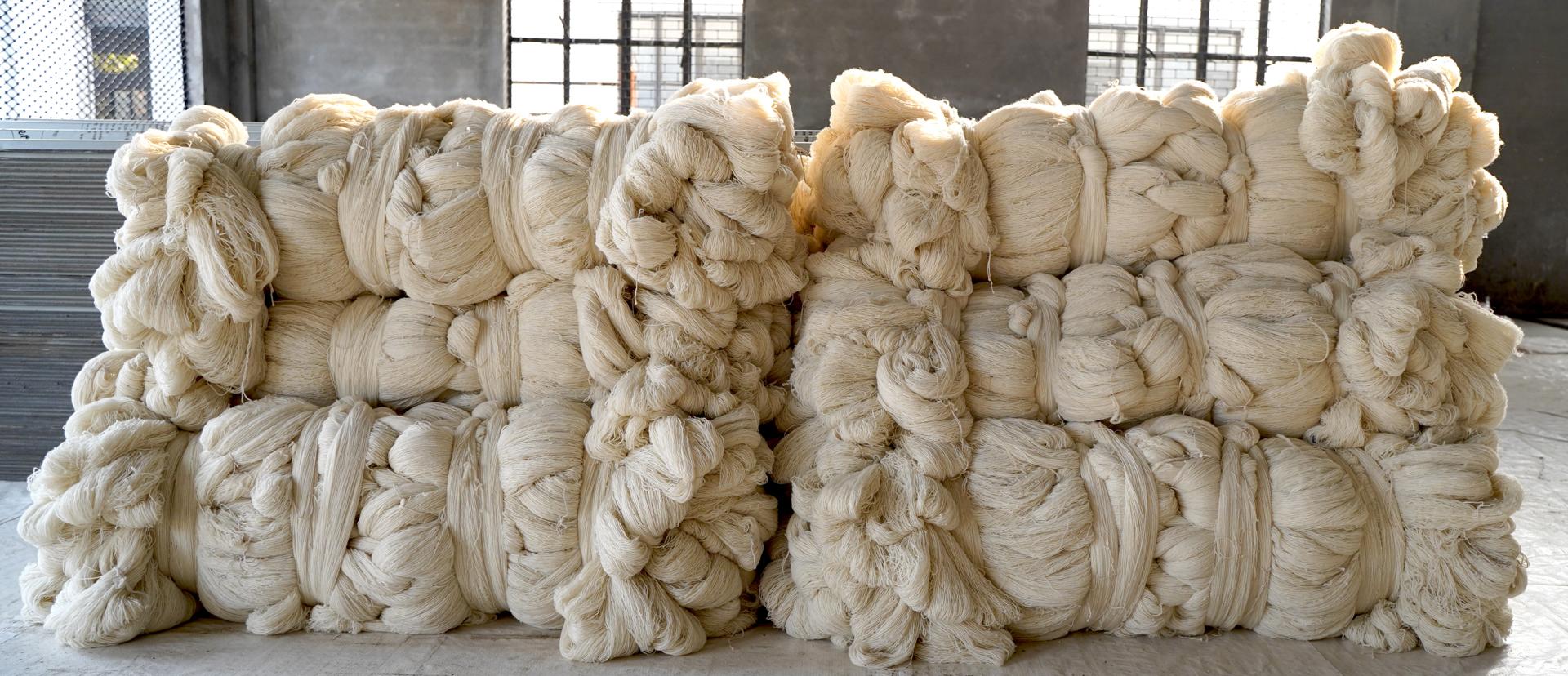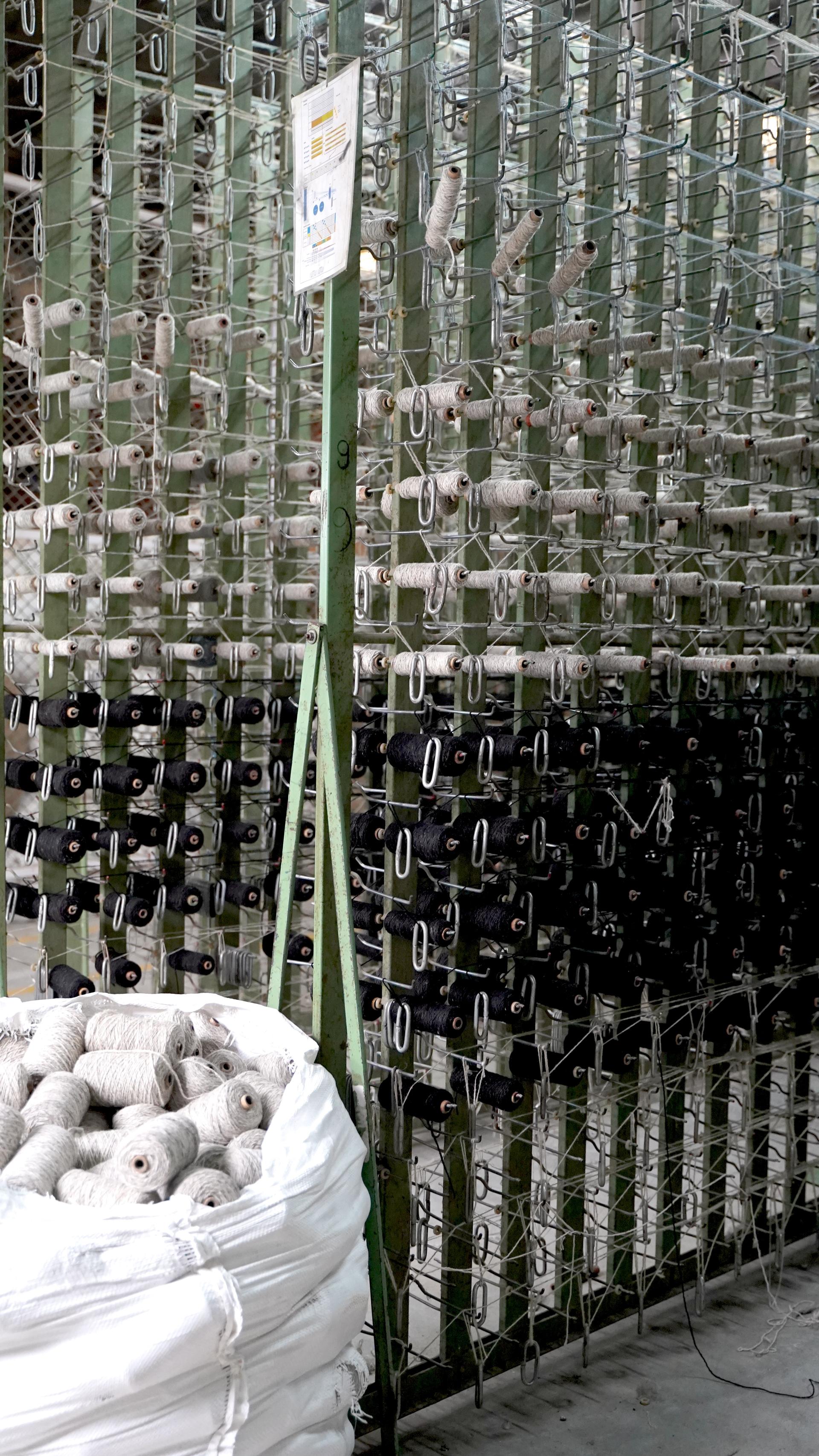
In house yarn spinning matters for hotel carpet because most visible inconsistency in a large order starts in the yarn, not on the loom. When the manufacturer cards, blends and spins its own fibre, it can hold yarn thickness, twist and blend steady across every room, every floor and every phase of a project, and repeat them years later for replacements.
Where inconsistency in hotel carpet actually comes from
A hotel order is unusual in the rug trade. Instead of one rug in a design, there may be hundreds of identical guest room rugs, long runs of corridor carpet and matching pieces for suites, all expected to look like one product. Under the even, repetitive lighting of a corridor, small differences become obvious.
Most of those differences trace back to yarn:
- Thickness variation. A yarn that runs slightly heavier in one batch fills the pile more densely, so one rug looks fuller and darker than its neighbour.
- Twist variation. More twist gives a crisper tuft and a sharper design. Less twist opens up and looks softer. Two batches with different twist read as two textures.
- Blend variation. Wool from different clips takes dye differently. If the fibre blend changes between batches, the same dye recipe gives a slightly different colour.
- Contamination and uneven fibre. Poorly prepared fibre leaves slubs, specks and weak spots that appear as streaks or early wear.
In broadloom, these show as banding, a faint stripe running along the length of the carpet where one yarn batch gave way to another. In loose rugs, they show as one room that does not quite match the next.
What spinning involves
Spinning turns raw fibre into yarn in a sequence of controlled steps. At Eastern Mills the sequence runs from scoured fibre through carding, blending, spinning, plying and winding, all on site in Bhadohi.
| Stage | What happens | Why it matters for a hotel order |
|---|---|---|
| Fibre selection | Incoming fibre is inspected for softness, cleanliness and consistency | Sets the baseline for every batch that follows |
| Carding | Fibres are opened, separated, straightened and cleaned into a roving | Removes impurities and evens out the fibre before it is spun |
| Blending | Fibres are combined in set proportions | Homogenises variation between clips so colour and feel stay level |
| Spinning | Roving is twisted into yarn of a set thickness and twist | Fixes the yarn count and twist that determine pile appearance |
| Plying and winding | Single yarns are twisted together and wound onto cones | Sets final yarn weight and balance for tufting or weaving |
| Yarn testing | Batches are tested before use | Confirms the yarn matches specification before it reaches the dye house |
Eastern Mills runs four carding machines and spins yarn in fine, medium and heavy weights. Fine yarn is used for detailed hand knotted work, medium for hand tufted and standard knotted pieces, and heavy yarn for dense handloom and broadloom constructions.
How owning spinning changes the outcome
Yarn is made for the order, not bought as found
A manufacturer that buys yarn selects from what the market has available. If the original yarn is not available for a reorder, the replacement is close but not identical. A manufacturer that spins sets the fibre, blend, count and twist itself and records them, so the same yarn can be made again.
Blending absorbs natural variation
Wool is a natural fibre. Clips differ in colour, crimp and micron from season to season. Blending at the carding stage spreads that variation evenly through a large quantity of yarn, which is the most reliable way to stop it appearing as shade differences once the yarn is dyed. Our guide to New Zealand wool and wool blends covers the blends themselves.
Yarn testing happens before dyeing
At Eastern Mills, yarn batches are tested in the in house laboratory for tensile strength, fibre composition and uniformity of twist, ply and thickness before they move on. A batch that is out of tolerance can be held back before it is dyed and woven into a rug, rather than discovered at final inspection.
Development is faster
Hotel interiors often call for a particular texture: a matt wool for a corridor, a wool with a touch of silk or linen for a suite, a heavier yarn for a lobby rug that must stand up to luggage. With spinning on site, a trial yarn can be produced, tufted into a sample and revised without waiting for an outside mill. Fibres processed on site include New Zealand wool, cashmere, mohair, alpaca, silk, linen, Tencel and nettle.
Traceability is shorter
For projects that specify responsible wool, spinning RWS certified wool in house keeps the chain of custody inside one company from fibre to finished rug, and certified orders are supported with transaction certificates.
What it does not solve on its own
In house spinning removes one large source of variation, but it is not the whole answer. Dyeing must still be controlled lot by lot, weaving tension and tufting density must be held steady, and finishing must be consistent. Our manufacturing infrastructure page covers how the stages connect. Spinning gives the later stages a consistent material to work with. Our post on vertical integration in rug manufacturing looks at each stage in turn.
Questions to ask any supplier about yarn
Use these when comparing manufacturers for a hotel project.
- Do you spin the yarn for this quality yourself, or buy it in? If bought, from whom?
- How is fibre blended to even out variation between wool clips?
- What yarn count, ply and twist is specified for this construction, and what tolerance applies?
- Is the yarn for the whole order spun and dyed together, or in batches as production runs?
- How do you test yarn before dyeing, and are the results recorded?
- If we reorder in three years, how will you reproduce the same yarn?
- For certified wool, who issues the transaction certificate, and for which stages?
A supplier that cannot answer the reorder question clearly is telling you that replacements may not match.
Planning yarn for a phased hotel project
Phased openings and multi property programmes put the most pressure on yarn consistency. A practical approach:
- Share the full scope early, including later phases, even if only the first phase is ordered.
- Agree whether yarn for all phases will be spun at the outset or spun to the same recorded specification later.
- Include attic stock in the yarn calculation so spares come from the same production.
- Keep the approved strike-off and a yarn sample as the reference for every later phase.
Our spinning page shows the process at Eastern Mills, and the hospitality page explains how we work with hotel project teams.
Frequently asked questions
Can yarn variation be fixed at the dyeing stage?
Only partly. Dyeing can adjust colour, but it cannot change thickness or twist, and fibre that takes dye differently will still shade slightly. It is easier to control variation in the yarn than to correct it later.
Does in house spinning matter for small hotel orders?
It matters less for a single suite rug and more as quantity rises. Once an order covers many rooms or long carpet runs, consistent yarn is what keeps them looking like one product.
Is hand spun yarn more variable than mill spun yarn?
Usually yes, and that variation is part of its character. For hotel work, where many pieces must match, controlled mill spun yarn is the more common choice.
What is banding in broadloom carpet?
A visible stripe along the length of a carpet where yarn or dye changed between batches. Consistent yarn and single lot dyeing are the main ways to prevent it.
To discuss yarn for a hotel project, contact Eastern Mills with the scope and phasing.