Buying direct from a rug manufacturer gives a hotel project closer control of design, colour and specification and fewer parties between the buyer and the loom. Buying through a dealer, agent or FF&E purchasing company gives local support, import handling, consolidated invoicing and often credit terms. Neither route is better in general. The right choice depends on what the project team can handle itself.
Who are the intermediaries?
The word dealer covers several different roles in hospitality sourcing.
| Intermediary | What it usually does |
|---|---|
| Dealer or distributor | Holds or sells product from one or more manufacturers in a local market, often with stock ranges |
| Manufacturer's agent | Represents a manufacturer locally, presents samples, manages the relationship; the order is usually placed with the manufacturer |
| Importer | Buys from the manufacturer, clears customs and sells on locally |
| FF&E purchasing company | Procures furniture, fixtures and equipment for a project on the owner's behalf, across many suppliers |
| Specialist contract carpet company | Supplies and often installs carpet and rugs for projects, sourcing from manufacturers |
These roles overlap, and many good projects use more than one. An owner might appoint an FF&E purchasing company that places orders direct with a manufacturer.
What buying direct changes
Specification and development
When the project team works with the manufacturer, design questions go to the people who make the rug. Colour, pile, construction and scale can be discussed with the design and production teams, and strike-offs come from the floor that will make the bulk.
Number of hand overs
Every party between the buyer and the factory relays information. Fewer relays means fewer chances for a comment to change meaning. This matters most during sampling, when detailed colour and texture feedback is passing back and forth.
Documentation
Specifications, inspection reports, packing lists and any test reports arranged for the order come straight from the source.
Cost structure
Buying direct removes the intermediary's margin. It does not remove the work that intermediary was doing. Freight, import clearance, duties, storage, inspection and local coordination still have to be done and paid for by someone.
What a dealer or agent adds
- Local presence and language. Meetings, sample presentations and problem solving in the project's own time zone.
- Import handling. The dealer or importer clears customs and delivers duty paid, so the project buys locally.
- Consolidation. One supplier and one invoice for products from several makers.
- Commercial terms. Local currency, local contracts and sometimes credit terms, where a manufacturer selling direct usually asks for an advance.
- Stock. Some dealers hold ready ranges for quick replacements or small orders.
- Installation and after sales. Many contract carpet companies install, and handle issues on site.
For a small project, a refurbishment of a few rooms, or a team without import experience, these services can be worth more than the margin they cost.
Comparing the two routes
| Factor | Direct from manufacturer | Through a dealer or agent |
|---|---|---|
| Design and colour control | Close, with the design team | Through the intermediary |
| Customisation | Full, within the manufacturer's minimums | Depends on the dealer's relationship with the maker |
| Price | No intermediary margin | Includes the intermediary's margin and services |
| Payment | Usually advance and balance before or against dispatch | Often local terms, sometimes credit |
| Import and customs | Buyer or its forwarder arranges | Often included |
| Communication | Direct, across time zones | Local |
| Minimums | Manufacturer's minimum applies | Dealer may aggregate demand or offer stock ranges |
| Responsibility for problems | Manufacturer, under the contract | Dealer, under its own contract with the buyer |
Questions to settle before choosing
- Can the project team manage import, customs and site delivery, or appoint a forwarder who can?
- Is the order large enough to reach the manufacturer's minimum per design and colourway?
- How much custom development is involved? The more custom the scheme, the more direct contact with the design team helps.
- Who will hold the contract and stand behind the goods if something goes wrong?
- Does the payment structure suit the project's cash flow?
- Who installs, and who handles replacements after opening?
A common middle route
Many hotel projects use a hybrid. The design team works directly with the manufacturer on development and sampling, while an FF&E purchasing company or importer places the order, handles payment, freight and import, and coordinates delivery to site. This gives close design control with local commercial support, as long as everyone agrees who is responsible for each stage.
What to check when buying direct
- The supplier is the actual manufacturer of the construction you need. Ask which stages are done in house and visit or take a video walk through the floor. Our post on manufacturers and trading houses explains how to tell.
- Minimum quantities and how they are counted.
- Payment terms and what each payment is tied to.
- The Incoterm, and who acts as importer.
- How sampling, approval and inspection will be documented.
- Certifications, with certificate numbers and scope.
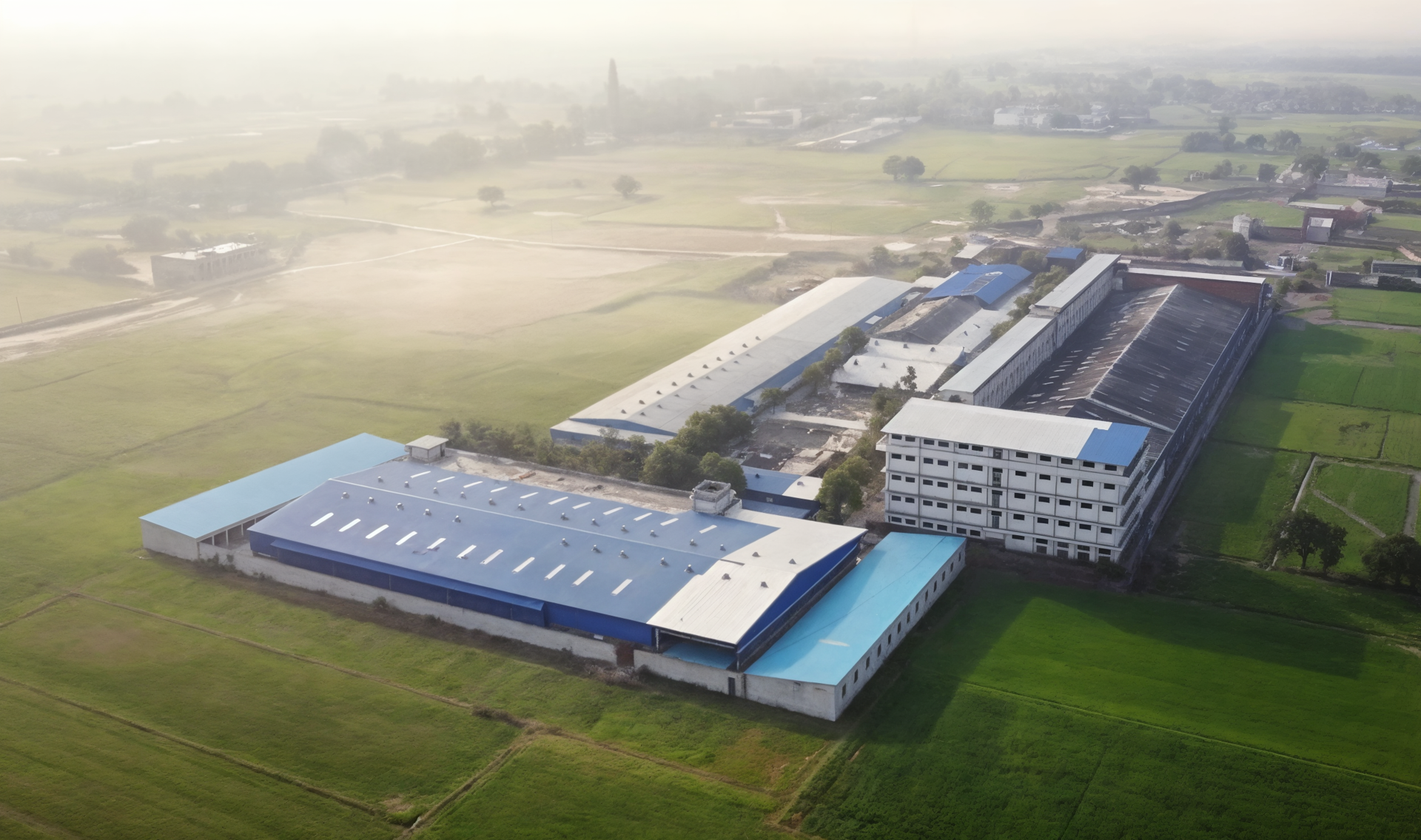
Eastern Mills is a manufacturer, founded in 1947 and now run by the third generation of the family, with in house yarn spinning, dyeing, hand tufting, hand knotting, handloom weaving, broadloom and finishing in Bhadohi. It works directly with design teams, purchasing companies and importers, and exports to more than 30 countries. Its minimum is 200 square metres per design per colour, and payment terms are 30 percent advance at order confirmation and 70 percent against dispatch. See our capabilities and manufacturing infrastructure pages for what is made on site.
Frequently asked questions
Is buying direct always cheaper?
The product price is usually lower, but the buyer takes on freight, import, inspection and coordination. Compare landed cost and the internal time needed, not only the unit price.
Can a designer work direct with the manufacturer while a purchasing agent places the order?
Yes. This is a common arrangement. Agree in writing who approves samples and who issues the purchase order.
Do manufacturers sell to small hotel projects?
Many do, subject to their minimums. Smaller quantities may be accepted at a price adjustment.
Who handles warranty claims when buying through a dealer?
Usually the dealer, under its contract with the buyer. When buying direct, the manufacturer does, under the sales contract.
To discuss buying direct for a project, contact Eastern Mills.