The cost of a custom hand tufted rug is set mainly by how much yarn goes into each square metre and what that yarn is, followed by the labour that the design demands: the number of colours, carving and texture, size and shape, and finishing. Quantity, sampling, testing, packing and delivery terms then add or spread costs around the rug itself. Knowing which of these moves the price most lets a project team adjust the specification without losing the design.
The main cost drivers at a glance
| Driver | Why it changes cost | Effect |
|---|---|---|
| Fibre | Raw material price varies widely between wools, blends, viscose and silk | High |
| Pile weight | More yarn per square metre means more material and tufting time | High |
| Pile height | Taller pile uses more yarn at the same density | Medium to high |
| Number of colours | Each colour needs development, dyeing and yarn changes during tufting | Medium |
| Design complexity | Fine detail and small areas slow tufting | Medium |
| Carving and texture | Carving, high and low pile and cut and loop add finishing labour | Medium |
| Size and shape | Shaped pieces waste material, very large pieces need more handling | Low to medium |
| Quantity per design | Fixed development costs are spread over the order | Medium |
| Finishing and backing | Washes, binding types and special backings add steps | Low to medium |
| Certified material | Certified yarn is sourced, stored and documented separately | Low to medium |
| Testing | Tests to a named standard are arranged per order | Project dependent |
| Packing and delivery | Room labelling, packing method and Incoterm | Project dependent |
Fibre
Fibre is usually the largest single cost. Wool is the default for hotel rugs because it wears well, resists soiling and is difficult to ignite. Within wool, price depends on origin, fineness and blend. Viscose and silk are used for sheen and accents, and cost more per kilogram, while viscose also shows wear and water marks more readily than wool in high traffic areas. Blends that put a premium fibre only where it shows, such as silk or viscose highlights on a wool ground, are a common way to get the look without paying for it across the whole rug.
Pile weight and pile height
Pile weight is the amount of yarn in the face of the rug per square metre. It is the clearest single measure of how much material a rug contains. Pile height is how tall the tufts stand.
A heavier pile feels richer and usually wears longer, but it uses more yarn and takes longer to tuft. A taller pile at the same density also uses more yarn. For hotel guest rooms, a dense, moderate pile often performs better than a very tall one, which can crush and show footprints.
When comparing quotations, compare pile weight and height as written figures. A rug that looks cheaper may simply contain less yarn. Our guide to pile weight and face weight explains the measures.
Number of colours
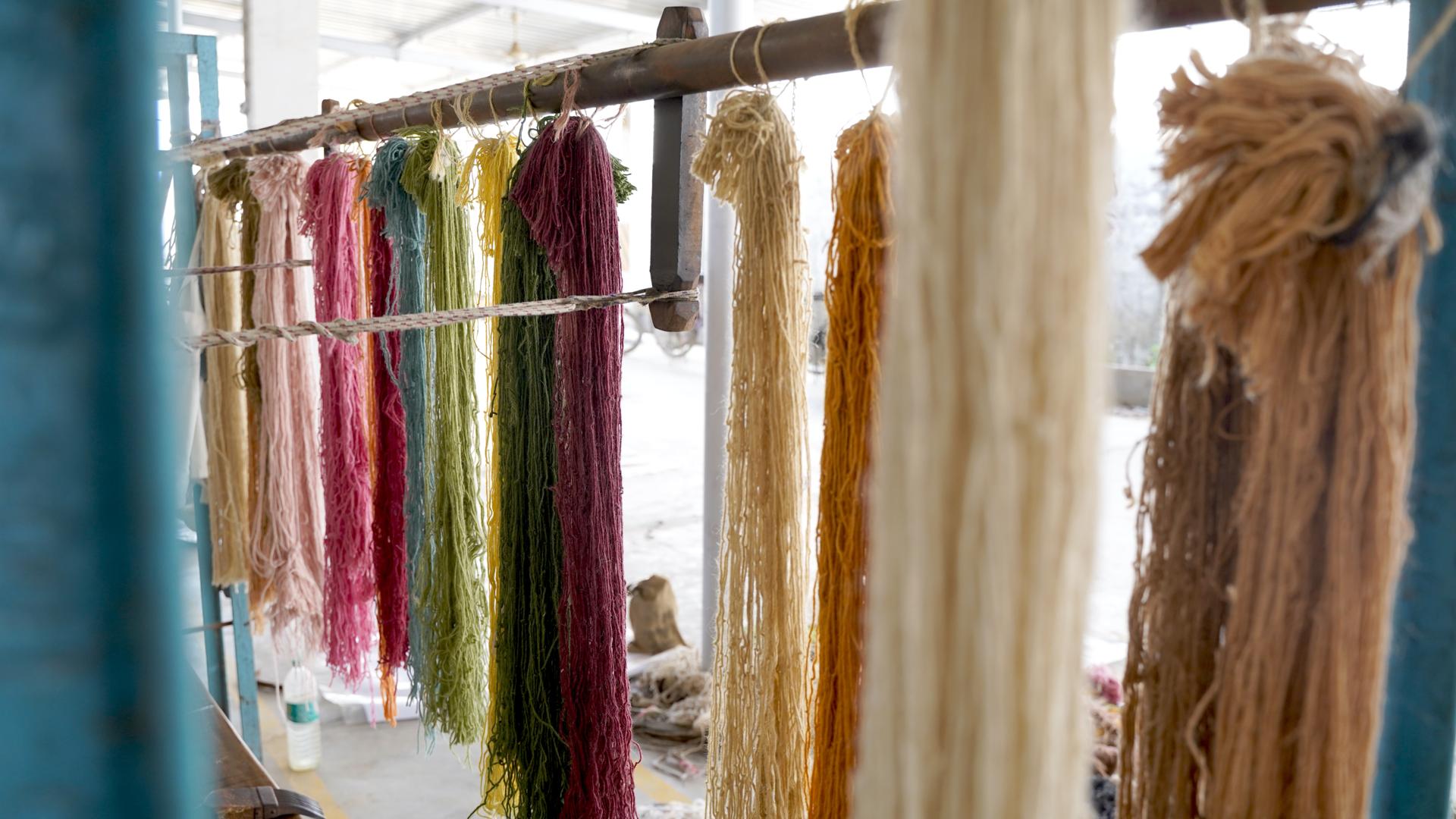
Every colour in a design is a separate dyed yarn. Each one needs a lab dip, a recipe and a production dye lot, and the tufter changes yarn each time a new colour area begins. A design with twelve colours costs more to develop and make than the same design in six.
Reducing colours is one of the least visible ways to save cost. Two close neutrals can often be merged, and tonal effects can sometimes be created by blending yarns rather than adding new colours.
Design complexity and texture
Large, open shapes tuft quickly. Fine lines, small motifs and many small colour areas slow the work. Texture adds further steps.
- Carving cuts a channel around motifs after tufting, to sharpen outlines.
- High and low pile uses two or more heights in one rug.
- Cut and loop combines sheared and looped tufts.
Each technique is done by hand and adds labour. Used selectively, for example carving only the main outline, they can give most of the effect for part of the cost.
Size, shape and quantity
Rectangular rugs in standard proportions are the most efficient. Rounds, ovals and irregular shapes waste backing cloth and yarn at the edges and need more finishing. Very large rugs need more handling space and people at every stage.
Quantity matters because each design carries fixed development work: production drawings, colour development, strike-offs and setup. Spread over a large order, this is a small part of the price. Eastern Mills works to a minimum of 200 square metres per design per colour; smaller orders may be accepted with a price adjustment that reflects those fixed costs. See minimum order quantities for hotel rug projects.
Finishing and backing
Finishing turns a tufted piece into a rug. Standard steps are latex coating, a secondary backing cloth, shearing and edge binding. Options that add cost include special washes, hand binding rather than machine binding, leather or fabric borders, and non slip or special backings for particular floors.
Certification, testing and documentation
Certified yarn, such as wool under the Responsible Wool Standard, has to be bought, stored and recorded separately. Testing to a project's named fire or performance standard is arranged per order, and its cost depends on the tests required. Neither is large per square metre on a big order, but both should be in the brief from the start so that they are in the quotation.
Costs around the rug
- Sampling, including strike-offs and revisions
- Spare stock ordered with the main order
- Room by room labelling and special packing
- Inspection, whether in house or third party
- Freight, insurance and import, depending on the Incoterm
How to adjust cost without losing the design
- Keep the fibre where it shows and simplify it where it does not, for example a premium accent on a wool ground.
- Review pile weight and height against the traffic in each area.
- Merge close colours.
- Use carving or texture only where it carries the design.
- Standardise sizes and colourways across room types to increase quantity per design.
- Order spare stock with the main order rather than later.
Frequently asked questions
Why do two quotations for the same rug differ so much?
Usually because they are not for the same rug. Compare fibre, pile weight, pile height, colour count, finishing and delivery terms line by line.
Is hand tufted cheaper than hand knotted?
Generally, yes, for the same size and fibre, because tufting is faster than knotting. Hand knotted rugs are chosen where detail, longevity or a particular look justify the extra time.
Does a larger rug cost less per square metre?
Not necessarily. Very large pieces need more handling, and shaped ones waste material. Quantity of the same design has a stronger effect than the size of each piece.
Should I share a target budget?
Yes. A manufacturer can suggest specification changes that reach a budget, but only if it knows the target.
For more on the construction, see our hand tufted rugs page and hand tufted rugs for hotels, or send a brief for a quotation.