Materials
High end custom rugs in luxury fibres
Eastern Mills makes high end custom rugs in silk, cashmere, mohair, alpaca, merino wool and wool and silk blends, for design brands and interior designers. Wool is spun in our own plant in Bhadohi, India, yarn for sampling and custom rugs is dyed in our own dye house, and every rug is made to the client's design, size and colour.
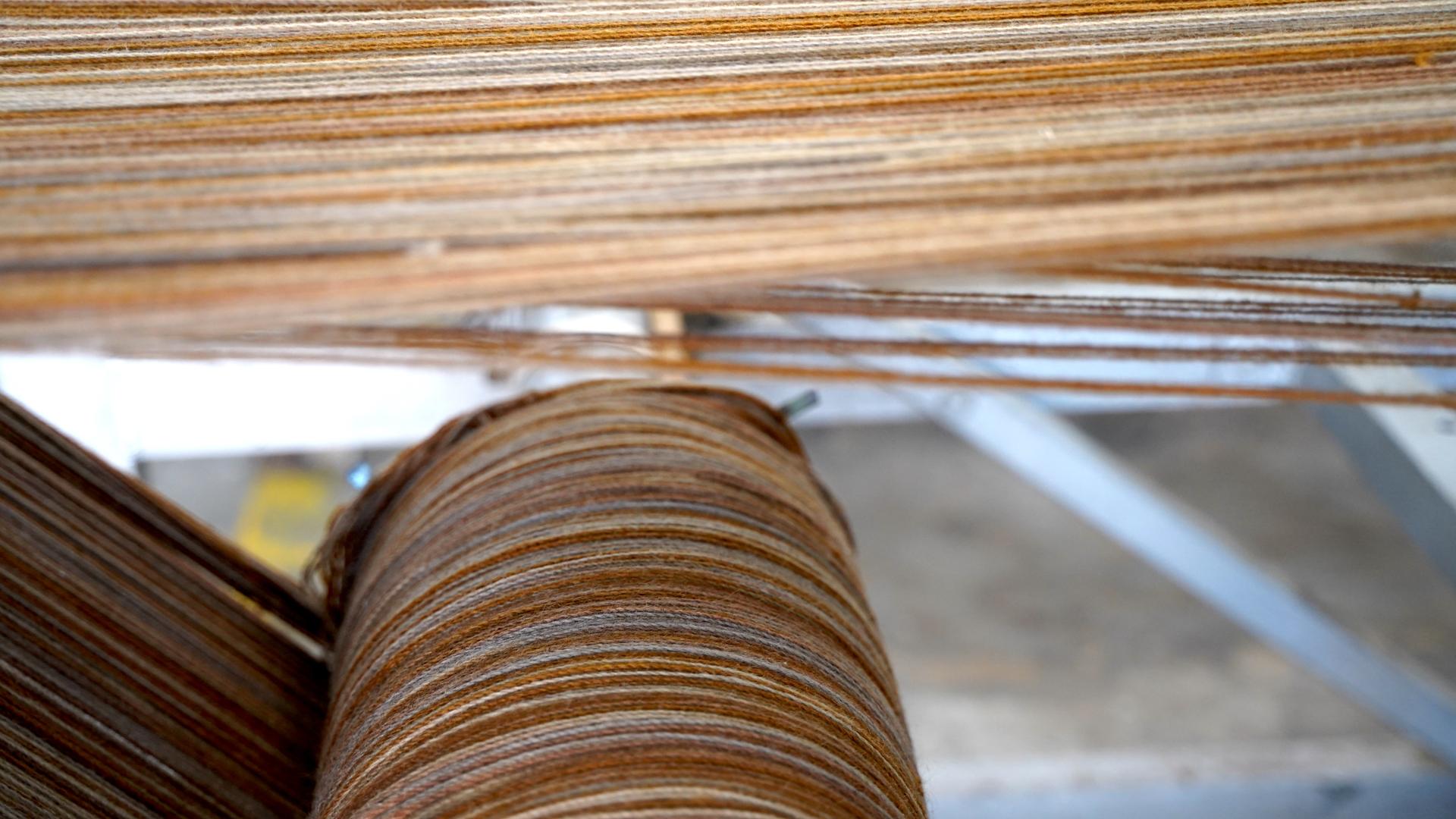
The fibres we work
- New Zealand wool: our core fibre, spun in house. Resilient, naturally stain resistant and soft, and the base for most blends.
- Merino wool: a finer wool with a very soft hand, for pieces that are touched as much as seen.
- Silk: luminosity and fine detail, used as the main pile or as accents that pick out part of a design.
- Wool and silk blends: typically from 70/30 to 50/50, combining the durability of wool with the lustre of silk.
- Cashmere: exceptional softness, with a standard pile height of 15mm. Best in bedrooms and low traffic rooms.
- Mohair: a bright lustre and strong dye uptake, which gives deep, saturated colour.
- Alpaca: soft and warm, and often blended with wool.
- Linen: a cool, contemporary hand for handloom and flatweave rugs.
See also materials.
Custom blends from our own spinning line
Wool and other fibres are carded on our own 4 carding machines and spun in our own plant, with a spinning capacity of 80,000 kg of yarn a month. Twist, ply and thickness are set for the construction the yarn will go into, from fine yarn for hand knotted rugs to heavier yarn for tufted and handloom work.
Because we spin, a blend can be developed to order: wool with cashmere for softness, wool with mohair for lustre, wool with alpaca for warmth, or a wool and silk blend set to the ratio the design needs. Spinning in house also keeps fibre quality consistent across a large order.
See also our spinning plant.
Constructions for luxury fibres
Hand knotted is the construction for silk and cashmere where the design needs fine detail. Each knot is tied by hand around the warp. The asymmetrical Persian knot allows finer detail than the Turkish knot, and a higher knot count allows finer detail and more precise colour transitions, at the cost of more labour.
Hand tufted rugs take luxury fibres as accents and textures: silk in a wool ground to pick out a motif, cut and loop pile in one rug, and carving where the design calls for it. Handloom and flatweave rugs work in linen, and silk accents can be added to premium pieces.
See also hand knotted and hand tufted.
Choosing a fibre for the room
Cashmere and pure silk belong where traffic is light: bedrooms, formal rooms and pieces walked on barefoot. Wool and silk blends and mohair blends hold up better in living rooms. In a busier space, a New Zealand wool ground with silk accents gives the effect of a luxury fibre where it shows, with the durability of wool underneath and at a lower cost.
We advise on fibre, pile height and construction at the sampling stage, against the room, the traffic it takes and the budget, so tell us where each rug will sit when you send the brief.
Colour
Dyeing is done in house for all sampling and custom rugs. The dye house works with chrome dyes for colour range and colourfastness, and with vegetable dyes for softer, natural effects. Colours are matched to a Pantone reference or to a physical swatch you send.
Silk, wool and blends take dye differently, so a colour that matches in wool can read brighter in silk. That is why each design is sampled in the real fibres before production, and why a palette is approved on the strike-off rather than on a yarn card alone.
Care for luxury fibre rugs
Fine fibres reward gentle handling, and it helps to pass this on to the end client. Silk and cashmere rugs are best vacuumed with the beater bar off, using a brushless attachment, and kept out of direct sunlight to prevent premature fading. Silk should be kept away from moisture and high humidity. Both need professional cleaning, and silk should never be wet cleaned at home. Mohair is more resilient, but spills should still be blotted promptly.
See also care and cleaning.
How a high end custom rug is developed
- Consultation: scope, aesthetic direction, technical requirements, timeline and budget
- Design development: our design team develops the pattern, palette and material specification, or translates your artwork
- Strike-off: a sample, typically 18x18 inches, in the real fibres, colours and construction. Sample development is invoiced separately
- Production: full scale production after written approval of the sample, with regular updates
- Inspection: a multi-stage inspection, with close-up photographs shared for your review before dispatch
Sizes, minimums and lead times
Standard widths go up to 14 feet (about 425 cm), and wider rugs are available at a surcharge. Runners, rounds, ovals and irregular shapes are made to order, and an irregular shape needs a physical template.
The minimum order quantity for production is 200 square metres per design per colour. Orders below that may be accepted with a price adjustment. Production lead time is 120 days for hand knotted rugs and 90 days for hand tufted and handwoven rugs.
For design brands
We make high end ranges for design brands, including Scandinavian design brands and US design brands, and the names of the brands we produce for are kept confidential. Eastern Mills holds ISO 9001:2015, GoodWeave, Sedex, Responsible Wool Standard (RWS), GOTS, GRS, SA8000 and C-TPAT certifications.
See also rug manufacturing for design brands and custom rugs.
Frequently asked questions
- Which luxury fibres do you make rugs in?
- Silk, cashmere, mohair, alpaca, merino wool and wool and silk blends, alongside New Zealand wool and linen. Custom blends are spun to order in our own plant.
- Do you make cashmere rugs?
- Yes. Cashmere rugs have a standard pile height of 15mm. Cashmere is very soft and best placed in bedrooms and low traffic rooms.
- Can you develop a custom fibre blend?
- Yes. We spin our own yarn, so blends such as wool with cashmere, mohair or alpaca, or a wool and silk blend at a set ratio, can be developed to order.
- Which construction is best for silk?
- Hand knotted gives silk the finest detail. Silk can also be used as accents in hand tufted rugs and in premium handloom pieces.
- Are luxury fibre rugs suitable for busy rooms?
- Cashmere and pure silk are best in low traffic rooms. For busier spaces, wool and silk blends, mohair blends, or a wool ground with silk accents are more durable choices.
- Can you match our colours in silk and wool?
- Yes. We dye in house and match to a Pantone reference or a physical swatch. Each design is sampled in the real fibres, because silk and wool take dye differently.
- What is the lead time for a high end custom rug?
- Production lead time is 120 days for hand knotted rugs and 90 days for hand tufted and handwoven rugs.
- Do you name the brands you make luxury ranges for?
- No. We keep the names of the design brands we produce for confidential, and a brand's designs remain the brand's property. Confidentiality and design ownership are agreed with each brand at the brief stage, before any artwork changes hands. We describe our work by construction, fibre and process instead.
Related
Custom Rugs
Made to your design, size, colour and fibre. In-house design team, dye house and sampling, available in every construction we weave.
Hand-Knotted Rugs
Individually tied knots from 80 to 400+ KPSI in New Zealand wool, silk, wool and silk blends, and cashmere. The most durable construction we make.
Design Brands
Hand tufted, hand knotted, handloom and flatweave collections made to a brand's own designs and colours, with client names kept confidential.
See also manufacturing capabilities, materials, the craft, broadloom and certifications and sustainability.
Send an enquiry
Tell us about your project or programme: construction, sizes, fibres and quantities. You can also write to corporate@easternmills.com.