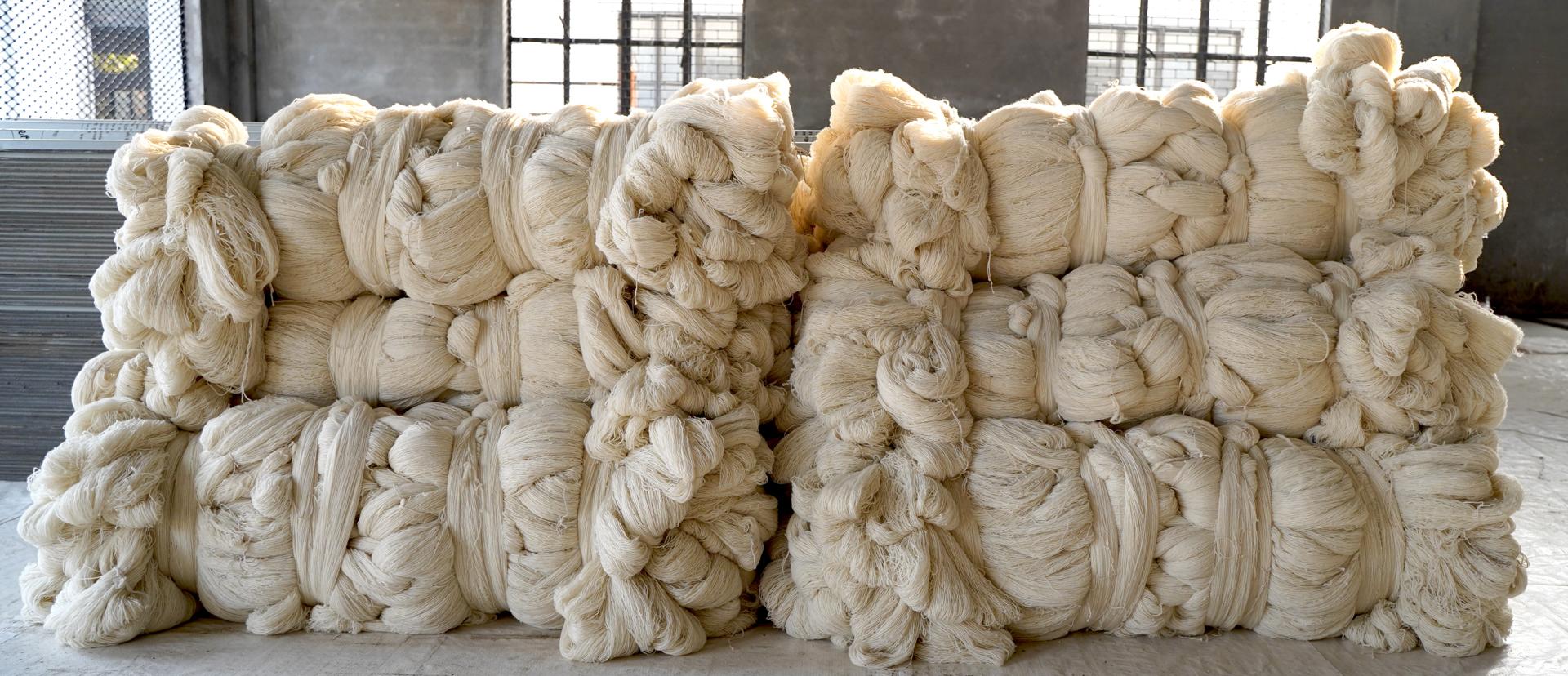
A sustainable hotel rug is one made from a fibre with a credible origin, produced under verified labour and environmental conditions, and built to last through its planned service life, with documents that prove each claim. Wool, recycled yarns and certification labels each answer part of that question, and none of them answers all of it on its own.
Start with durability
The most effective sustainability decision on a hotel project is often to specify a rug that lasts until the planned refurbishment and does not need replacing early. A cheaper rug replaced twice can have a larger footprint than a durable one replaced once. Material choice, construction, maintenance and attic stock all contribute to that. Labels describe how a product was made. They do not tell you how long it will last in your lobby.
Wool
Wool is the default fibre for hotel floors for practical reasons. It is renewable, it resists crushing, it releases soil readily and it is naturally difficult to ignite. It is also a farmed animal fibre, so its sustainability depends on how the sheep and land are managed and how the fibre is processed.
What to ask:
- Where is the wool from, and is the origin documented?
- Is it certified under a farm and chain of custody standard such as RWS?
- How is it scoured, spun and dyed, and how is wastewater handled?
At Eastern Mills, yarn is spun in house, including RWS certified New Zealand wool, which keeps the chain of custody from fibre to finished rug within one company. Dyeing and washing use water recycling systems, and wastewater is treated before discharge.
Recycled yarns
Recycled content in rugs usually means one of two things: recycled synthetic fibre, often polyester made from post consumer bottles, or recycled natural fibre, such as wool reclaimed from textile waste.
Points to weigh:
- Performance. Recycled synthetics can be durable and colourfast, but they behave differently from wool in crushing, soil release and fire behaviour. Test the actual construction for the project.
- Feel. Recycled wool often has shorter fibres, so it is commonly blended with new wool.
- Verification. A recycled claim needs a recognised standard behind it, most commonly GRS, the Global Recycled Standard.
- End of life. Blends of different fibres can be harder to recycle again than single fibre products.
What the labels mean
RWS covers wool from certified farms and its chain of custody, GRS verified recycled content, GOTS organic fibre and its processing, and GoodWeave labour in rug production. SA8000, Sedex and ISO 9001 describe how the factory is managed rather than what the rug is made of. Our guides to supplier certifications for hotel ESG reporting and rug certifications set out what evidence each gives and what it leaves out.
Eastern Mills holds RWS, GRS, GOTS, GoodWeave, SA8000, Sedex, ISO 9001:2015 and C-TPAT certifications.
Site certification versus product claims
A factory can hold a certification without every product it makes carrying that claim. A scope certificate shows that a site is certified to handle a standard's material. A transaction certificate, issued for a specific shipment, is the document that supports a claim such as RWS or GRS on your order. Certified material must be sourced and kept separate through spinning, dyeing and weaving, so plan for it at enquiry rather than at the end.
Questions that separate claims from evidence
- Which certificate supports this claim, and what is its number?
- Does the scope cover this site and this product?
- Will a transaction certificate be issued for our order?
- What percentage of the fibre is certified or recycled?
- What treatments, finishes or backings are used, and what are they made of?
- How is wastewater from dyeing and washing treated?
- What is the expected care regime, and does it need harsh chemicals?
Certificate numbers can be checked with the certifying body or its public database.
A sustainable specification checklist
- Construction chosen to last the planned cycle
- Fibre and origin stated
- Certification named for each claim
- Transaction certificate requested where a material claim is made
- Backings, adhesives and treatments declared
- Care guide that uses standard wool safe products
- Attic stock ordered to avoid early whole floor replacement
- Packing materials agreed with the installer and hotel
Making the claim on site
Hotels increasingly mention materials in their own sustainability reporting or guest communication. Keep the wording close to the document: "contains RWS certified wool" is supportable with the right certificate. Broader words such as "eco friendly" or "green" are harder to support and best avoided.
Read about how yarn is produced on our spinning page, and about hotel projects on our hospitality page. For the wider production picture, see manufacturing infrastructure.
Frequently asked questions
Is wool more sustainable than recycled polyester?
It depends on what you measure. Wool is renewable and durable. Recycled polyester reuses waste. Durability in the space, verified sourcing and end of life all matter, so compare specific products rather than fibres in general.
Does GoodWeave make a rug sustainable?
GoodWeave addresses labour, especially child labour. It is an important part of responsible sourcing, but it does not cover fibre origin or environmental impact.
Can a rug carry several certifications?
Yes. A rug can be made from RWS wool by a GoodWeave and SA8000 certified manufacturer, for example. Each certificate covers a different question.
Can certified material be added to an order after production starts?
Usually not. Certified fibre has to be sourced and segregated from the start of yarn production, so the claim should be agreed at enquiry.
To discuss materials and certification for a project, contact Eastern Mills.


