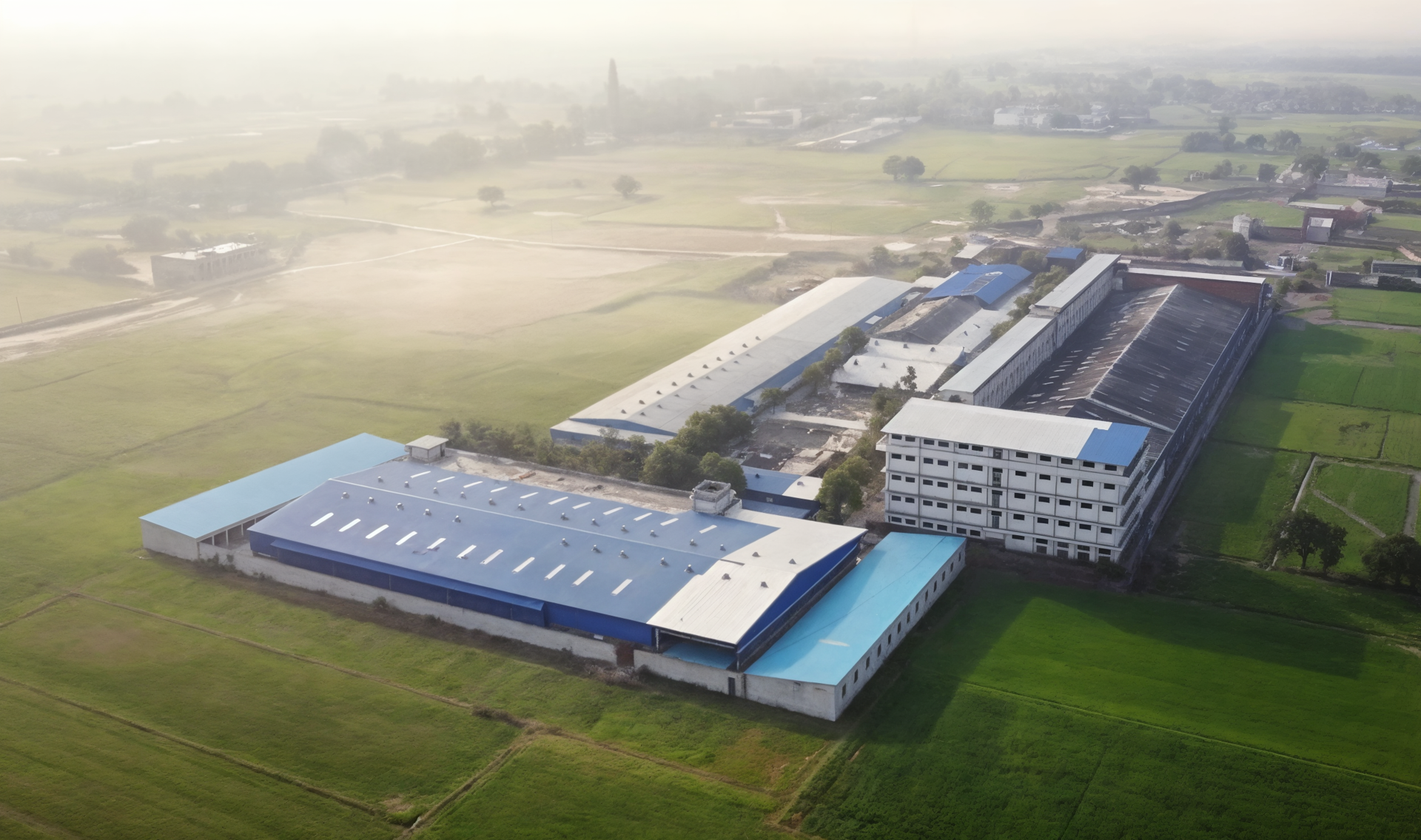
Private label rug manufacturing means a factory makes rugs to your design and specification and ships them under your brand, with your labels and packaging. The process runs in eight stages: brief, development samples, costing, approval, bulk production, inspection, labelling and packing, then shipment. The brand owns the design and the customer. The manufacturer owns the making.
Who does what in a private label programme?
| Stage | The brand provides | The manufacturer provides |
|---|---|---|
| Brief | Range plan, designs or references, target prices, market requirements | Feasibility, construction and fibre proposals |
| Development | Colour references, feedback on samples | Yarn development, dyeing, strike-offs |
| Costing | Quantities, sizes, Incoterm | Price per size, minimums, sample charges |
| Approval | Written sign off on each design and colour | Sealed reference samples, recorded specification |
| Production | Purchase order, labels, packaging artwork | Yarn, dyeing, weaving, finishing, progress updates |
| Inspection | Quality standard, inspector if a third party is used | In process checks, final inspection, records |
| Packing | Routing guide, carton marks, barcodes | Labelled and packed goods, packing list |
| Shipment | Forwarder or delivery instructions | Container loading, export documents |
Stage 1: What goes into the brief?
The brief sets the range: how many designs, in which constructions, in which sizes, and at what retail price. Share the market the goods are going to, because it decides testing and labelling rules. If you already have artwork, send it. If you have only a direction, a manufacturer with a design archive can propose qualities and designs to adapt. Our guide to briefing a rug manufacturer lists every field a factory needs.
Agree confidentiality and design ownership at this point, before artwork changes hands.
Stage 2: How does sampling work?
The factory develops yarn and colour first, then weaves a strike-off, a small sample showing part of the design in the real construction. You review it, give specific feedback, and the factory revises. Two rounds are common for a new design. More than three usually means the brief or the colour references were unclear.
At Eastern Mills, strike-offs are typically 18 by 18 inches and sample development is invoiced separately. Dyeing for sampling happens in house, so a colour revision does not wait on an outside dye house.
Stage 3: How is a private label rug costed?
The price per square metre is built from yarn consumption, fibre cost, weaving labour for the chosen quality, finishing, and packing. The quote should state the construction, the quality it assumes, fibre content, the sizes covered and the Incoterm. Ask what changes the price, so you can engineer toward a target. Reducing pile weight, simplifying carving or adjusting knot count often moves cost more than negotiating does.
Minimums matter for range planning. Eastern Mills works to a minimum of 150 to 200 square metres per design per colour. Orders below that may be accepted with a price adjustment. Payment terms are 30 percent advance at order confirmation and 70 percent against dispatch.
Stage 4: What exactly is being approved?
Approval should cover three things in writing: the physical sample for colour, texture and hand feel, the specification sheet for everything measurable, and the labelling and packing instructions. Keep one half of each approved sample and let the factory keep the other. That sealed sample becomes the reference that bulk is judged against, by both sides.
Stage 5: What happens during bulk production?
Yarn is spun or allocated, then dyed in production lots matched against the approved sample. Weaving follows, then washing, drying, stretching, shearing and edge finishing. A buyer should expect progress updates at dye lot approval, on loom, and after finishing. At Eastern Mills, production lead time is 90 days for handwoven and hand tufted rugs, and 120 days for hand knotted rugs.
This is where the structure of the supplier matters. A factory that spins, dyes, weaves and finishes on its own site controls each hand over. A trading company coordinates outside units and has less direct control. Our post on manufacturers and trading houses explains the difference.
Stage 6: How is quality checked before shipment?
There are usually three layers.
- In process checks by the factory during weaving and after washing.
- A final inspection by the factory against the sealed sample and spec sheet: size, colour, pile, pattern, edges, cleanliness.
- An optional pre-shipment inspection by the brand or a third party agency, usually on a sampling plan agreed in advance.
Agree tolerances before production, not at inspection. Handmade rugs vary slightly in size and shade, and both sides need a written figure for what is acceptable. Eastern Mills shares close up photographs of finished custom pieces for review before dispatch. Claims are not accepted after dispatch, so that review is the point at which to raise anything.
Stage 7: How are labels and packaging handled?
The factory attaches your brand labels, care labels, fibre content and country of origin marking, and any certification labels you are entitled to use. Supply artwork and placement instructions early. Country of origin and fibre content labelling are legal requirements in most markets, and the wording differs by country, so the brand should specify it.
Packaging follows your channel. Rugs for stores may be rolled and sleeved with a printed band. Rugs for online delivery are usually rolled, wrapped and boxed or bagged to a carrier's size limits. Tell the factory which carrier limits apply, because they affect how large sizes are rolled or folded.
Stage 8: What happens at shipment?
Goods are loaded into the container and the export documents are prepared: commercial invoice, packing list, bill of lading, certificate of origin, and any transaction certificates for certified materials. Who books freight depends on the Incoterm. Eastern Mills loads export containers at its own facility in Bhadohi, which keeps the final check and the loading under one roof.
What makes a private label programme work on reorder?
The second order is the real test. Colour and hand feel should match the first, months later. That depends on the factory keeping yarn specifications, dye recipes and the sealed sample, and on the buyer returning or retaining the original sample for matching. Ask a prospective supplier how they would reproduce a colour from a past order, and how they record it.
Private label checklist before you place an order
- Design ownership and exclusivity agreed in writing
- Spec sheet signed for every design
- Sealed sample held by both parties
- Size and shade tolerances stated
- Test requirements and certified claims listed
- Label and packaging artwork approved
- Inspection method and timing agreed
- Incoterm, payment terms and delivery window confirmed
Frequently asked questions
What is the difference between private label and white label rugs?
Private label rugs are developed to the brand's own design and specification. White label usually means the brand selects existing designs from the manufacturer's range and applies its own label. Many programmes mix the two.
Can a manufacturer design the range for me?
Often, yes. Eastern Mills holds more than 9,800 designs and an in house archive going back to 1947, and qualities from it can be adapted or recoloured for a brand.
Will my designs be sold to other buyers?
They should not be, and this should be written into your agreement. Designs you supply should be produced only for you.
Which rug constructions are available for private label?
At Eastern Mills, hand knotted, hand tufted, handloom, flatweave and broadloom, all made in house. See the private label manufacturing page for how programmes are set up.
Do I need to visit the factory?
It is not required, but it is the fastest way to judge a supplier. If you cannot travel, ask for a live video walk through of spinning, dyeing, weaving and finishing.
To discuss a private label range, contact Eastern Mills with your brief and target market. Our capabilities page sets out what is made on site.