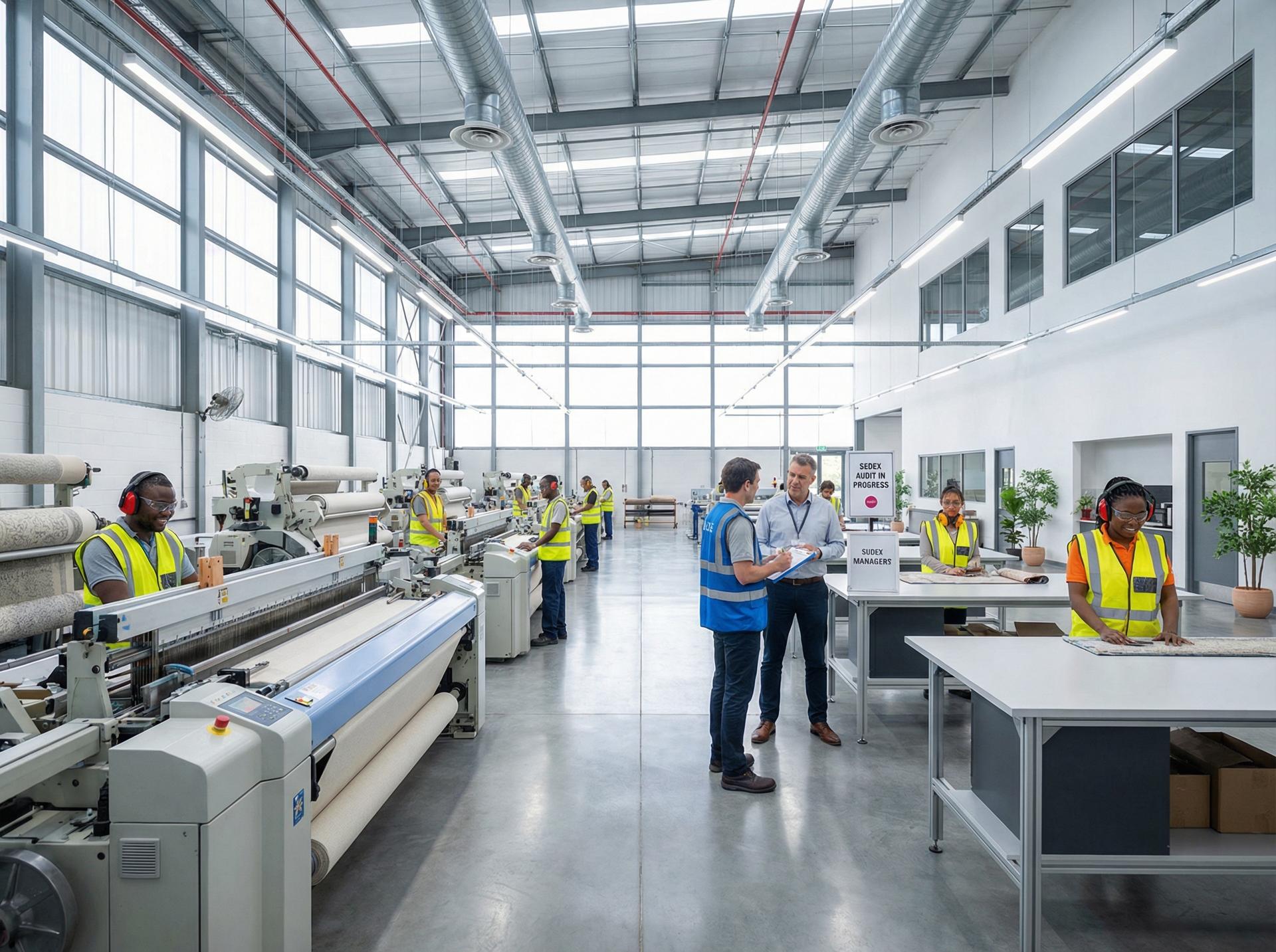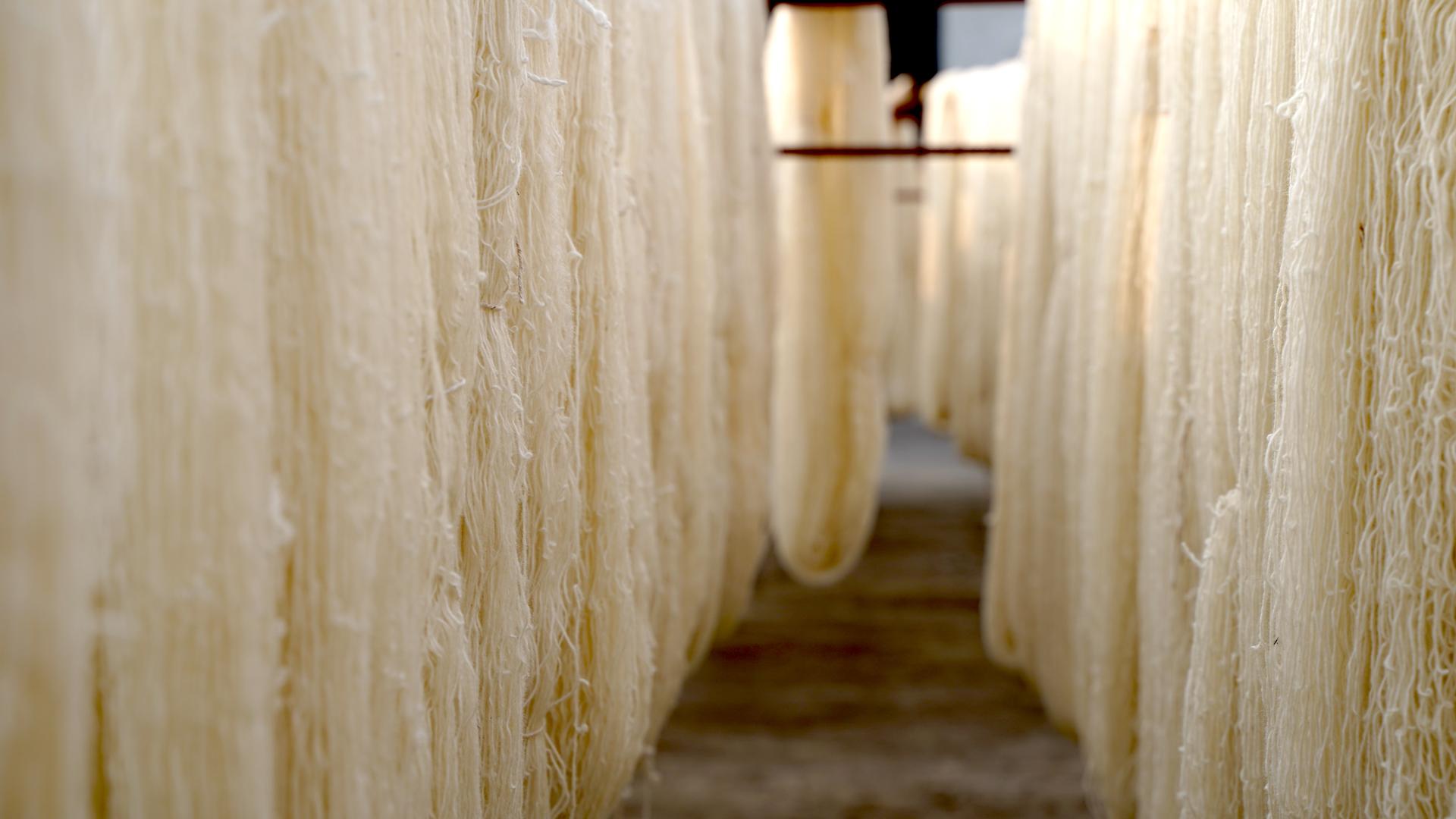
Carpet affects indoor air in two ways: it can release volatile organic compounds, mainly from backings, adhesives and treatments rather than from the face fibre, and it can hold and release dust. Hotels manage the first by specifying products tested under a recognised chamber emissions method, such as the California CDPH Standard Method used by CRI Green Label Plus, and the second by choice of construction and by cleaning.
Where emissions come from
A finished rug or carpet is more than its pile. The parts that most often contribute to emissions are:
| Component | Why it can emit |
|---|---|
| Latex or adhesive in the backing | Hand tufted rugs and many broadloom carpets are held together with a latex compound, which can release compounds as it cures and ages |
| Installation adhesives | Glue down installations add their own emissions, often more than the carpet |
| Cushions and underlays | Foam underlays are a separate product with their own emissions |
| Finishes and treatments | Stain, moth, soil or fire retardant treatments add chemistry to the surface |
| Dyeing and washing residues | Usually small after proper washing and drying, but worth checking |
The face fibre itself is rarely the main source. Wool, the most common fibre in hotel rugs, is a protein fibre that does not contribute meaningful VOCs of its own.
Emissions are highest when the product is new and fall over the following weeks. This is why the timing of installation, ventilation and opening matters.
How emissions are tested
Emissions are measured by placing a sample in a sealed chamber with controlled temperature, humidity and air exchange, and analysing the air at set intervals. The results are then modelled against a standard room to estimate the concentrations a person would breathe.
The method most often referenced in North America is the California Department of Public Health Standard Method for VOC emissions from indoor sources using environmental chambers, version 1.2, which is the emissions test behind California's Section 01350 specification. Green building rating systems that award credit for low emitting materials commonly refer to it.
In Europe, several national schemes and voluntary labels exist. France requires a VOC emissions label on many construction products, including floor coverings, graded from A+ to C. Voluntary labels for textile floor coverings, such as GUT, set their own emissions limits and testing.
Labels hotels ask for
| Label or method | Who runs it | What it shows |
|---|---|---|
| CRI Green Label Plus | Carpet and Rug Institute, United States | Carpet, cushions and adhesives tested for emissions. Its 2017 requirements use CDPH v1.2 and add criteria of its own |
| CDPH Standard Method v1.2 compliance | Test reports from independent laboratories | Emissions below the method's limits after the test period |
| French VOC label | Mandatory national labelling for covered construction products | An emissions class from A+ to C |
| Voluntary European carpet labels such as GUT | Independent associations | Emissions and content limits for textile floor coverings |
A label covers the products that were tested and enrolled. It does not transfer to a different construction from the same supplier, and it does not cover adhesives or underlays unless they were tested as well.
Where a project requires emissions testing from Eastern Mills, it is arranged per order on the construction to be supplied, at an independent laboratory, to the method the project names.
What the wool claims rest on
Wool is often described as purifying indoor air. The claim comes from laboratory research, notably work by AgResearch in New Zealand published in 2016, which tested wool based materials, including unbacked wool carpet, for their ability to absorb formaldehyde, sulphur dioxide and nitrogen oxides in a test chamber and found that they absorbed most of these pollutants over the test period.
These are real findings, but they come from chamber tests with controlled concentrations. Much of the publicity around them is produced by wool industry bodies. A fair summary is that wool can take up some common indoor pollutants, and that this is a modest benefit alongside emission control and ventilation, not a substitute for them.
Dust and allergens
Carpet holds dust at floor level instead of letting it circulate when disturbed, and releases it when vacuumed. Whether that is good or bad depends almost entirely on cleaning. For hotels the practical points are:
- Specify constructions that are easy to clean thoroughly. Dense, lower pile constructions release soil to a vacuum more readily than deep shags.
- Use high efficiency filter vacuums.
- Provide entrance matting systems to stop soil at the door.
- Give housekeeping the maintenance guide for each quality before opening.
Practical steps for a hotel project
- Name the emissions method or label in the specification, for each product: rugs, broadloom, underlay and adhesive.
- Ask for reports on the exact construction, including the backing compound.
- Prefer mechanical fixing or low emission adhesives for fitted carpet.
- Plan installation early enough to allow airing before guests arrive.
- Unpack rugs on arrival, remove plastic wrapping and let them air in a ventilated space before placement.
- Record fibre content and treatments for the hotel's own building certification files.
How Eastern Mills approaches it
Eastern Mills spins and dyes yarn in house and finishes rugs on its own site in Bhadohi, which means the backing materials, treatments and washing for each order can be identified and documented. Construction is set per project. See our hand tufted rugs and broadloom pages for the constructions, or contact us with the emissions requirement for your project.
Requirements vary by jurisdiction and project, and the project's environmental consultant and code consultant decide which methods apply.
Frequently asked questions
Do wool rugs need emissions testing?
The fibre is rarely the issue, but the backing and any treatments can be. If the project requires it, test the finished construction.
How long do new carpet emissions last?
They are highest at first and fall over the following weeks. Ventilation during and after installation shortens the period noticeably.
Is Green Label Plus required for hotels?
Not by law in most places. It is often requested by brand standards and green building rating systems. Some accept equivalent test reports to CDPH v1.2.
Does a hand knotted rug have a backing?
Hand knotted and many handloom rugs are woven through and do not need a latex backing, which removes one common source of emissions. Hand tufted rugs and tufted carpet rely on one, and many woven carpets carry a back coating.